The quick answer: Bellver Castle is a fourteenth-century royal fortress on a wooded hill three kilometres west of Palma Old Town, and it is the only circular castle in Spain. General admission is €4, it opens Tuesday to Saturday from 10am, and it is closed every Monday. Entry is free on Sundays, though Sunday hours are shorter at 10am to 3pm. The EMT bus 50 from Plaça d’Espanya gets you close, followed by a ten-minute uphill walk through pine woods.
Bellver Castle is the building you see from almost everywhere in Palma without quite registering what it is: a pale circular crown on a wooded hill above the bay. Most visitors photograph it from below and never go up. That is a mistake, because it is one of the most unusual castles in Europe and the walk to it takes less time than the queue at the cathedral. Of all the things to do in and around Palma Old Town, it is the one most often left off the list.
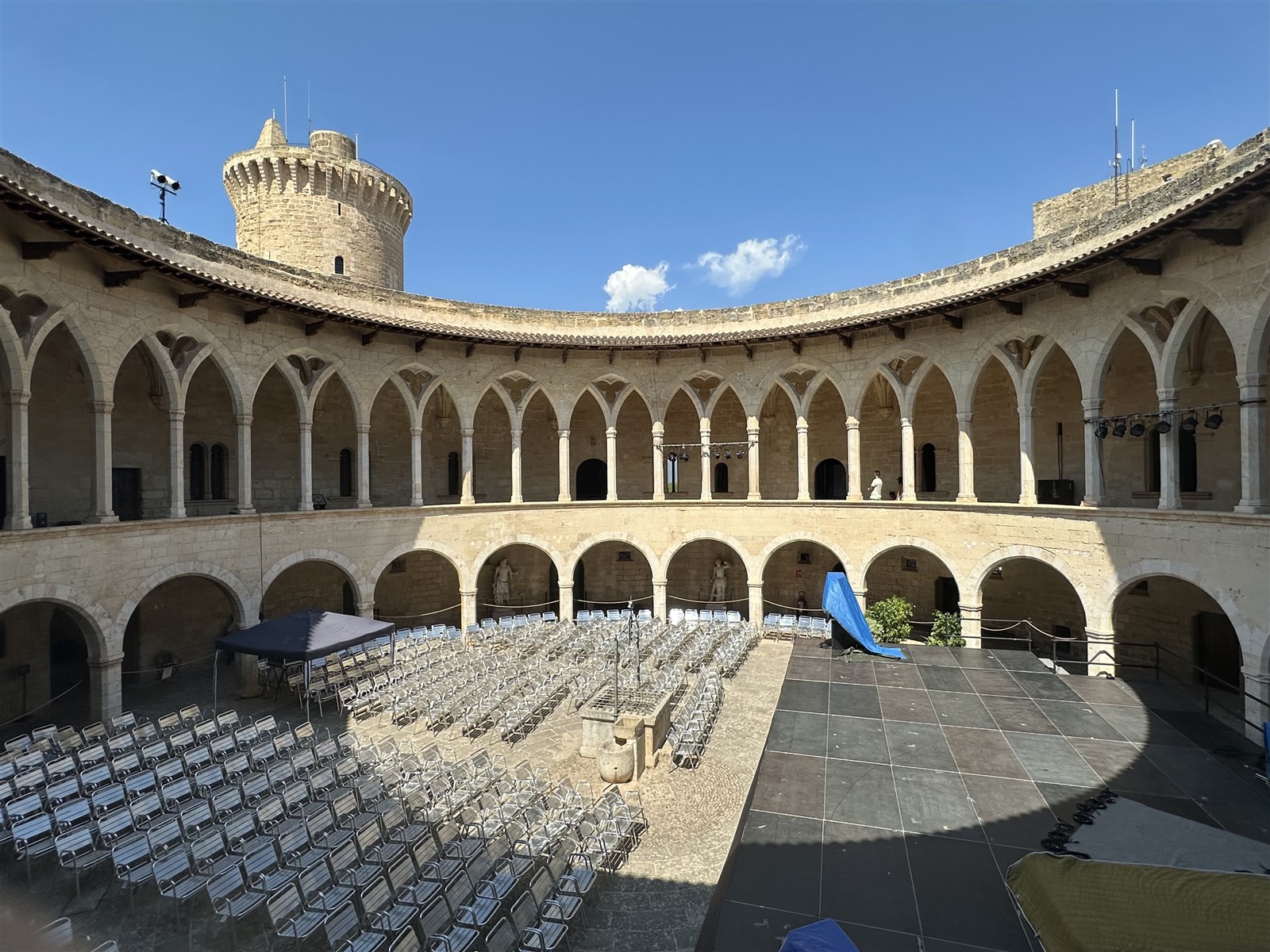
What makes it worth the trip is the shape. Almost every medieval castle in Europe is rectangular, because straight walls are easier to build and easier to defend with the technology of the time. Bellver is a perfect circle, with a circular courtyard inside it and a free-standing keep linked by a bridge. There is nothing else quite like it in Spain, and standing in the middle of that courtyard is a genuinely strange experience.
This guide covers the practical business of getting there, the current prices and opening hours, what there is to see once you are inside, and the honest question of how long to give it. Distances are measured from Carrer dels Hostals, where Casa Roca sits in the Old Town.
Bellver Castle Tickets, Opening Hours and Prices
Prices and hours below were checked against the castle’s official site in August 2026. The single most useful thing to know is that Monday is a closed day, which catches out a great many people who walk up the hill for nothing.
| Detail | April to September | October to March |
|---|---|---|
| Monday | Closed | Closed |
| Tuesday to Saturday | 10:00–19:00 | 10:00–18:00 |
| Sunday and bank holidays | 10:00–15:00 | 10:00–15:00 |
| General admission | €4 | |
| Reduced (students 14–18, pensioners, youth card) | €2 | |
| Palma residents | €2.50 | |
| Children under 14 | Free | |
| Sundays | Free for everyone | |
| Last entry | 30 minutes before closing | |
| Annual closures | 25 Dec, 1 Jan, 1 May, Easter Sunday | |
🌿 Insider Tip: Free on Sunday sounds like the obvious choice, but Sunday closes at 3pm and draws the biggest crowds of the week. At €4, a Tuesday or Wednesday morning is better value in every sense except the literal one. If you do go on a Sunday, be there at opening.
How to Get to Bellver Castle from Palma
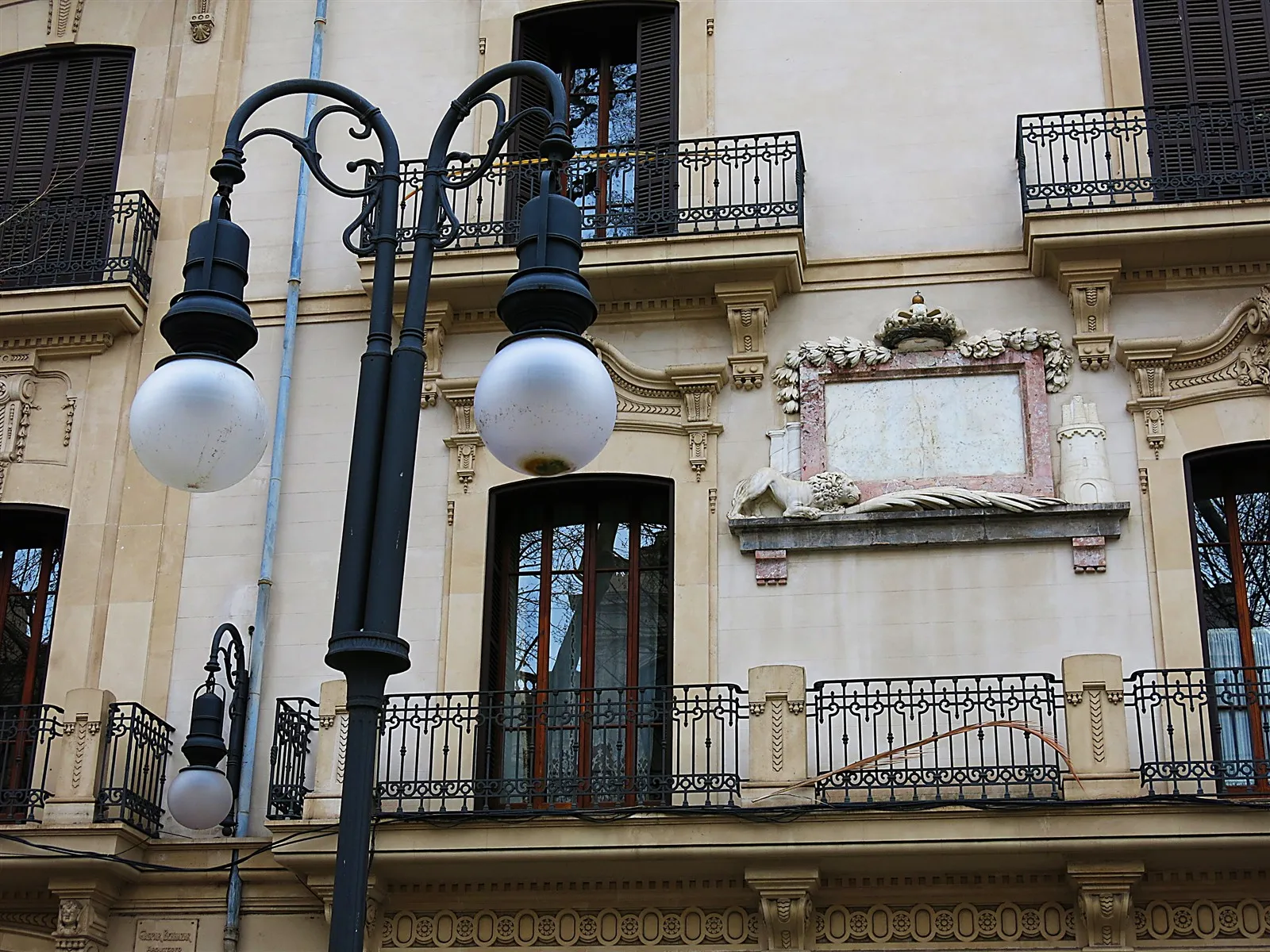
The castle sits about three kilometres west of the historic centre, on a hill of protected pine woodland called the Bosc de Bellver. There are three sensible ways up, and the right one depends on how much walking you feel like.
The bus is the simplest. EMT line 50 leaves from Plaça d’Espanya, ten minutes on foot from the Old Town, and drops you near the access road. From there it is roughly a ten-minute climb through the woods to the gates. Note that Palma’s EMT city buses are charged separately and are not covered by the free interurban travel scheme that applies to the rest of the island.
Walking the whole way from the Old Town takes about forty-five minutes and climbs steadily through the last stretch. It is a pleasant route in spring and autumn and an unpleasant one at two in the afternoon in July. A taxi from the centre takes ten minutes and is the obvious answer if you are short on time or travelling with anyone who would struggle with the hill.
There is a second walking route worth knowing about. From Plaça Gomila, on the western side of the city, a path climbs through the pine woods above Carrer de Bellver and passes a small chapel on the way up. It is shadier than the main access road and considerably more pleasant in warm weather, though it is steeper and less obvious to follow.
Whichever way you go, the last stretch is on foot. There is no road that delivers you to the gates, and the hill is protected woodland, so budget ten minutes of climbing at the end regardless of how you covered the first three kilometres. Comfortable shoes matter more here than for anything else in central Palma.
The History of Bellver Castle
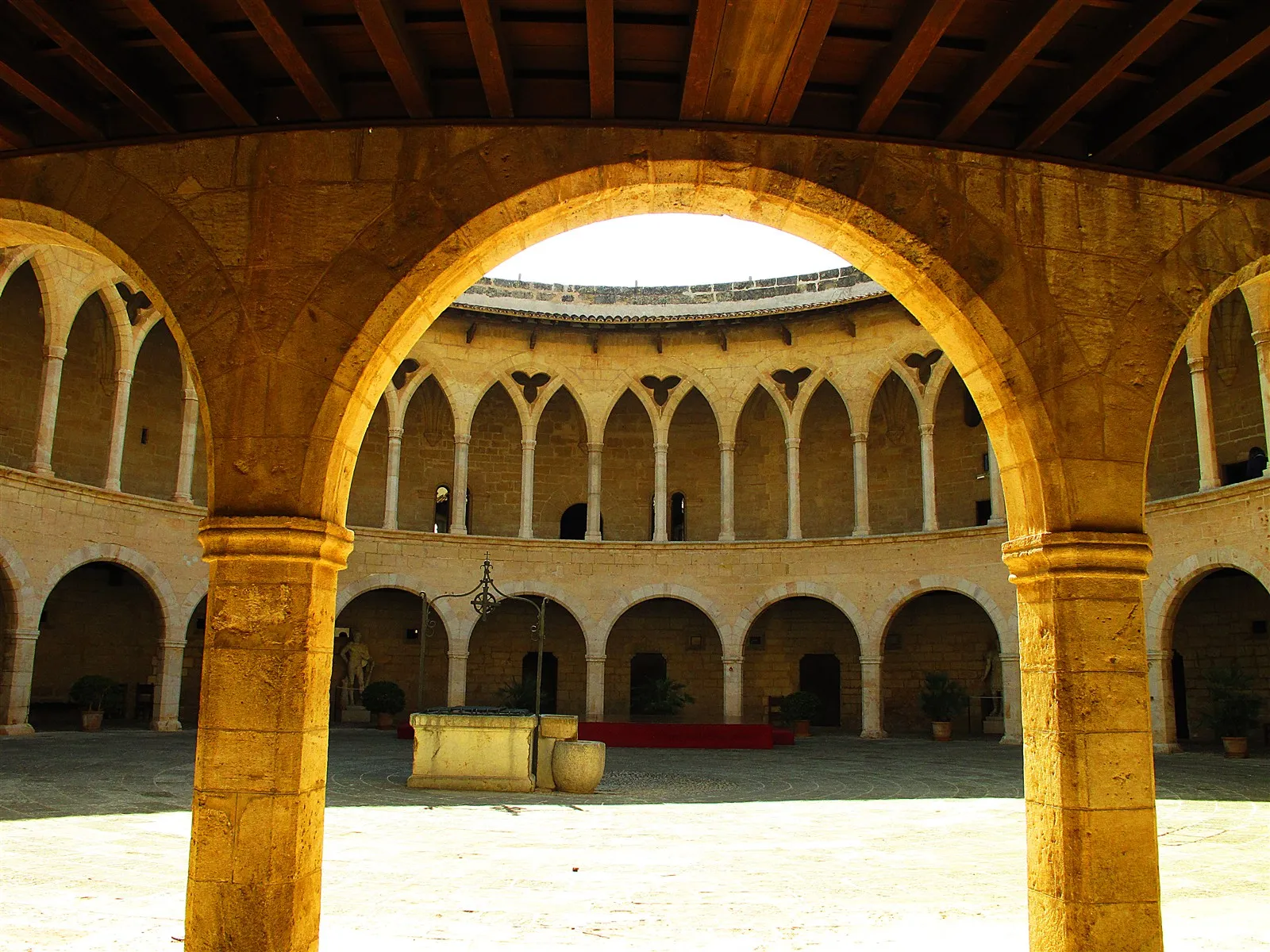
Bellver was built in the early fourteenth century for James II of Mallorca, at a point when the island was briefly its own kingdom rather than a possession of Aragon. The name means, roughly, beautiful view, which is unusually literal by medieval standards and remains accurate seven hundred years later.
It was designed as a royal residence rather than a frontier fortress, which explains the elegance of the courtyard and the quality of the stonework. Its defensive features are real but restrained: four towers, one of them free-standing and reached by a bridge, and a dry moat cut into the rock. It was never seriously besieged.
For most of its life it did a less glamorous job. From the eighteenth century onwards it served as a military prison, holding political prisoners including, most famously, the writer and statesman Gaspar Melchor de Jovellanos in the early 1800s. It only became a museum in the twentieth century, and the sense of a building that has been repurposed repeatedly is part of what makes it interesting.
The circular plan has been argued over for centuries. The most persuasive explanations are practical rather than mystical: a circle encloses the most space for the least wall, it removes the blind corners that attackers exploit, and it suits a hilltop where a rectangle would waste ground. Whether the architect Pere Salvà was working from a Roman precedent or simply solving the problem in front of him is not something the records settle.
What is clear is that the castle outlived the kingdom that built it. James II’s independent Mallorca lasted only a few decades before Aragon reabsorbed it, and Bellver spent the following centuries as a garrison, a mint, a prison and finally a museum. Very few buildings of its age have been in continuous use for seven hundred years, and fewer still have been so thoroughly repurposed without being wrecked.
What to See Inside Bellver Castle
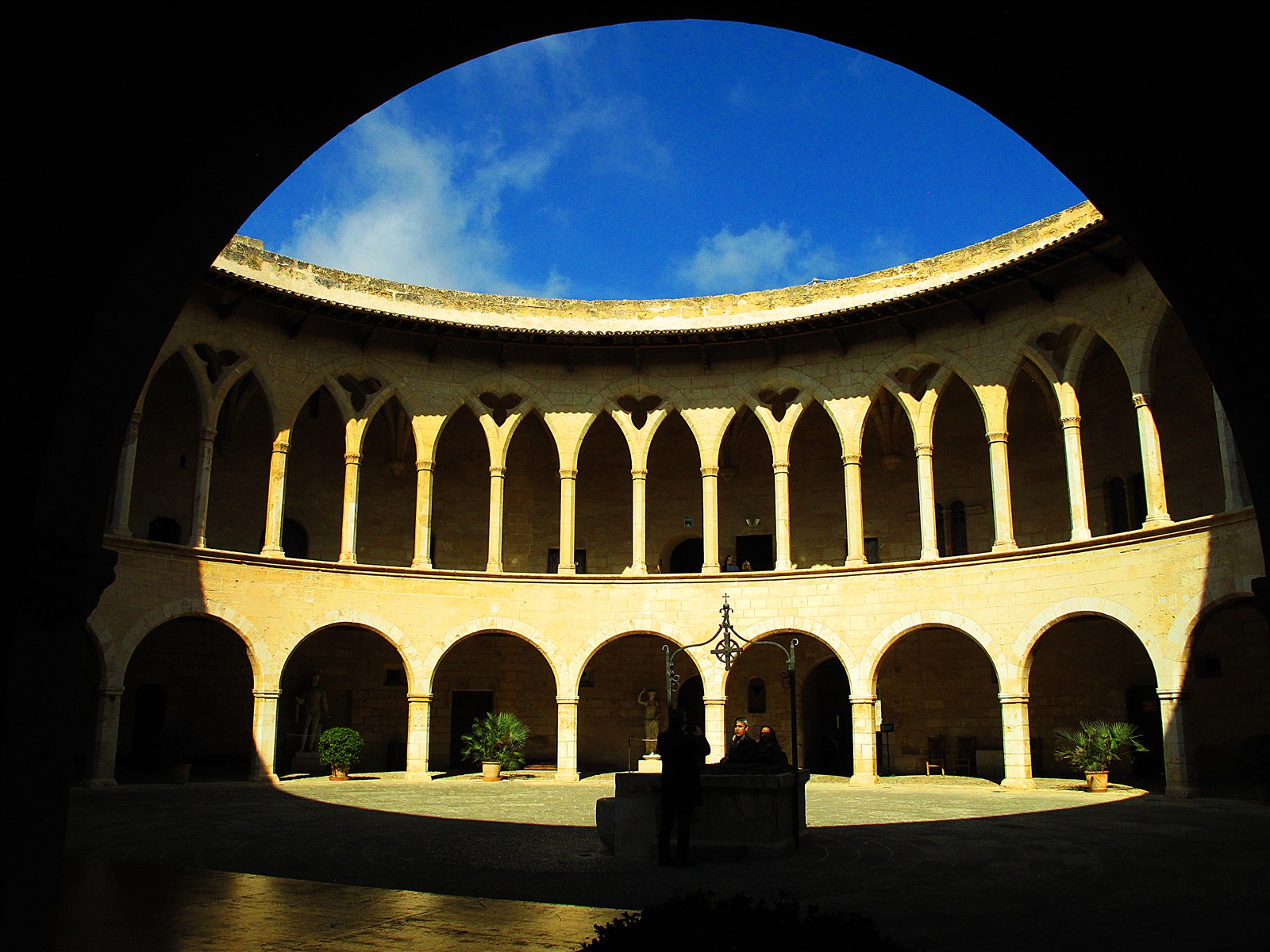
1. The Circular Courtyard at Bellver Castle
The courtyard is the reason to come. Two tiers of arcading run the full circle, semicircular Romanesque arches below and pointed Gothic arches above, around a plain stone floor with a well at the centre. The effect is disorientating in a way that photographs do not convey, because there is no corner anywhere to orient yourself against.
It is still in active use. The council runs concerts and events here through the summer, and you may well find seating laid out across the floor when you visit. That is worth checking before you come if you want the space empty for photographs, though the acoustics are extraordinary and catching a performance is the better outcome.
Give the courtyard longer than you think. Most visitors cross it in two minutes on the way to the roof. Walking the full circle of both galleries, upper and lower, takes about fifteen and is the part of the visit people remember.
2. The Roof Terrace and the View Over Palma
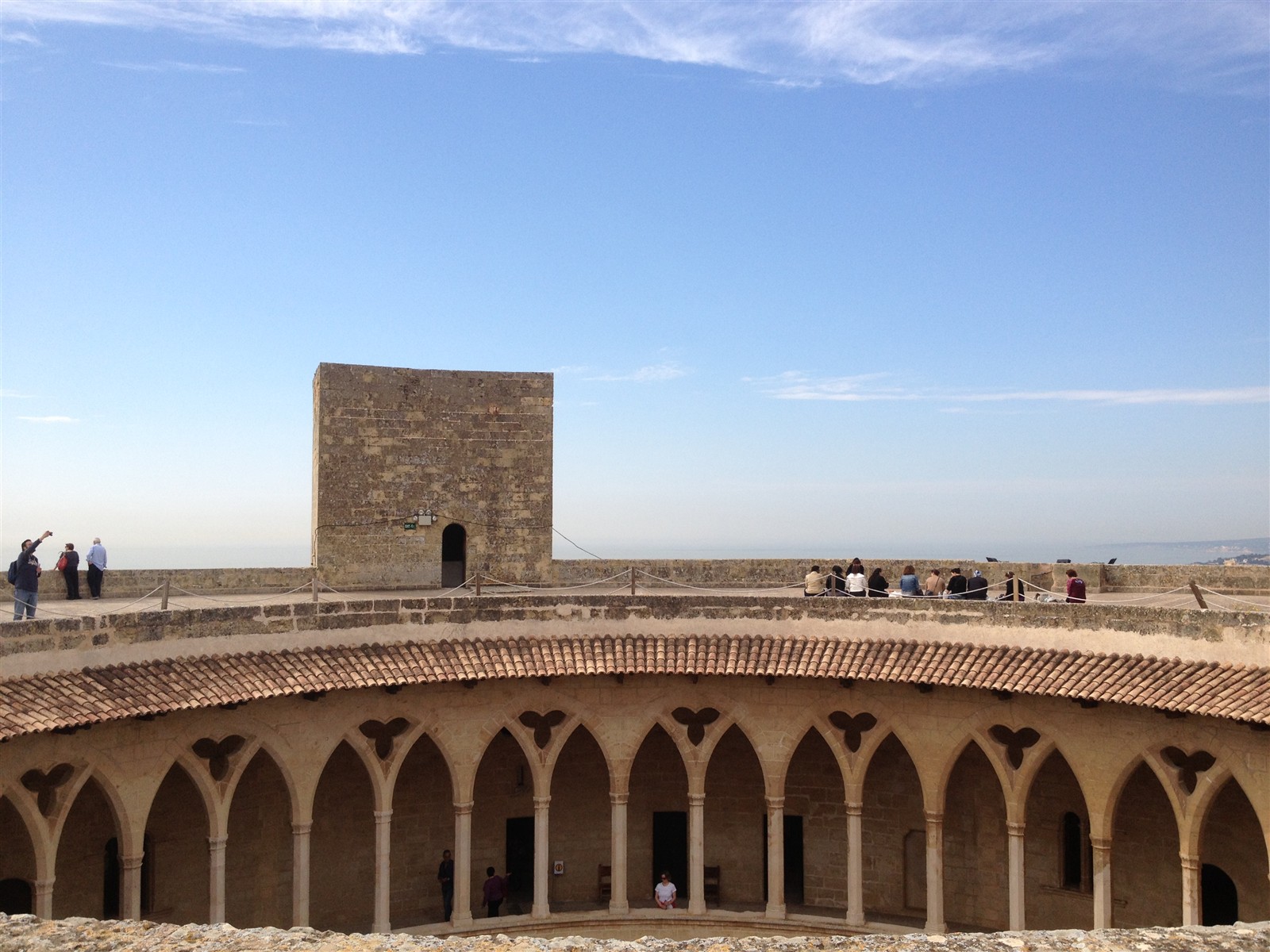
From the roof you get the whole of Palma laid out below: the cathedral, the harbour, the marina, the Serra de Tramuntana behind, and the bay curving away east towards the airport. On a clear day it is the best single view of the city available to anyone who has not chartered a boat.
It is also the best place to understand the geography of where you are staying. The Old Town reads clearly from up here as a dense sandstone block around the cathedral, with Santa Catalina to its west and the long sweep of Playa de Palma to the east. Twenty minutes on this roof will teach you more about the shape of the city than an afternoon with a map.
Go early or late. The light is flat and hard at midday and the terrace has no shade to speak of, which matters a great deal between June and September. First thing after opening is the reliable answer.
3. The Museum of Palma History at Bellver Castle
The castle houses Palma’s municipal history museum, arranged through the ground-floor rooms off the courtyard. It traces the city from the Talaiotic period through Roman, Islamic and Christian Mallorca, largely through pottery, coins and architectural fragments.
Be realistic about it. This is a solid municipal collection rather than a world-class one, and the labelling is not always generous in English. Half an hour is enough for most people, and if you are travelling with children who have already climbed a hill, it is the part to move through briskly.
The building itself remains the main exhibit throughout. The rooms are worth walking through for the vaulting and the window seats cut into walls several metres thick, even if the cases inside do not detain you long.
4. The Keep, the Moat and the Walls of Bellver Castle
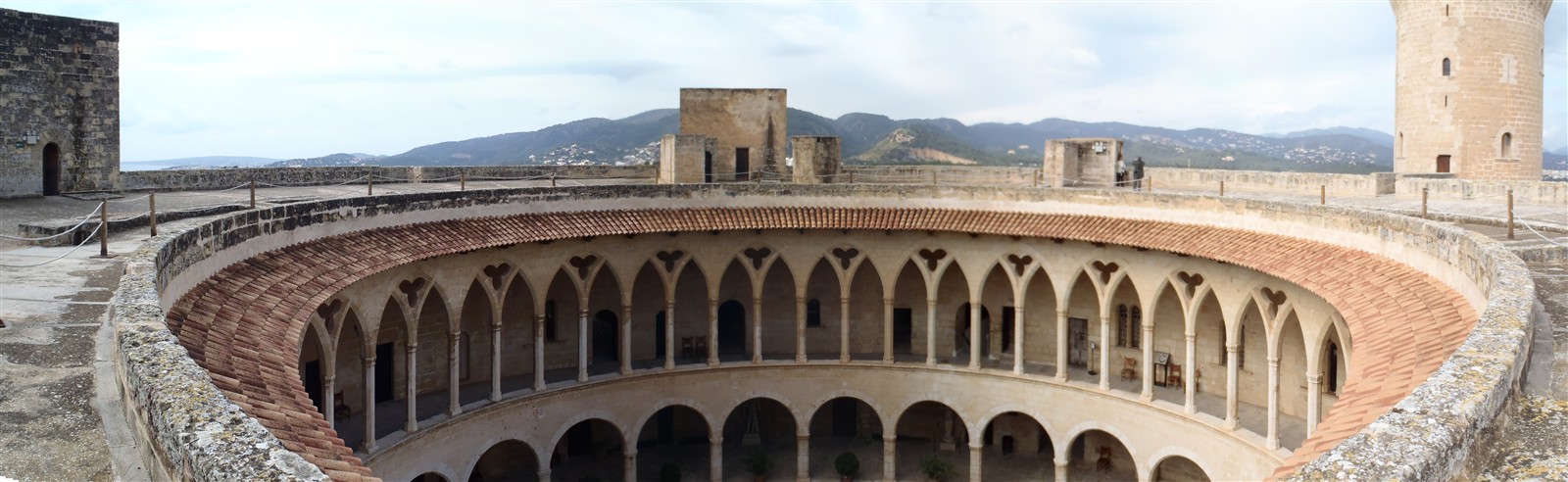
Three of the castle’s four towers are built into the circular wall. The fourth, the keep known as the Torre de l’Homenatge, stands apart from the main structure and is reached across a stone bridge over the moat. It is taller than everything around it and was designed to be defensible even if the rest of the castle fell.
The moat is dry and cut directly into the rock of the hill, which is worth looking at properly rather than crossing without noticing. Walking its circuit gives you the clearest sense of the engineering involved: a perfect circle carved into a hilltop seven hundred years ago, without machinery.
This part of the visit is also where the prison history feels closest. The cells used to hold political prisoners in the eighteenth and nineteenth centuries are in these lower levels, and the contrast between the elegance of the courtyard above and the conditions below is the most memorable thing about the place after the view.
The Best Time to Visit Bellver Castle
Morning is the answer in almost every season. The castle opens at ten, the first hour is the quietest of the day, and the light across the bay is better before noon. In July and August this stops being a preference and becomes the only sensible option, because the approach path and the roof terrace are both fully exposed.
By season, spring and autumn are the best of it. The pine woods on the approach are genuinely pleasant in April, May, September and October, and the walk up from the city becomes an attraction in its own right rather than an ordeal. Winter visits work well too, with the shorter six o’clock closing being the only real limitation.
Avoid Sunday afternoons and cruise-ship mornings if you can. Free entry on Sunday combined with a three o’clock close concentrates a whole day’s visitors into five hours, and on days when several ships are in port the castle appears on most excursion itineraries. A Tuesday or Wednesday in shoulder season is close to having the place to yourself.
Ten Minutes From the Castle Bus, in the Old Town
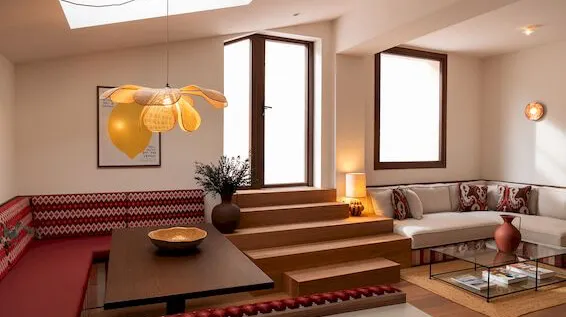
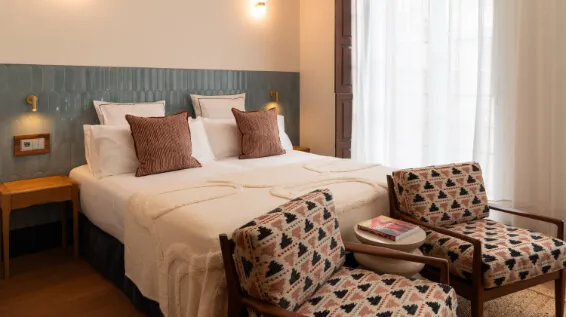
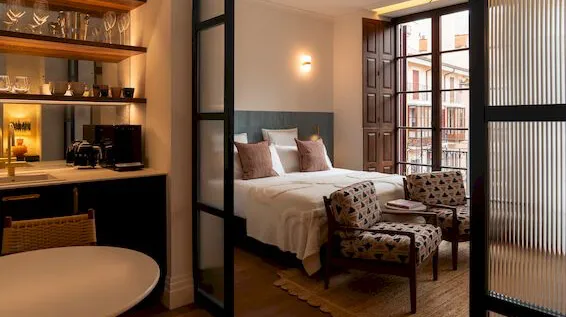
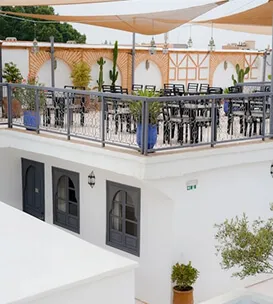
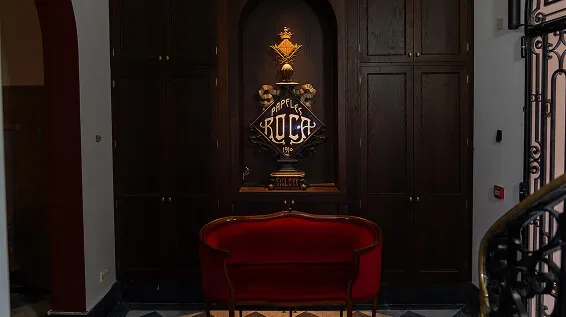
Casa Roca is a restored heritage building on Carrer dels Hostals, a short walk from Plaça d’Espanya where the 50 bus leaves for Bellver. Suites, apartments and a three-bedroom penthouse, with a rooftop terrace of its own.
Planning Your Visit to Bellver Castle

Allow ninety minutes to two hours in total, including the walk up from the bus stop. That covers the courtyard properly, the roof, a brisk pass through the museum and time to sit in the woods on the way back down. Anyone in a hurry can do it in an hour.
Wear something you can climb in. The approach path is unsurfaced in places, the internal stairs are original and uneven, and there is no lift to the roof. The castle has ramps and adapted facilities, but the hill and the medieval staircases mean parts of a visit are genuinely difficult for anyone with restricted mobility.
Pair it with something rather than treating it as a standalone half day. The castle sits between the centre and the western beaches, so it works well before an afternoon at Cala Major, or as the first stop on a day that ends along the Paseo Marítimo. If you are working through the island rather than the city, our guide to day trips from Palma without a car covers what else is reachable on public transport.
Before You Go To Bellver Castle
- Never on a Monday. It is closed all year round.
- Sunday is free but closes at 15:00 and is the busiest day.
- Last entry is 30 minutes before closing, and it is enforced.
- EMT bus 50 from Plaça d’Espanya, then a ten-minute uphill walk.
- City buses are not free, unlike the island-wide TIB network.
- Go early in summer. The roof terrace has no shade.
More to Explore in Palma
- Palma Cathedral, La Seu, the city’s other great building
- The complete guide to things to do in Palma de Mallorca
- Arriving by cruise ship, and whether the castle fits into a day in port
“Amazing find, in an incredible location. The place is beautifully restored, the staff are fantastic, and has that true traditional Mallorcan vibe.”
– James P, TripAdvisor, August 2026
Frequently Asked Questions
How Much Are Bellver Castle Tickets?
General admission is €4. Reduced entry is €2 for students aged 14 to 18, pensioners and youth card holders, and €2.50 for Palma residents. Children under 14 go free, and entry is free for everyone on Sundays.
What Are Bellver Castle Opening Hours?
From April to September the castle opens Tuesday to Saturday 10:00 to 19:00, and Sundays and bank holidays 10:00 to 15:00. From October to March it closes an hour earlier at 18:00 on Tuesday to Saturday. It is closed every Monday, and last entry is 30 minutes before closing.
Is Bellver Castle Closed On Mondays?
Yes, Bellver Castle is closed every Monday throughout the year. It is also closed on 25 December, 1 January, 1 May and Easter Sunday. This is the most common reason visitors make the trip up the hill and cannot get in.
How Do You Get To Bellver Castle From Palma?
Take EMT bus 50 from Plaça d’Espanya, about ten minutes on foot from the Old Town, then walk roughly ten minutes uphill through the pine woods. A taxi from the centre takes around ten minutes. Walking the whole way from the Old Town takes about 45 minutes and climbs steadily.
How Long Do You Need At Bellver Castle?
Allow 90 minutes to two hours including the walk up from the bus stop. That covers the circular courtyard, the roof terrace and a brisk visit to the history museum. An hour is enough if you are pressed for time and skip the museum.
Why Is Bellver Castle Circular?
It was built in the early 14th century for James II of Mallorca as a royal residence rather than a frontier fortress, and the circular plan reflects that. It is the only fully circular castle in Spain and one of very few in Europe, with a circular courtyard inside and a free-standing keep reached by a bridge.
Is Bellver Castle Worth Visiting?
Yes, particularly for the courtyard and the view. The circular design is genuinely unusual and the roof gives the best single view of Palma, the bay and the Tramuntana mountains. At €4 it is among the best value sights in the city, though the museum inside is modest.
Is Bellver Castle Suitable For Children?
Children under 14 enter free and generally enjoy the towers, the moat and the roof walk. Be aware that there is a ten-minute uphill approach, the internal stairs are original and uneven, and there is no lift, so it is hard work with a pushchair.
Base Yourself in Palma Old Town
Casa Roca sits on Carrer dels Hostals, five minutes from the cathedral and a short walk from the bus up to Bellver. Suites, apartments and a three-bedroom penthouse in a restored 175-year-old building.
Check AvailabilityImage credits: Bellver Castle courtyard by Florent Pécassou (CC BY-SA 4.0); arcade and courtyard arch by Enric (CC BY-SA 4.0); roof terrace by Qwertz1894 (CC BY-SA 3.0); Passeig del Born by Enric (CC BY-SA 4.0). All via Wikimedia Commons. Opening hours and prices from castelldebellver.palma.es, checked August 2026.