Almond Blossom in Mallorca at a Glance
- When: late January to early March, at its peak around mid-February.
- Where: the central plain, the foothills of the Tramuntana and the east of the island.
- Closest to Palma: Santa Maria, Alaró, Algaida and Bunyola, 20 to 30 minutes away.
- By train: the line to Inca runs through almond country, from the Plaça d’Espanya station.
- Weather: about 15°C by day in February, with around 170 hours of sunshine.
Every winter, for a few short weeks, Mallorca turns white and pink. Millions of almond trees burst into flower across the island, covering the fields of the central plain, the terraces of the Serra de Tramuntana and the valleys around its villages in a soft cloud of blossom. The almond blossom in Mallorca is one of the most beautiful sights in the Mediterranean, and it arrives when the rest of Europe is still deep in winter.
Palma makes an ideal base for the season. From Casa Roca on Carrer dels Hostals in Palma Old Town, the nearest almond orchards are about 20 minutes away by car or train, so you can spend the morning among the blossom and the evening in the restaurants and wine bars of the city. Mallorca in February pairs bright, mild days in the countryside with the comfort of a boutique hotel in the heart of Palma.
When Is the Almond Blossom in Mallorca?
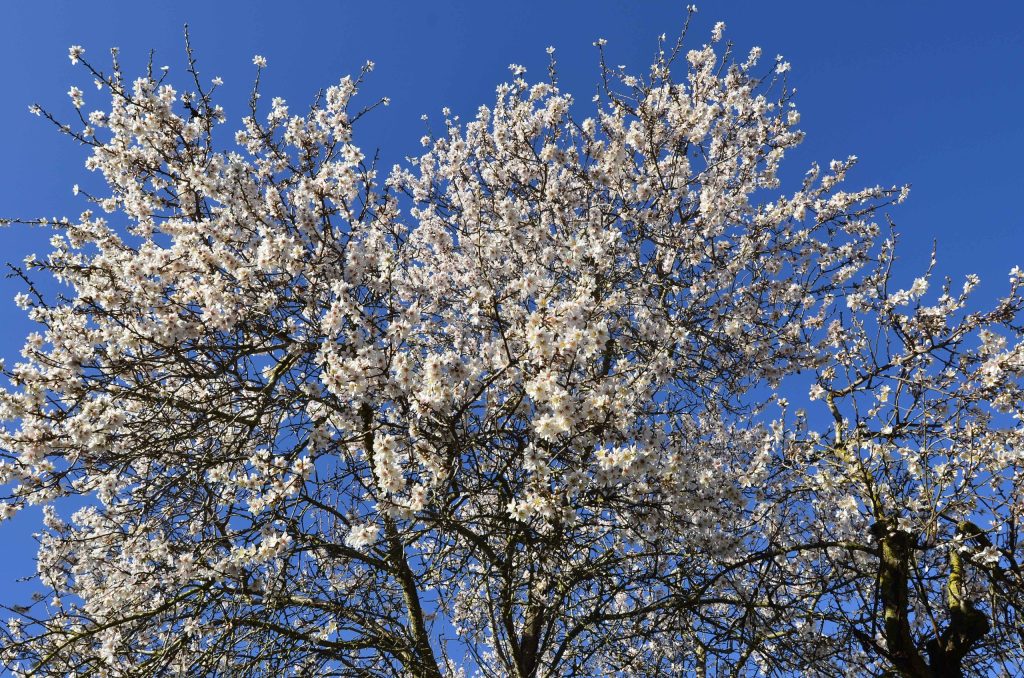
The almond blossom in Mallorca usually begins in late January and lasts until late February or early March, with the peak around the middle of February. The exact timing changes every year with the weather: a mild winter brings the first flowers earlier, while a cold snap can hold them back by a week or two. In some recent years, the first trees near Palma were already in flower by mid-January.
The blossom moves across the island in stages. The first flowers appear in the warm lowlands of the south, around Llucmajor and Colònia de Sant Jordi, followed by the central plain of Es Pla. The orchards in the higher valleys of the Serra de Tramuntana, around Orient, Galilea and Fornalutx, flower last, often into early March. This long sequence means that a visit at almost any time in February will find almond trees in bloom somewhere on the island.
Each tree flowers for only around two weeks, and wind or rain can strip the petals quickly, so a few days of flexibility pays off. The blossom is at its most beautiful on clear, sunny mornings, when the white flowers stand out against a deep blue sky and the green fields beneath them.
| Almond blossom in Mallorca | Typical timing | Where to look |
|---|---|---|
| First flowers | Mid to late January | Llucmajor, Colònia de Sant Jordi and around Palma |
| Main bloom | Early to mid-February | Santa Maria, Alaró, Algaida, Sencelles and Consell |
| Peak | Around mid-February | The central plain and the Tramuntana foothills |
| Late bloom | Late February to early March | Orient, Galilea, Fornalutx and the higher valleys |
Timing Your Almond Blossom Trip
- Aim for the first three weeks of February for the best chance of full bloom.
- Plan your blossom days for sunny mornings.
- Keep a day or two flexible in case of wind or rain.
- Head to the higher valleys if you arrive late in the season.
- Ask our team for the latest news on the blossom when you book.
Where to See Almond Blossom in Mallorca: The Best Areas
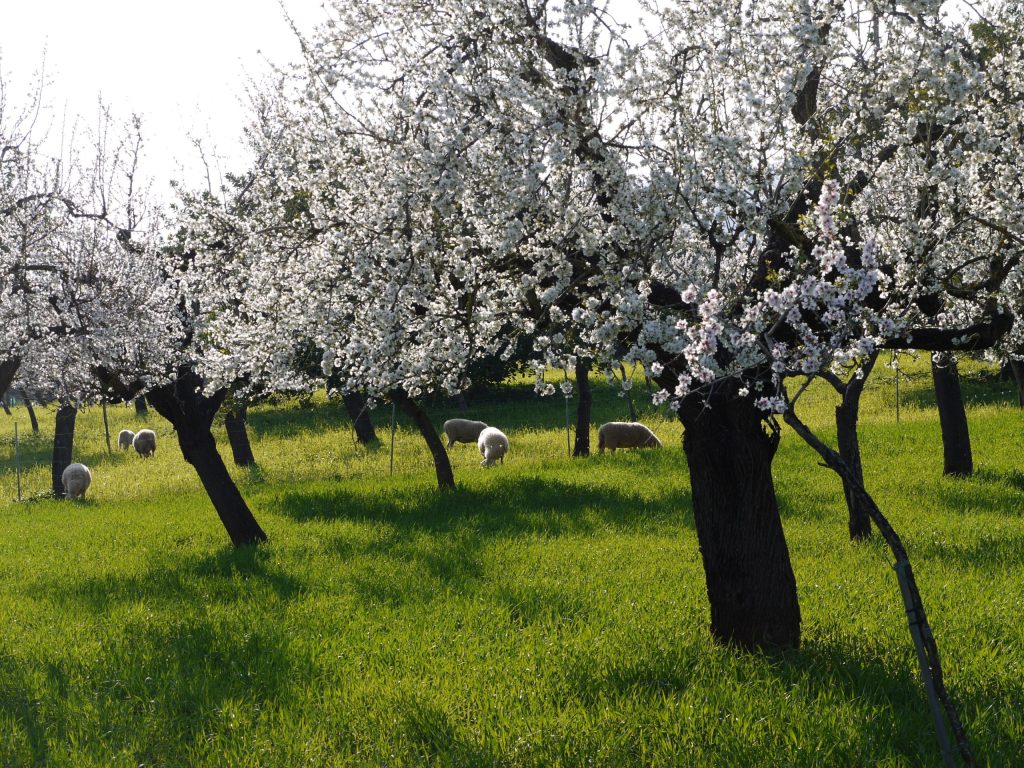
The finest almond blossom in Mallorca is found where the central plain meets the foothills of the Serra de Tramuntana. Around Alaró, orchards climb the slopes beneath the twin peaks of the Puig d’Alaró and the Puig de s’Alcadena, with sheep grazing between the trees and dry-stone walls running across the fields. The road up towards Alaró Castle winds through blossoming terraces with views across the whole plain.
Closer to Palma, the wine villages of Santa Maria del Camí, Consell, Binissalem and Sencelles sit among vineyards and almond groves, and the flat country lanes between them are easy to explore by car or bicycle. To the east, Algaida and the slopes of the Puig de Randa offer wide views over a sea of blossom, while Son Servera, near the east coast, holds the island’s best-known almond blossom fair.
In the Serra de Tramuntana, the blossom frames the old stone villages. The road from Bunyola to Orient passes through one of the most beautiful valleys on the island, and the hamlet of Galilea, high above the southwest coast, looks over terraces of almond and olive trees. Fornalutx and the Sóller valley flower later, when orange trees heavy with fruit stand beside the white almond blossom.
| Where to see almond blossom in Mallorca | Why go | From Palma |
|---|---|---|
| Santa Maria del Camí and Consell | Orchards and vineyards on the plain; easy walks | About 20 minutes by car or train |
| Alaró | Blossoming terraces under the mountains; castle road | About 30 minutes by car |
| Algaida and Puig de Randa | Wide views over the central plain | About 25 minutes by car |
| Bunyola to Orient | A beautiful mountain valley | About 40 minutes by car |
| Son Servera | The almond blossom fair; eastern orchards | About 1 hour by car |
| Fornalutx and Galilea | Late blossom in mountain villages | About 40 minutes by car |
Best Almond Blossom Views Near Palma
- The road up to Alaró Castle, through blossoming terraces.
- The country lanes between Santa Maria, Consell and Sencelles.
- The Sanctuary of Cura on the Puig de Randa, above Algaida.
- The valley road from Bunyola to Orient.
- The terraces around Galilea, high above the coast.
Almond Blossom Walks and Drives from Palma
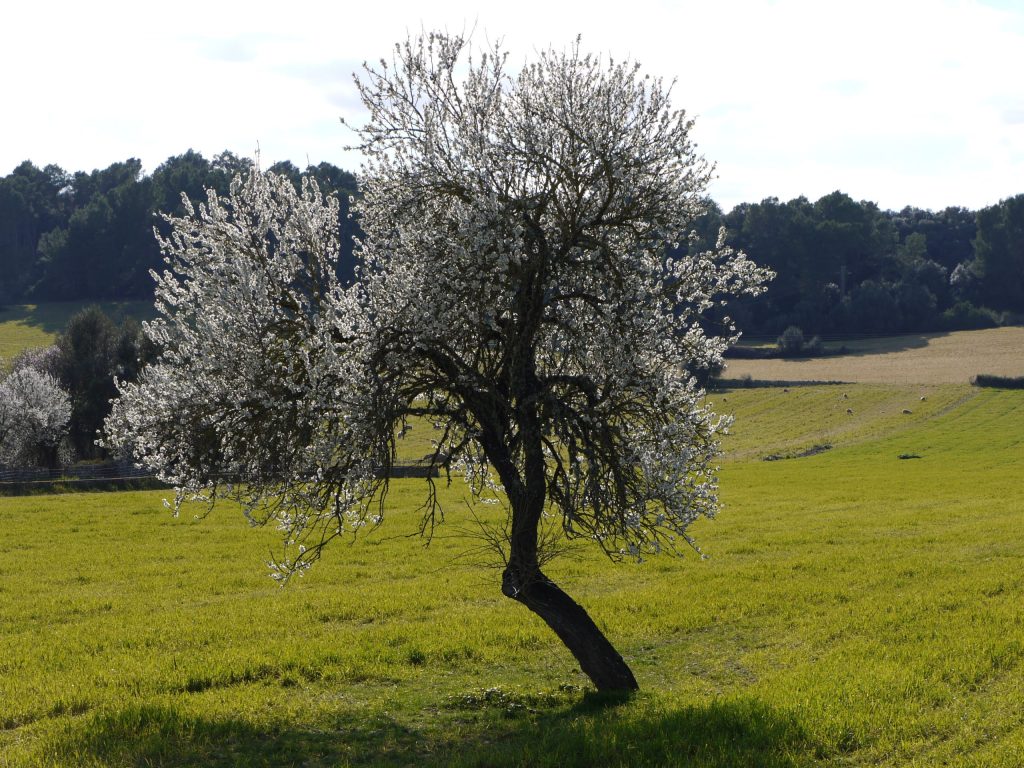
The simplest way to enjoy the almond blossom is a slow drive through the countryside, stopping wherever the orchards look best. A classic half-day loop from Palma heads to Santa Maria del Camí, then on through Consell and Alaró, returning via Bunyola, with lunch in a village celler along the way. Country roads are narrow, so take your time and pull in only where it is safe.
For walkers, the paths around Alaró are ideal. The climb from the village towards Alaró Castle passes through terraces of almond and olive trees before reaching the ruins on the summit, with a traditional refuge serving lunch near the top. Gentler walks follow the farm tracks around Santa Maria and Sencelles, where flat lanes lead between orchards and vineyards.
Mallorca’s train is a relaxing alternative to driving. The line from Palma’s Plaça d’Espanya station to Inca runs straight through almond country, with stops at Santa Maria, Consell-Alaró, Binissalem and Lloseta, all ringed by orchards in February. Pair the blossom with a visit to a Binissalem winery, and see our guide to day trips from Palma de Mallorca for more routes across the island.
| Almond blossom route from Palma | How | Time | Highlights |
|---|---|---|---|
| Santa Maria, Consell and Alaró | Car | Half a day | Orchards, vineyards and mountain views |
| Alaró Castle walk | Car and on foot | A full day | Terraces, castle ruins and lunch at the top |
| Train to Lloseta and Binissalem | Train from Plaça d’Espanya | Half a day | Orchards, wineries and village squares |
| Algaida and Puig de Randa | Car | Half a day | The Sanctuary of Cura and plain views |
| Bunyola, Orient and Alaró | Car | A full day | Mountain valleys and late blossom |
Almond Blossom Walking Tips
- Stay on public paths; most orchards are private farmland.
- Close any gates behind you and keep away from grazing animals.
- Wear walking shoes, as tracks can be muddy after rain.
- Carry water and a layer for the shade of the mountains.
- Start early for the softest light on the blossom.
Almond Blossom in the Serra de Tramuntana
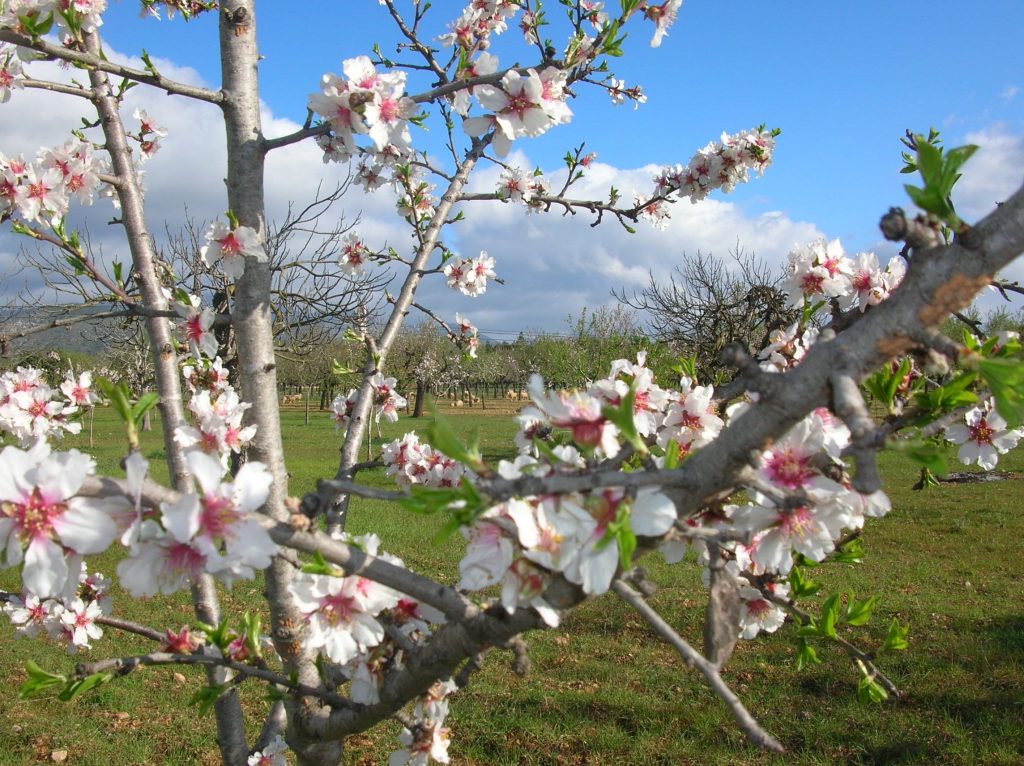
The Serra de Tramuntana, the mountain range along Mallorca’s northwest coast and a UNESCO World Heritage cultural landscape, gives the almond blossom its most dramatic setting. Along the foothills, at Lloseta, Alaró and Bunyola, orchards stretch up towards the limestone peaks, and in the high valleys the trees grow on ancient terraces built by generations of farmers.
The valley of Orient, reached by a winding road from Bunyola, is one of the island’s most beautiful in February, with a handful of stone houses surrounded by fields of blossom. Further west, Galilea and the Puigpunyent valley look over terraces running down towards the sea, while Valldemossa and Deià combine the blossom with their famous mountain villages and coastal views.
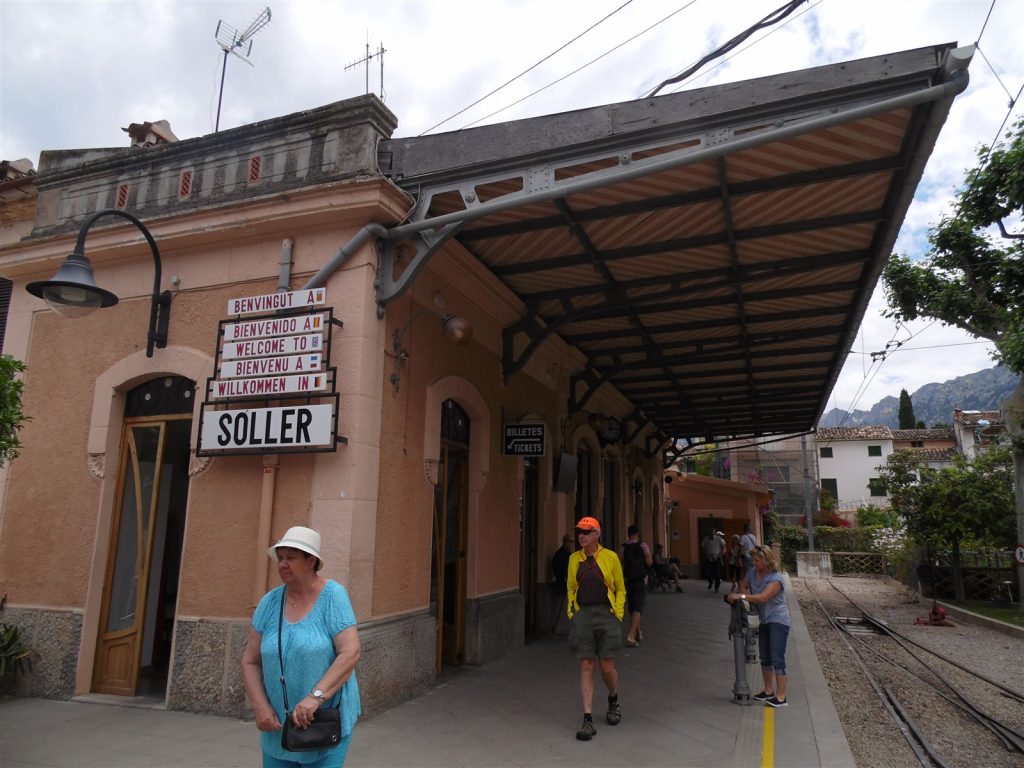
In the Sóller valley, the blossom arrives late, often at the end of February, when the orange and lemon groves are still full of fruit. The vintage train from Palma to Sóller runs all year through the mountains, making the valley an easy and memorable day out in the almond blossom season.
Tramuntana Villages in Blossom
- Orient: a tiny hamlet in a valley of almond orchards.
- Alaró: terraces under the castle and the twin peaks.
- Galilea: a hilltop village with views to the sea.
- Fornalutx: late blossom beside orange groves.
- Valldemossa: the blossom with a famous monastery village.
Why Mallorca Has So Many Almond Trees
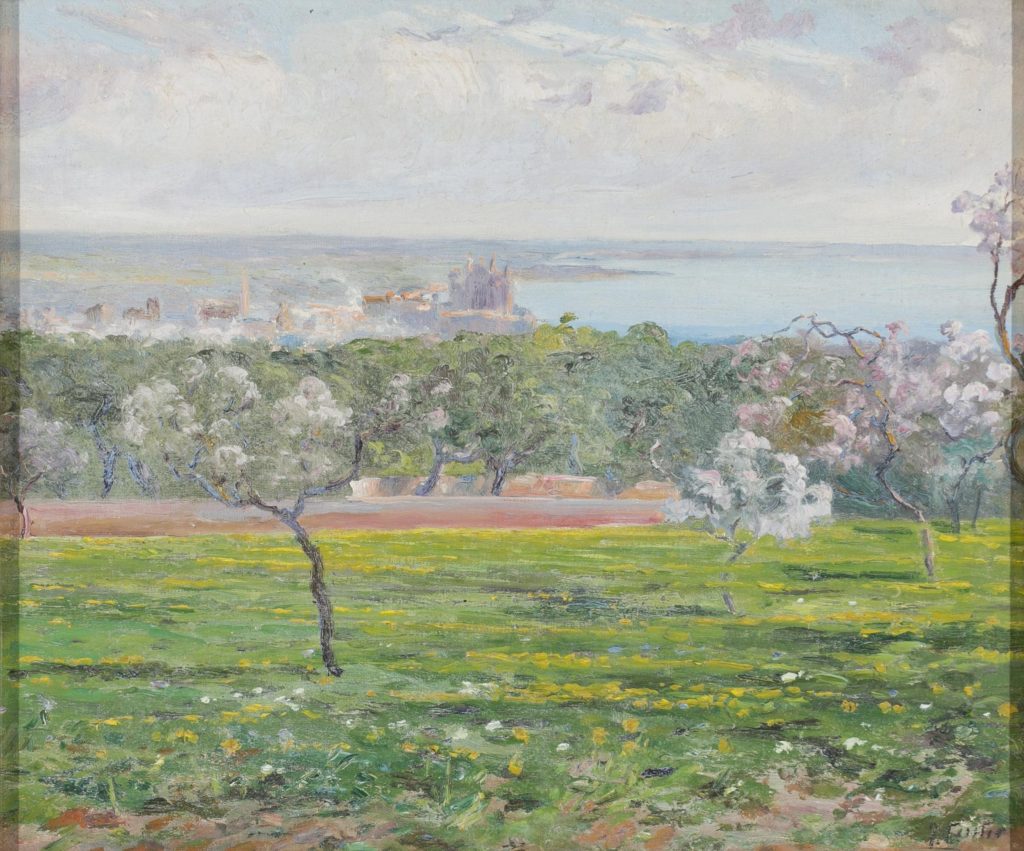
Almond trees have grown in Mallorca for centuries, but the great almond landscapes of today date from the late nineteenth century. In 1891, phylloxera, the insect that had already destroyed many of Europe’s vineyards, reached Mallorca, appearing first in the south around Algaida and Llucmajor. Within a few years it had ruined most of the island’s vines, and farmers replanted their fields with almond trees, which thrived in the dry soil and needed little water.
The almond became one of the pillars of the rural economy, and the blossom became part of the island’s identity. Mallorcan painters such as Joan Fuster Bonnin captured the white orchards with Palma and the bay beyond, and writers and travellers described the February bloom as a snowfall that never melts.
Today, around 12,000 hectares of rain-fed almond orchards still cover the island. Many trees are old, standing in fields bordered by dry-stone walls, and the almonds grown here are protected with an EU geographical indication, Ametlla de Mallorca.
| Almonds in Mallorca | Key fact |
|---|---|
| Turning point | Phylloxera reached Mallorca in 1891 and destroyed most vineyards |
| What replaced the vines | Almond trees, suited to dry soil and little water |
| Orchards today | Around 12,000 hectares of rain-fed almonds (2020) |
| Protection | Ametlla de Mallorca, an EU geographical indication |
| Harvest | Late summer, when the nuts are knocked from the trees |
Mallorca’s Almond Story
- Almonds grew on the island long before the great replanting.
- Phylloxera ruined Mallorca’s vineyards from 1891.
- Farmers turned to almonds as a hardy, dry-land crop.
- The blossom inspired Mallorcan painters and poets.
- Ametlla de Mallorca is protected as a local product.
Mallorcan Almond Food: Gató, Turrón and Almond Ice Cream
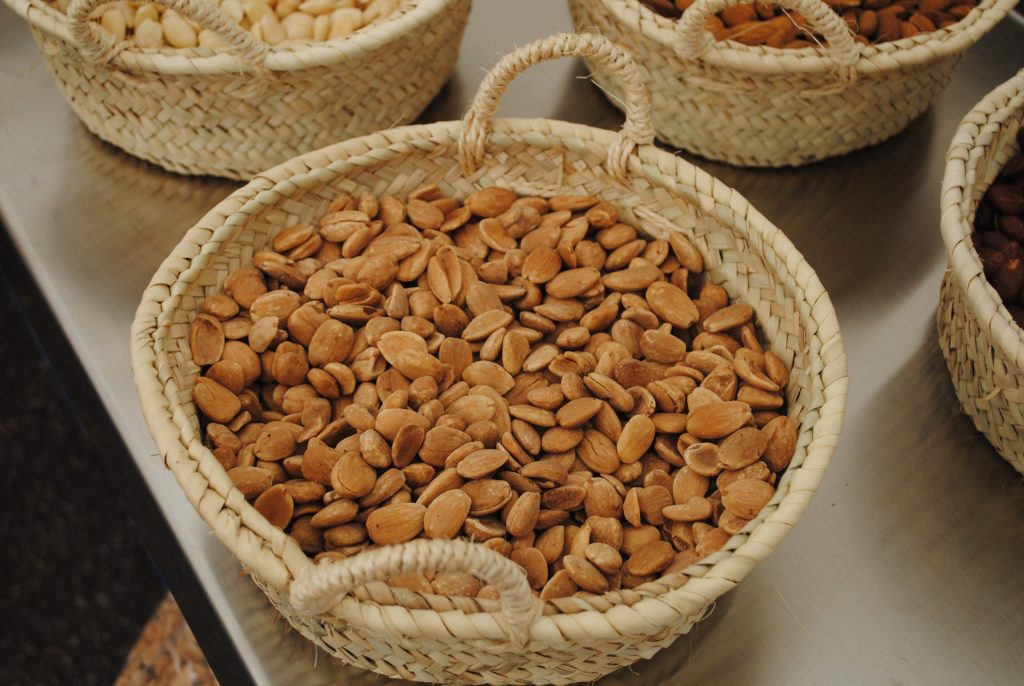
Almonds run through Mallorcan cooking, and the blossom season is the perfect time to taste them. The island’s signature almond dessert is the gató d’ametla, a light, moist almond sponge made without flour, traditionally served with a scoop of almond ice cream, gelat d’ametla. You will find it on the menu of almost every traditional restaurant in Mallorca.
Other almond specialities include ametlles torrades, toasted almonds sold in markets and village shops, almendrados, small almond biscuits, and torró, the almond nougat eaten at Christmas. Llet d’ametla, almond milk, is a refreshing traditional drink, and almonds also appear in savoury dishes, ground into sauces for meat and fish.
In Palma, the Olivar market sells Mallorcan almonds by the bag, and the bakeries of the Old Town make gató and almond biscuits every day. Our guide to the best restaurants in Palma de Mallorca lists the places that serve the best traditional desserts, and Mallorcan wines pair well with almond cake: see our guide to wine tasting in Palma.
| Mallorcan almond food | What it is | Where to try it |
|---|---|---|
| Gató d’ametla | Flourless almond sponge cake | Traditional restaurants and bakeries |
| Gelat d’ametla | Almond ice cream, served with gató | Restaurants and ice cream shops |
| Ametlles torrades | Toasted Mallorcan almonds | The Olivar market and village shops |
| Almendrados | Small almond biscuits | Old Town bakeries |
| Llet d’ametla | Traditional almond milk | Cafés and markets |
Almond Treats to Take Home
- A bag of toasted Ametlla de Mallorca almonds.
- A boxed gató d’ametla from an Old Town bakery.
- Almendrados and other almond biscuits.
- Almond oil or almond-based cosmetics from local producers.
- A bottle of Mallorcan wine to share with the gató.
Mallorca in February: Weather and Events
The weather in Mallorca in February is mild and often bright. AEMET’s averages for Palma’s harbour give a February high of about 15°C and a low of about 8°C, with around 170 hours of sunshine, and the days grow noticeably longer through the month. It is excellent weather for walking, cycling and exploring the countryside, with cool evenings ideal for long dinners in the city. For more detail, see our Palma weather guide.
February is also carnival month. Palma’s carnival parade, Sa Rua, fills the centre with floats and costumed groups on a Sunday before Lent, with Sa Rueta, the children’s parade, the day before. In 2026 Sa Rua set off from La Rambla at 17:00 with a record number of floats, and towns across the island hold their own carnival celebrations.
In Son Servera, the Fira de la Flor d’Ametller celebrates the almond blossom on a weekend during the bloom, with stalls of local produce, crafts and almond specialities. Combine the fair with a drive through the orchards of the east, and you have one of the most rewarding days out of the Mallorcan winter.
| Mallorca in February | Average or timing | What it means for your stay |
|---|---|---|
| Daytime high | About 15°C | Ideal for walking among the blossom |
| Night-time low | About 8°C | A warm layer for the evenings |
| Sunshine | About 170 hours a month | Plenty of bright days for photographs |
| Almond blossom | Peak around mid-February | The best month for the bloom |
| Sa Rua | A Sunday before Lent | Palma’s carnival parade |
| Fira de la Flor d’Ametller | A weekend in February | Almond blossom fair in Son Servera |
Five Days in Mallorca in February
- Day 1: Palma Old Town, the cathedral and dinner in La Lonja.
- Day 2: the almond blossom around Santa Maria and Alaró.
- Day 3: the vintage train to Sóller and the orange groves.
- Day 4: Algaida, the Puig de Randa and a Binissalem winery.
- Day 5: the Olivar market and gató d’ametla before you fly.
Where to Stay for the Almond Blossom: Palma as Your Base
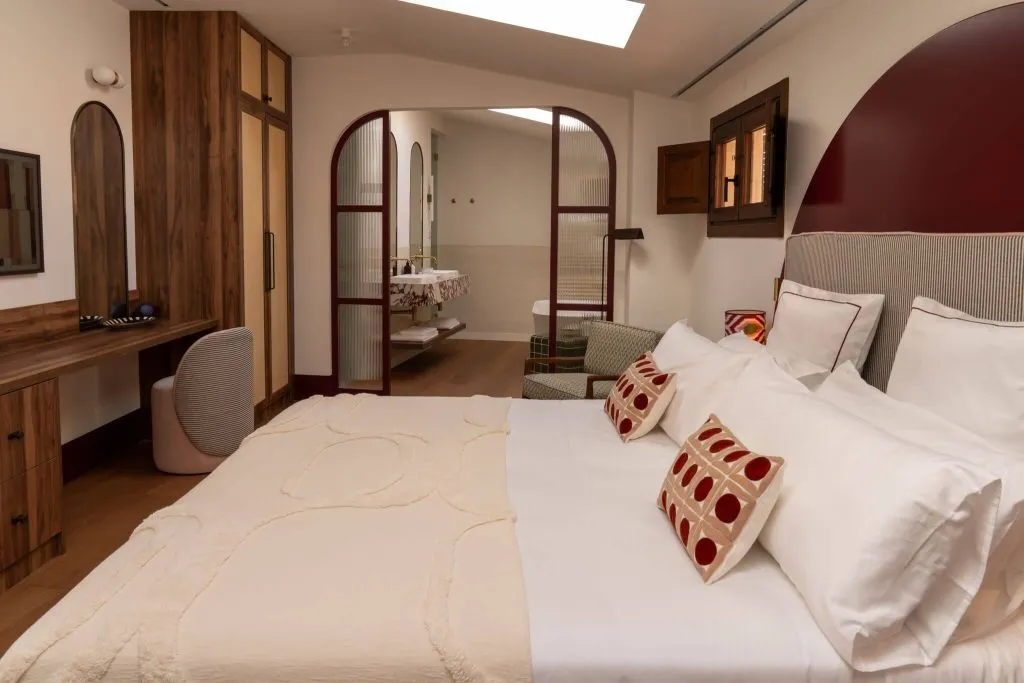
Staying in Palma gives you the best of the almond blossom season. The orchards of the central plain are a short drive or train ride away, and every evening you return to the restaurants, wine bars and lit streets of the Old Town. Rental cars are easy to collect in the city, and the train station in Plaça d’Espanya is a short walk from Casa Roca.
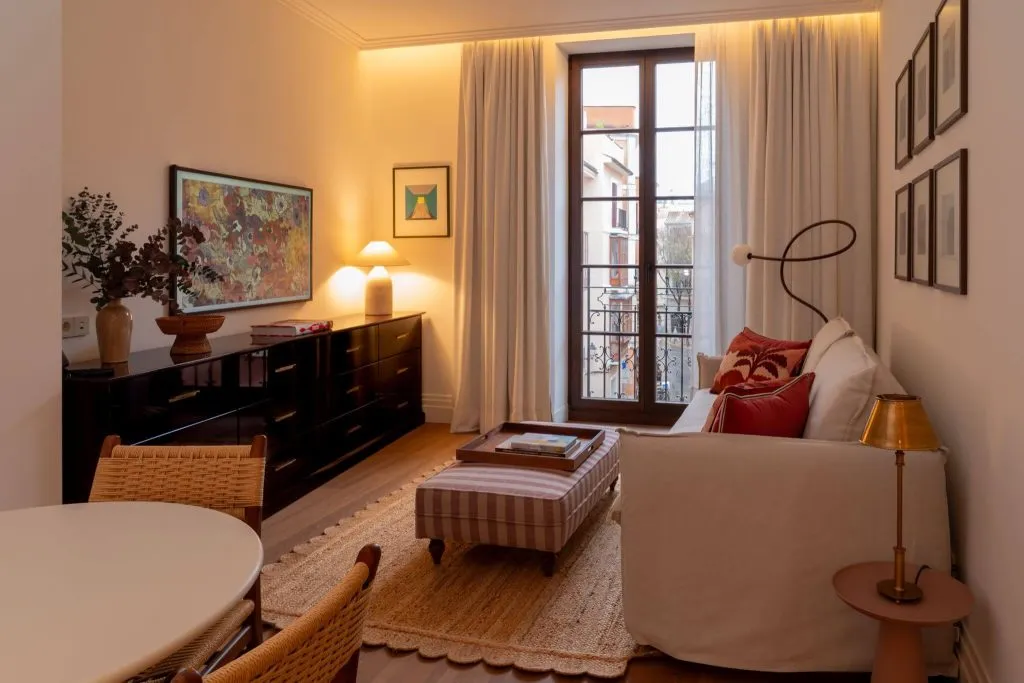
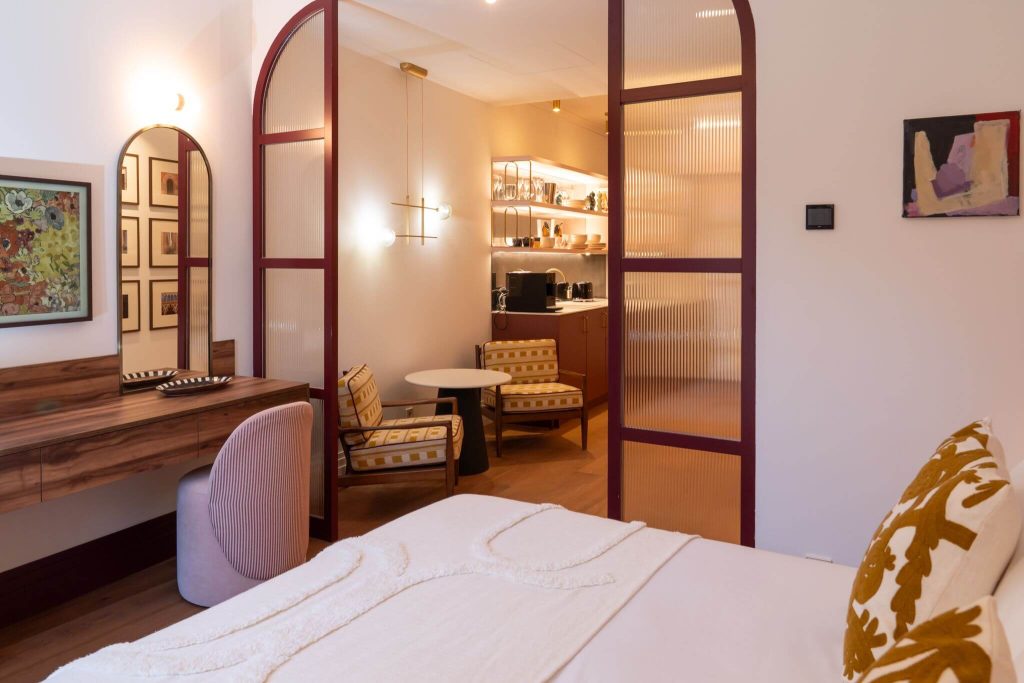
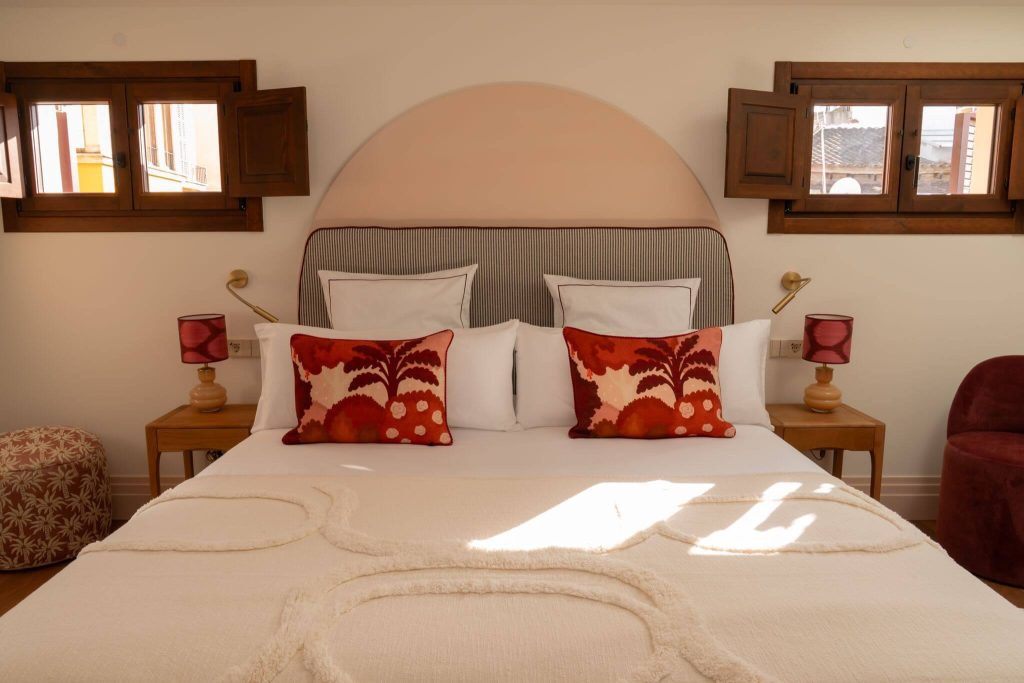
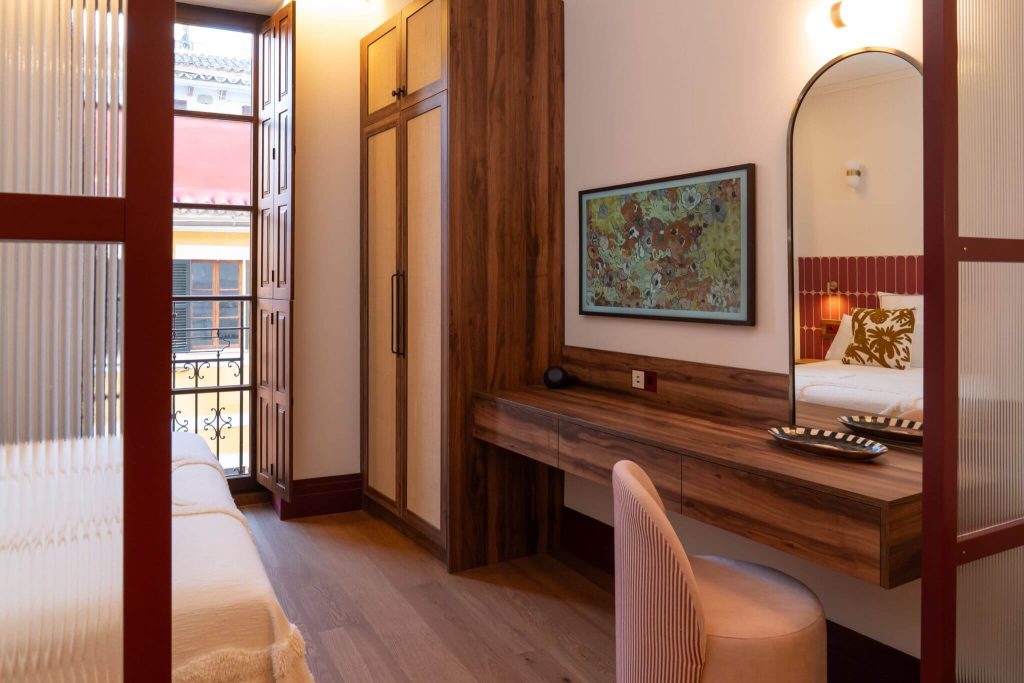
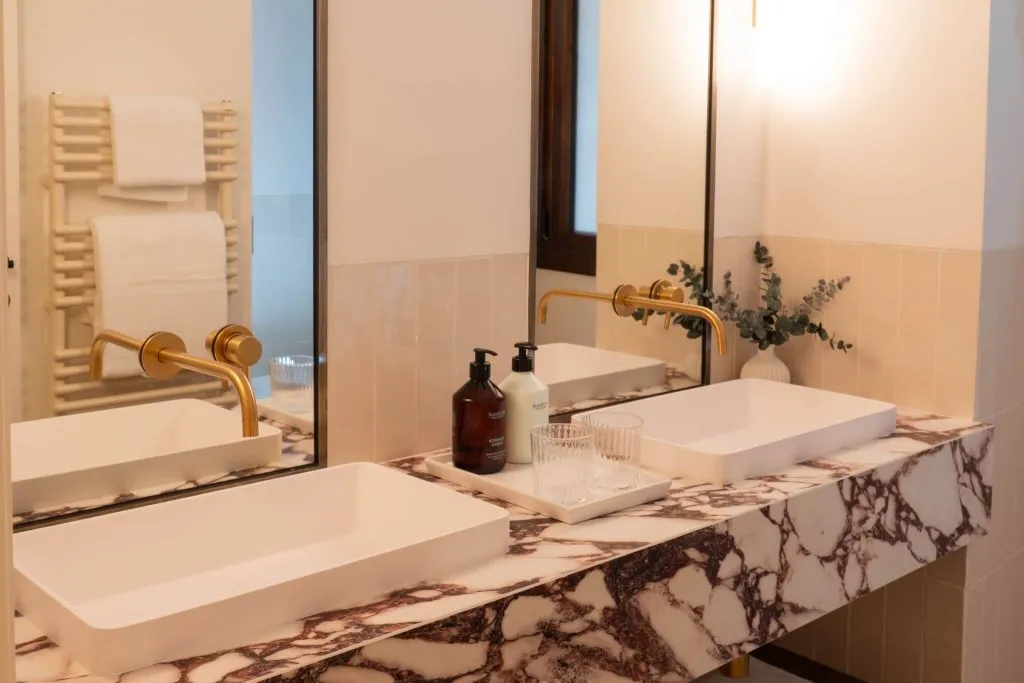
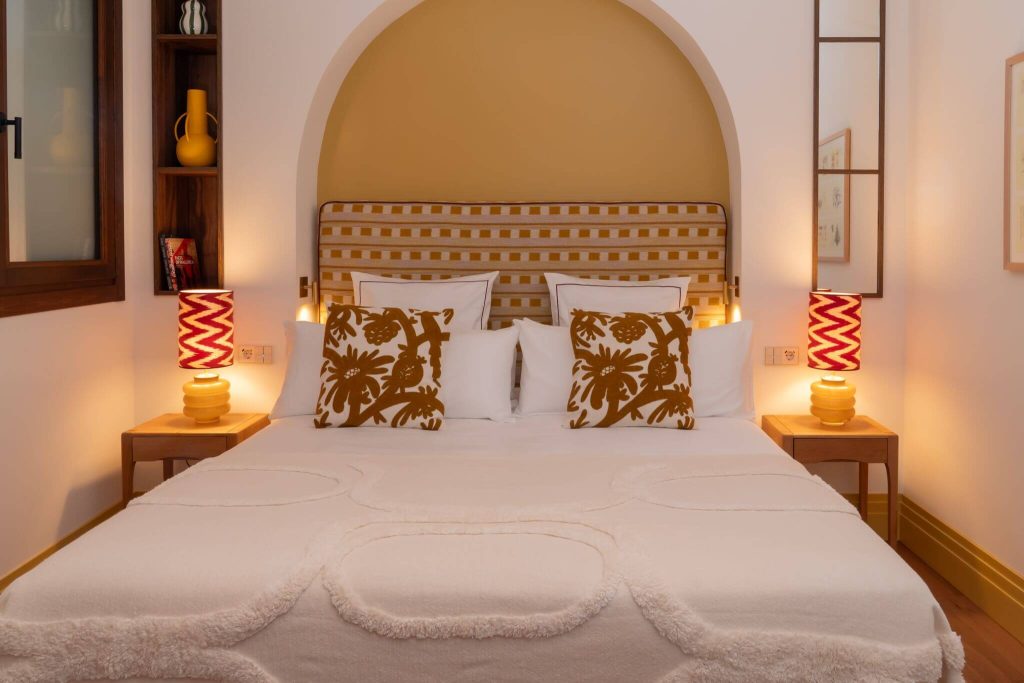
Casa Roca occupies the restored 1847 home of Francisco Roca’s paper and stationery business on Carrer dels Hostals, beside Plaça Major. Its suites and apartments in Palma Old Town suit couples, families and friends, and the three-bedroom Francisco Roca Penthouse sleeps six. After a day among the blossom, the Capítulo wine bar serves Mallorcan wines by the glass, and the rooftop terrace with its hot tub looks over the roofs of the Old Town.
Email hello@casaroca.com and our team will share the latest news on the blossom, suggest routes and help with car hire or a private driver. To compare neighbourhoods, see the best areas to stay in Palma.
“Absolutely loved staying at Casa Roca. The perfect boutique hotel right in the heart of Palma’s Old Town that’s beautifully located, stylish rooms, incredible service, a fantastic amenities, alongside exquisite wine choices! It feels like a real find and the ideal base for exploring Palma, with everything right on your doorstep.”
– Charlotte S, Tripadvisor review, October 2026
Casa Roca Gallery: A Palma Base for the Almond Blossom
Return from the orchards to a restored 1847 house in the heart of Palma Old Town.
Almond Blossom in Mallorca: Frequently Asked Questions
When Is The Almond Blossom In Mallorca?
The almond blossom in Mallorca usually runs from late January to late February or early March, with the peak around mid-February. The timing changes each year with the weather, and the first flowers appear in the warm south of the island before the central plain and the mountain valleys.
Where Is The Best Place To See Almond Blossom In Mallorca?
The best places to see almond blossom in Mallorca are the central plain and the foothills of the Serra de Tramuntana: Alaró, Santa Maria del Camí, Consell, Sencelles, Algaida, Lloseta and the Orient valley. Son Servera in the east holds an almond blossom fair.
How Long Does The Almond Blossom Last In Mallorca?
Across the island, the almond blossom in Mallorca lasts for around five to six weeks, because different areas flower at different times. Each tree flowers for about two weeks, and wind or heavy rain can shorten the bloom.
Can You See Almond Blossom From Palma?
Yes. The nearest almond orchards are about 20 to 30 minutes from Palma by car, around Santa Maria, Consell, Alaró and Algaida. The train from Plaça d’Espanya to Inca also runs through almond country, with stops at Santa Maria, Consell-Alaró, Binissalem and Lloseta.
What Is The Weather Like In Mallorca In February?
The weather in Mallorca in February is mild, with average highs of about 15°C and lows of about 8°C in Palma, and around 170 hours of sunshine in the month, according to AEMET averages. It is excellent weather for walking and exploring the countryside.
Is Mallorca Worth Visiting In February?
Yes. Mallorca in February offers the almond blossom, mild and often sunny weather, carnival celebrations and easy access to the sights. It is an ideal month for walking, cycling and a city break in Palma combined with countryside day trips.
Is There An Almond Blossom Festival In Mallorca?
Yes. Son Servera holds the Fira de la Flor d’Ametller, an almond blossom fair with local produce, crafts and almond specialities, on a weekend during the bloom. Check the town’s programme for the date each year.
Why Are There So Many Almond Trees In Mallorca?
Mallorca has so many almond trees because farmers replanted their fields with almonds after phylloxera destroyed the island’s vineyards from 1891. Almonds thrive in dry soil with little water, and around 12,000 hectares of rain-fed orchards still cover the island.
See the Almond Blossom from Casa Roca
Orchards in the morning, Palma Old Town in the evening. Suites, apartments and a three-bedroom penthouse in a restored 1847 building beside Plaça Major. Write to hello@casaroca.com or call +34 871 264 164.
Check February Availability Email Casa RocaImage credits: almond tree at Colònia de Sant Jordi by mateu mulet (CC BY 3.0); Alaró and Algaida orchards by Martin Ibert (CC BY-SA 3.0); Lloseta blossom and toasted almonds by Rotget (CC BY-SA 4.0); View of Palma with almond blossoms by Joan Fuster Bonnin (public domain); Sóller station by Antekbojar (CC0). Via Wikimedia Commons.