Where to Stay in Palma de Mallorca at a Glance
- Old Town: the best area to stay in Palma for a first visit, with the cathedral, markets and restaurants all on foot.
- La Lonja: for dinners out and late evenings by the old merchants’ exchange.
- Santa Catalina: for food markets, wine bars and neighbourhood life.
- Portixol and Cala Major: for a seaside base within reach of the city.
- Playa de Palma: for a resort beach holiday with sightseeing on the side.
Every week a guest tells us the same thing at check-out: they wish they had stayed longer in the Old Town and spent less time in taxis on their last trip. Choosing where to stay in Palma de Mallorca shapes everything else about a visit. Get it right and the city unfolds on foot: coffee in a square at nine, the cathedral by ten, lunch in a market hall, an afternoon swim, dinner two streets from your bed. There are dozens of things to do in Palma Old Town, and almost all of them sit within a twenty-minute walk of each other.
The confusion comes from the name. “Palma” means two quite different places: the historic city, a dense grid of sandstone lanes behind medieval walls, and the Bay of Palma, a fifteen-kilometre arc of coastline with resorts strung along it. They offer completely different holidays. Casa Roca sits in the first, on Carrer dels Hostals in the Old Town, so the walking times we quote are measured from a real front door rather than estimated from a map. Seven areas are worth considering, each with its own character, and the hotels we recommend in each come from years of answering the same question for friends and guests.
Best Areas to Stay in Palma de Mallorca Compared
Palma is a walking city with a driving problem. The historic centre is largely pedestrianised or too narrow for comfort, parking inside the old walls is scarce and expensive, and the one-way system defeats most visitors on the first attempt. That means the value of a hotel here is measured in minutes on foot rather than in stars. The table compares the seven areas side by side, with walking times from Carrer dels Hostals and a price guide for a double room in high season.
| Area of Palma | Best for | Walk to cathedral | Beach | Evenings | Price guide |
|---|---|---|---|---|---|
| Old Town | First visits, culture, walking | 5–10 min | 25 min walk | Excellent | €€–€€€€ |
| La Lonja | Dining, bars, late evenings | 5 min | 20 min walk | Excellent | €€–€€€ |
| Santa Catalina | Food markets, local life | 15–20 min | 25 min walk | Very good | €€–€€€ |
| Paseo Marítimo | Marina views, clubs | 15–25 min | 15 min walk | Good, late | €€–€€€€ |
| Portixol | Seaside, brunch, cycling | 30 min walk | On the doorstep | Limited | €€–€€€ |
| Cala Major | Beach hotels near the city | 15 min bus | On the doorstep | Limited | €–€€€ |
| Playa de Palma | Resort holidays | 25 min bus | On the doorstep | Lively, seasonal | €–€€ |
Map of the Best Areas to Stay in Palma
The map is centred on Casa Roca. The Old Town spreads out around it, La Lonja lies between the cathedral and the marina, and Santa Catalina sits west across the old riverbed. The Paseo Marítimo runs along the waterfront to the west, Portixol is east along the seafront, Cala Major is past the port to the west, and Playa de Palma stretches east beyond the airport.
The Best Areas to Stay in Palma de Mallorca, With Hotels
The areas run from the most central outward. The first three are inside or beside the historic city, and the last four trade walking distance for sea air. Each one comes with the hotels we recommend to friends who ask, whether or not they stay with us.
1. Palma Old Town: The Best Place to Stay in Palma for First-Time Visitors
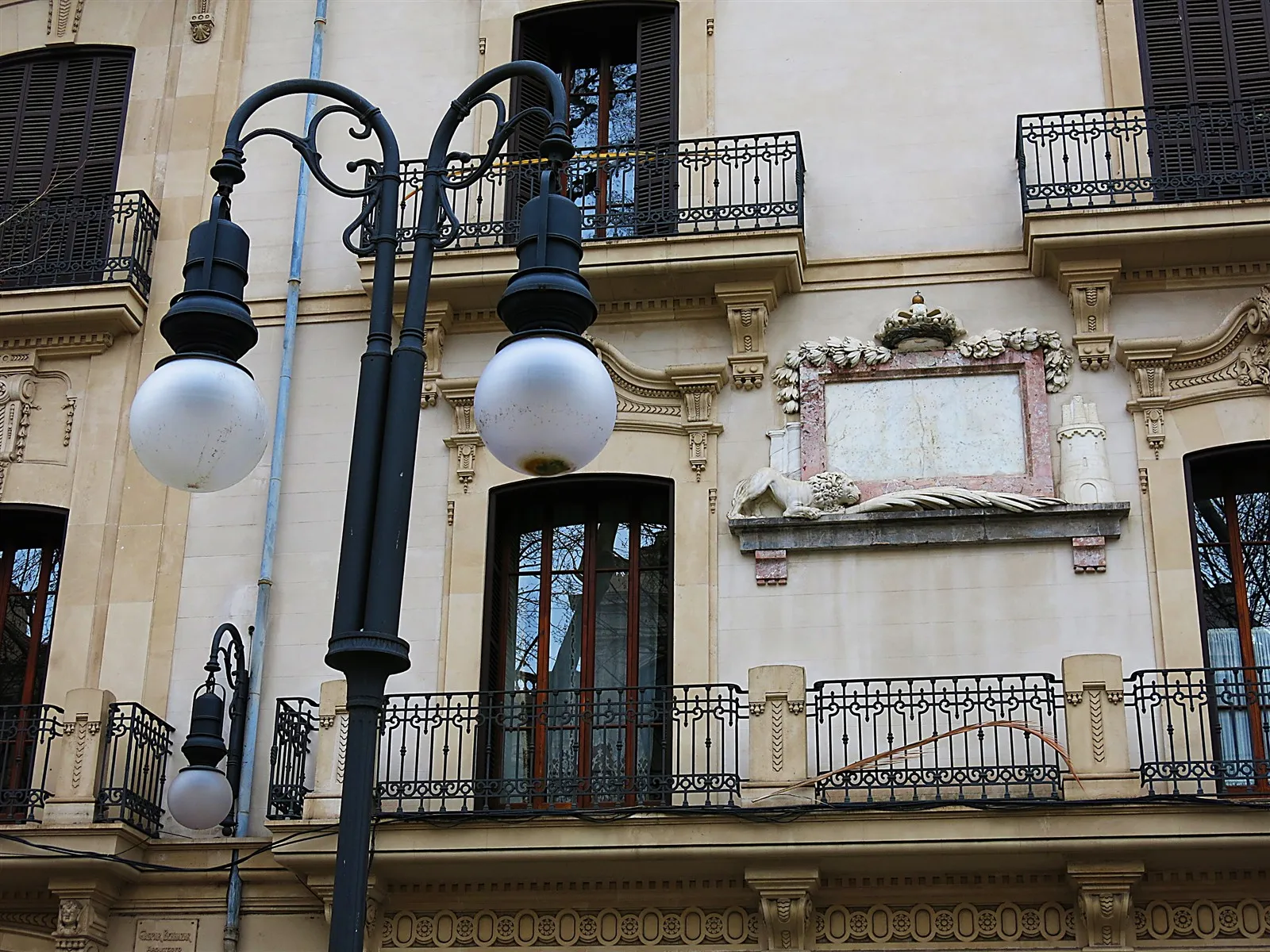
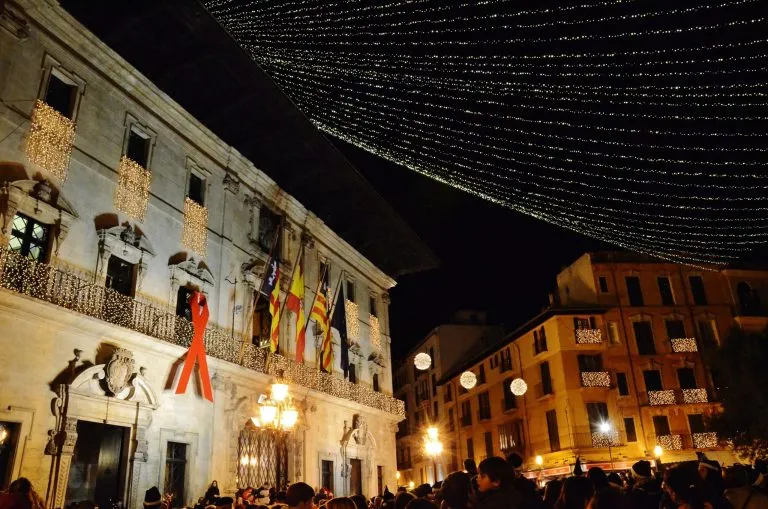
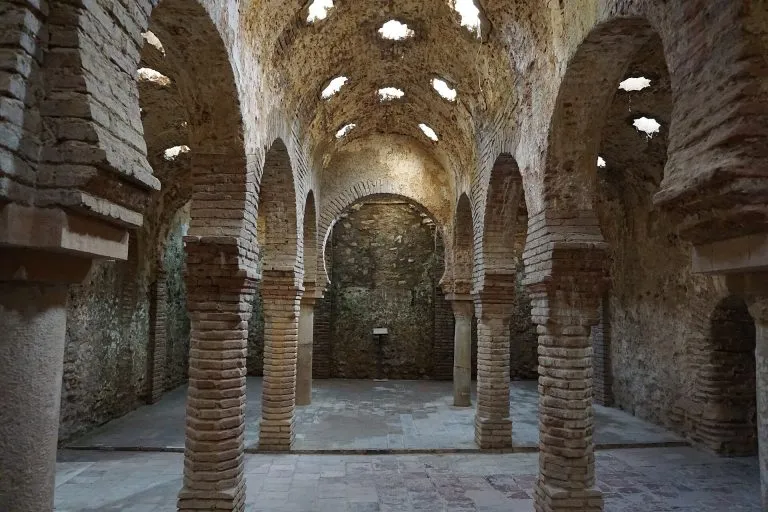
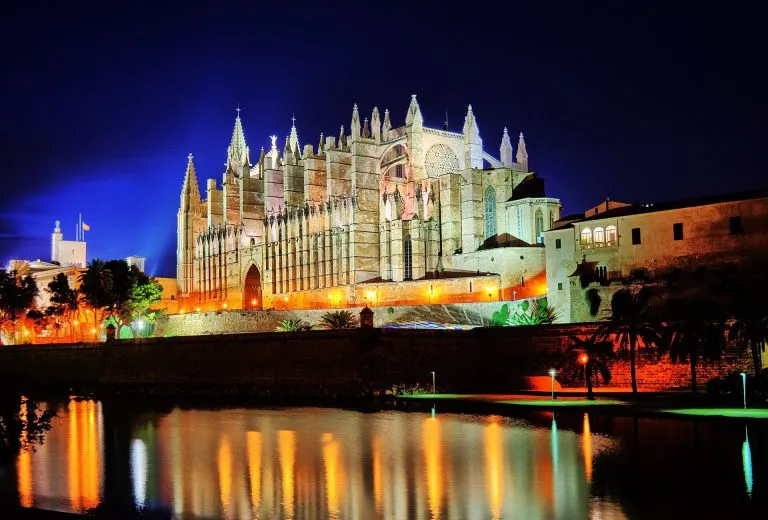
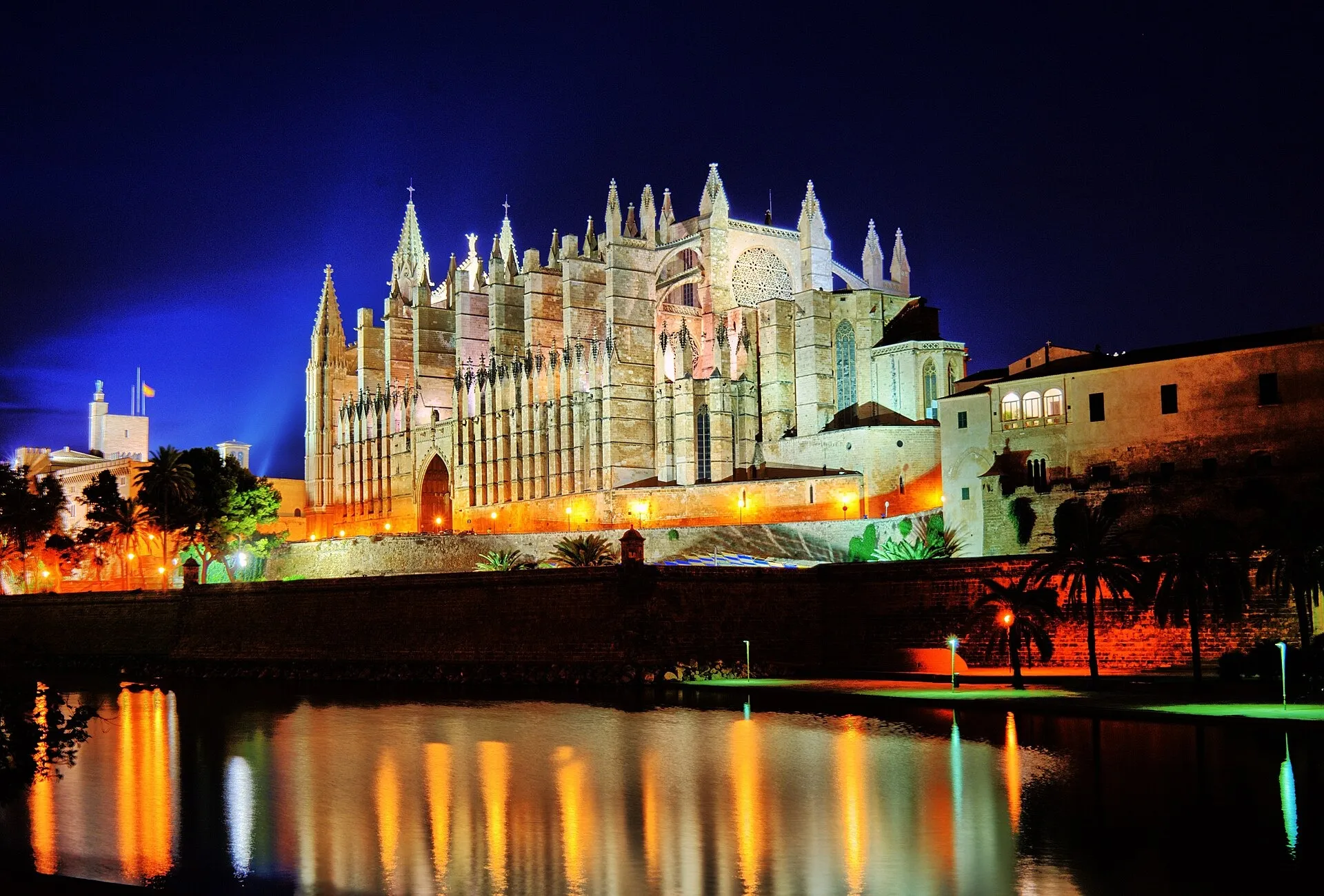
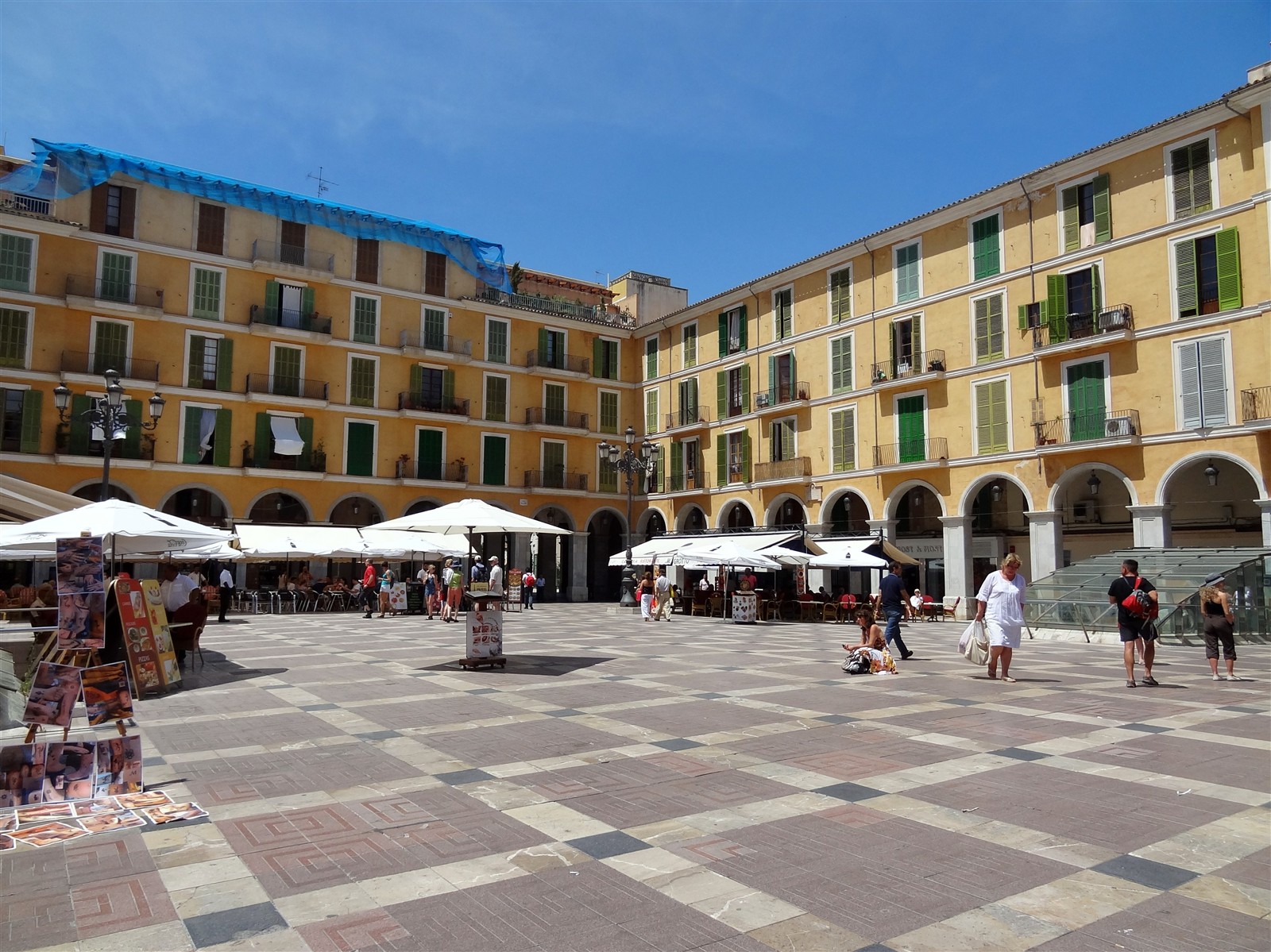
The Old Town, or Casco Antiguo, is the sandstone maze behind the medieval walls, running from the cathedral up to Plaça Major and out towards the Olivar market. It is the reason people fall for Palma. The streets stay shaded through the afternoon, courtyards open unexpectedly off blank facades, and the whole quarter is small enough that getting lost is a pleasure. Staying here puts the cathedral, the Almudaina palace, the Arab Baths, Plaça Major, the Olivar market and several hundred restaurants within a ten-minute walk.
It also means you see the city at the hours that matter. The Old Town at eight in the morning, before the day visitors and the cruise groups arrive, is a different place from the Old Town at noon, and you only see it if you sleep there. The two things to check are noise and parking. Sound carries between stone buildings, so a room over a busy lane can be lively until late, and most Old Town hotels have no garage. If you are hiring a car, confirm the arrangement before you book.
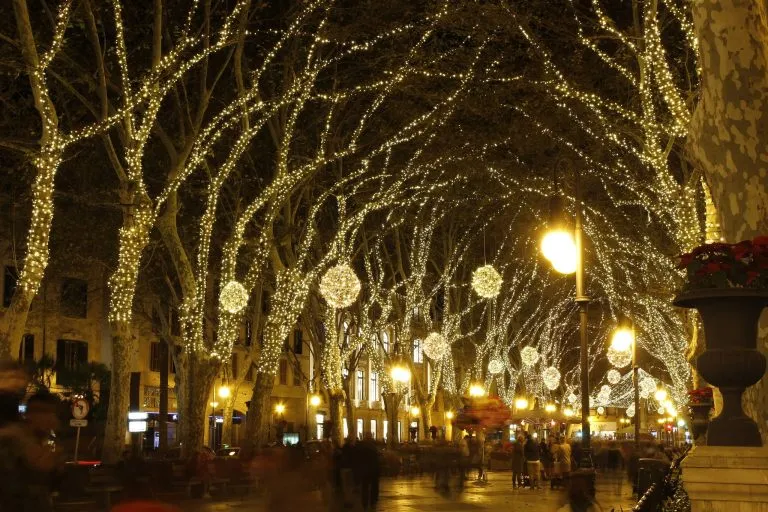
🌿 Insider Tip: The Old Town is not one uniform area. The streets between the cathedral and Carrer dels Hostals are more residential and peaceful at night, while the area immediately around Plaça Major is busier and more commercial. Five minutes on a map is a large difference in atmosphere, so check the exact street before booking.
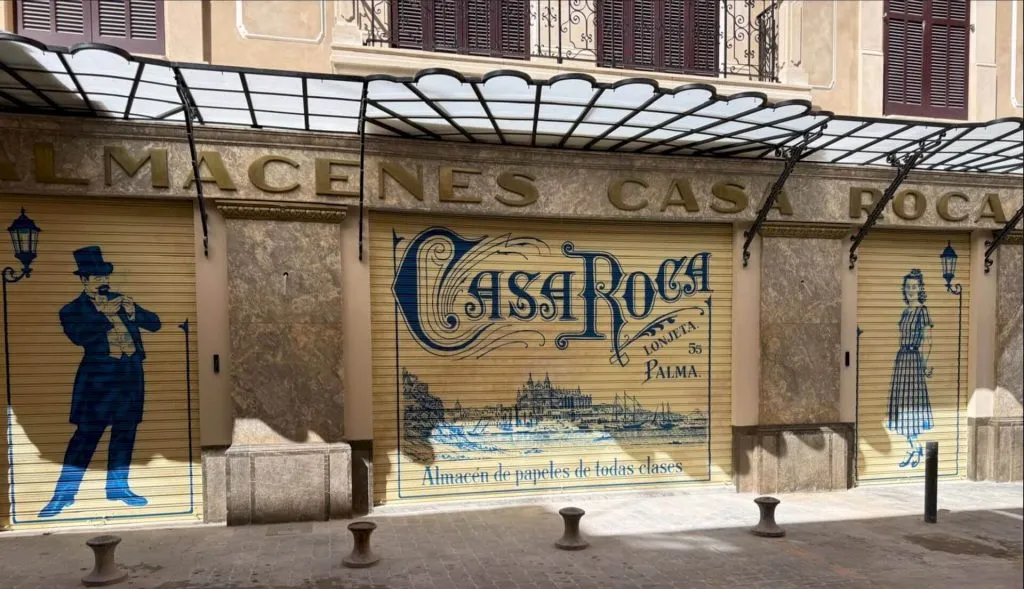
Where We Recommend in Palma Old Town
Casa Roca, Carrer dels Hostals
The 1847 paper and stationery house of Francisco Roca, restored into suites, one- and two-bedroom apartments and the three-bedroom Francisco Roca Penthouse. Five minutes from La Seu, four from the Olivar market, with breakfast and the Capitulo wine bar on the ground floor and a rooftop terrace upstairs.
Book DirectThe Old Town has the best choice of small hotels in Palma, most of them converted palaces and townhouses with fewer than forty rooms. Beyond Casa Roca, the ones we recommend are Sant Francesc Hotel Singular, a 42-room nineteenth-century mansion on Plaça Sant Francesc with a rooftop pool; Can Cera, a fourteen-room palace with a courtyard, for adults aged fourteen and over; Glòria de Sant Jaume, fourteen rooms in a sixteenth-century house with an underground spa; and Hotel Basilica, a 38-room four-star opened in 2019. All are within a ten-minute walk of the cathedral.
2. La Lonja: The Best Area to Stay in Palma for Restaurants and Evenings
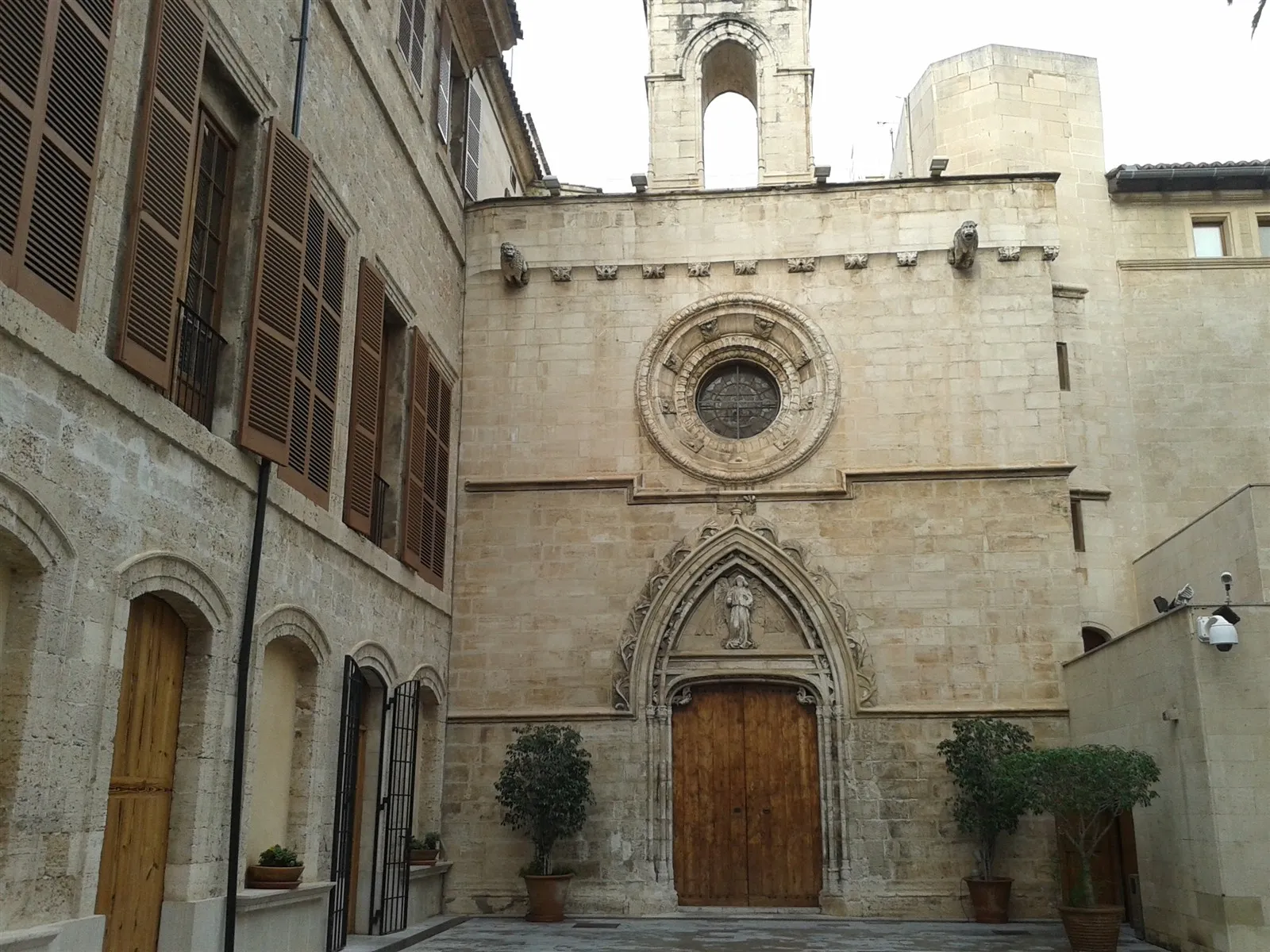
La Lonja sits at the seaward edge of the Old Town, between the cathedral and the marina, and takes its name from the fifteenth-century merchants’ exchange at its heart. It is part of the historic centre but has its own character: lower, older buildings, more bars per square metre, and an evening crowd that arrives around nine and stays. The concentration of restaurants around Carrer Apuntadors is the densest in the city, from tapas counters to serious cooking, and the best restaurants in Palma de Mallorca include several within a few streets of the Llotja.
What makes La Lonja good at eight in the evening makes it loud at one in the morning, especially at weekends in summer. It suits couples and groups who intend to be out late and suits young families less. For the location without the volume, stay a few streets inland and walk down. Hotels to consider here include Can Alomar, a sixteen-room adults-only house on the Passeig del Born, and the townhouse hotels around Carrer Apuntadors.
3. Santa Catalina: The Best Area to Stay in Palma for Food and Local Life
Santa Catalina is a fifteen to twenty-minute walk west of the Old Town, across the old riverbed. It began as a fishermen’s quarter and is now the part of Palma that residents say has the best food. The covered market is the anchor, surrounded by a grid of low houses that have filled with restaurants, wine bars and coffee shops over the past decade, and the neighbourhood still works as a neighbourhood: people do their shopping here, and the bars have regulars rather than queues.
For a second or third visit, when the cathedral is already ticked off, it is a more interesting place to wake up than the historic centre. The evening scene is strong without being rowdy, and the bars and nightlife in Palma split between here and the Old Town. The architecture is ordinary, and hotel choice is thin and leans towards apartments. Hostal Cuba, a restored modernist building on Carrer de Sant Magí with a rooftop bar, is the best-known hotel in the area.
4. Paseo Marítimo: Where to Stay in Palma for the Marina
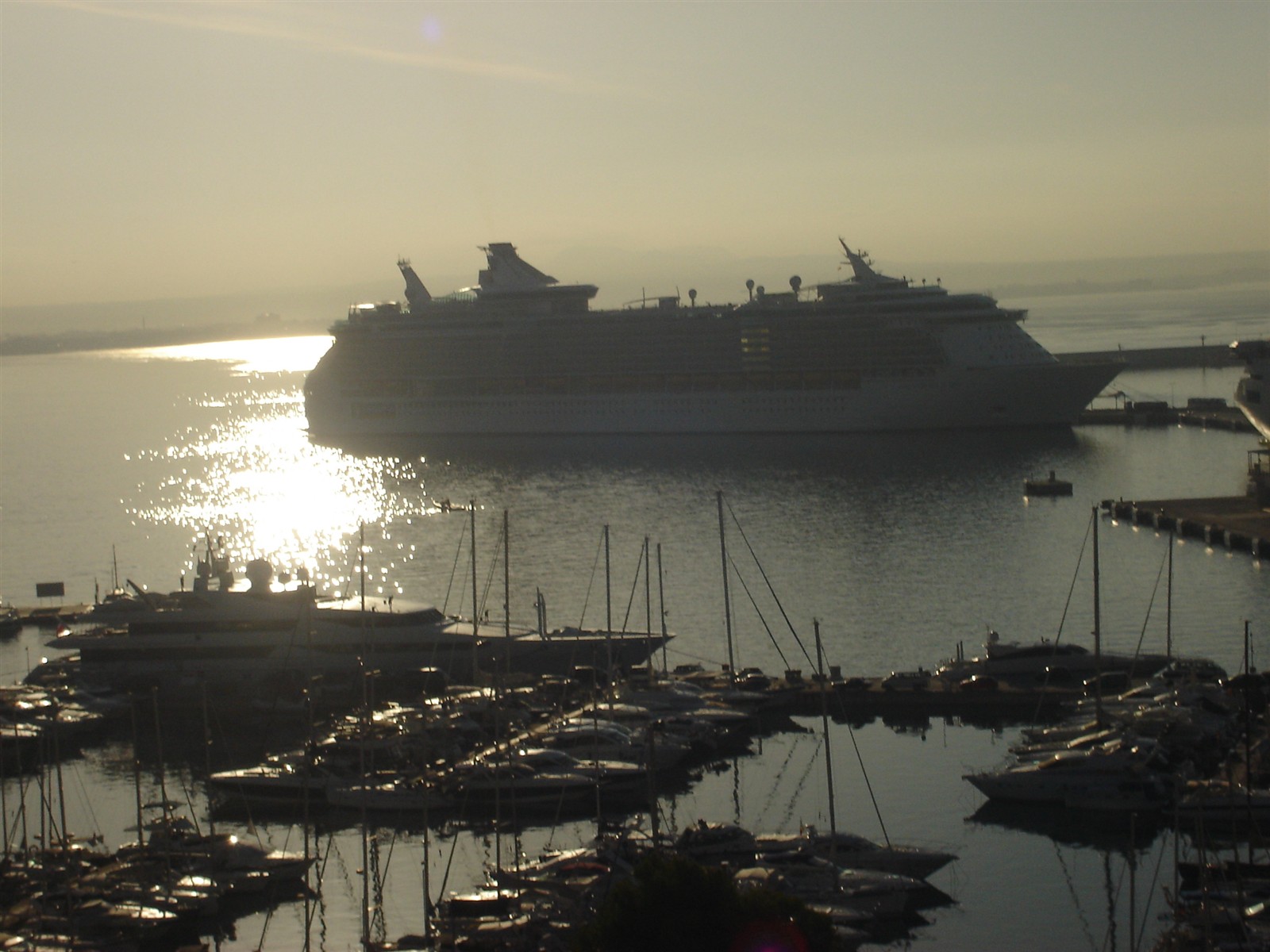
The Paseo Marítimo is the waterfront road running west from the cathedral along the marina. It is where the largest yachts moor, where several of the bigger hotels sit, and where most of Palma’s late-night clubs are found. The sea is on one side and a busy road on the other, and that is the defining fact about staying here.
It works for travellers who want a sea view, a lift and a large reception, none of which is guaranteed in a converted Old Town townhouse. The promenade is good for a morning walk or a run and links Santa Catalina, the marina and the cathedral in one flat line. Rooms facing the water are worth the supplement; rooms facing the road are not. The walk into the Old Town is fifteen to twenty-five minutes depending on where you are along the strip.
5. Portixol: The Best Place to Stay in Palma by the Sea
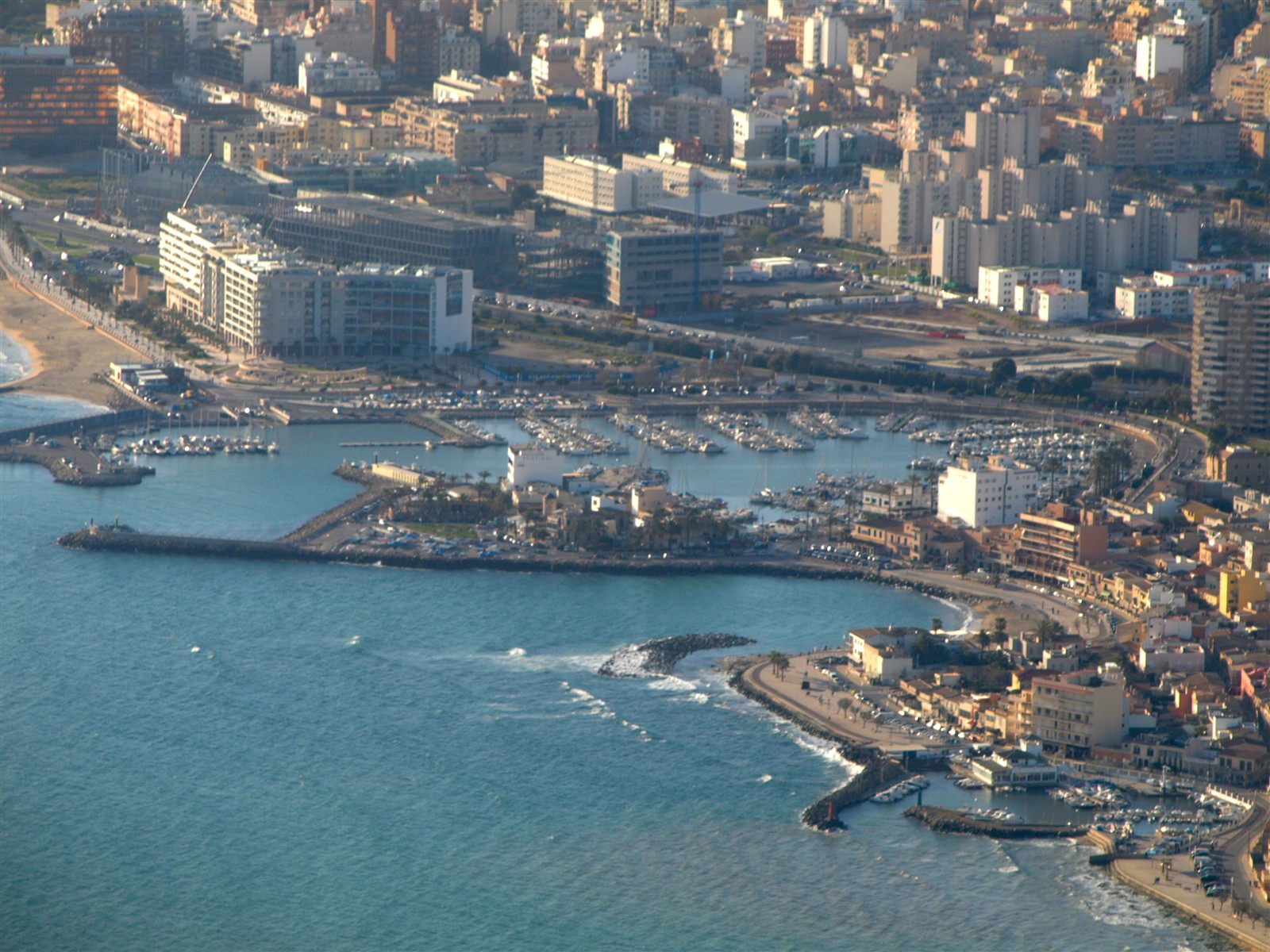
Portixol is a former fishing village on the eastern edge of the city, about thirty minutes on foot from the Old Town along a flat seafront promenade, or ten minutes by taxi. It has a small harbour, a row of low whitewashed houses, a beach you can swim from, and a strip of restaurants that are busiest at brunch. The cycle path runs straight into the centre, and the atmosphere is residential rather than touristic.
It is the best compromise for anyone who wants sea air without a resort, and families like it for the calm water and slower pace. What you give up is spontaneity, because deciding at ten in the evening to see the cathedral is not a plan from Portixol. Hotel Portixol, the design hotel on the harbour with a pool facing the sea, is the address most people know; the rest of the area is mainly apartments.
6. Cala Major: Where to Stay in Palma for a Beach Hotel
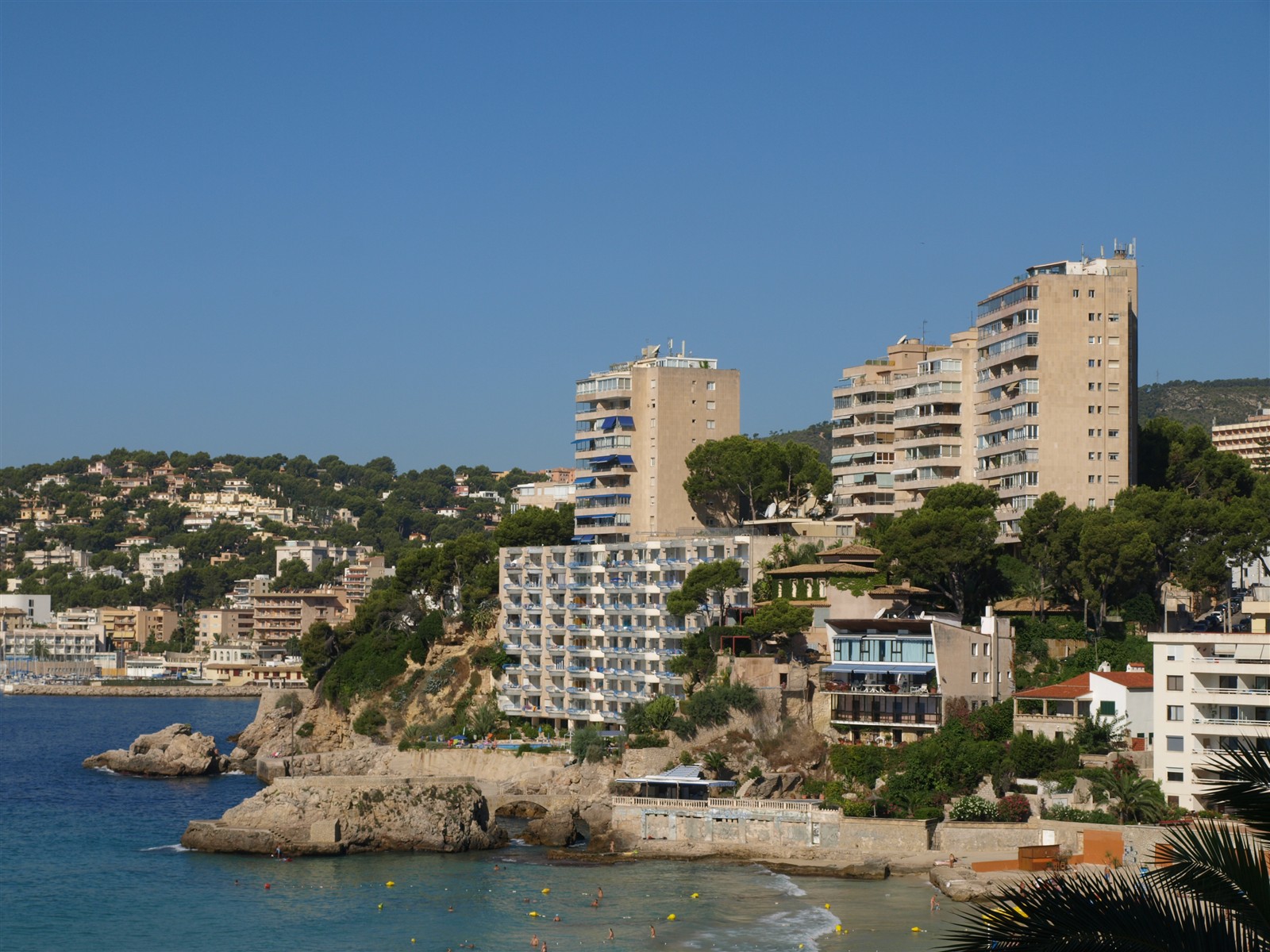
Cala Major is a sandy cove about four kilometres west of the centre, fifteen minutes by bus. It was one of Mallorca’s first resorts, which shows in the mix of 1970s apartment blocks and a handful of grand older hotels stacked up the slope behind a compact beach. The Joan Miró studio and foundation sit on the hill above it.
It suits travellers who want a beach hotel with a pool but not a resort strip, and it is the closest thing to a beach holiday you can have while still being in Palma. The beach is small and full in high season, and some hotels and restaurants close in winter. Nixe Palace, a five-star hotel set directly on the beach, is the best known; plan on taxis if you want to eat in the city most nights.
7. Playa de Palma: Where to Stay in Palma for a Resort Holiday
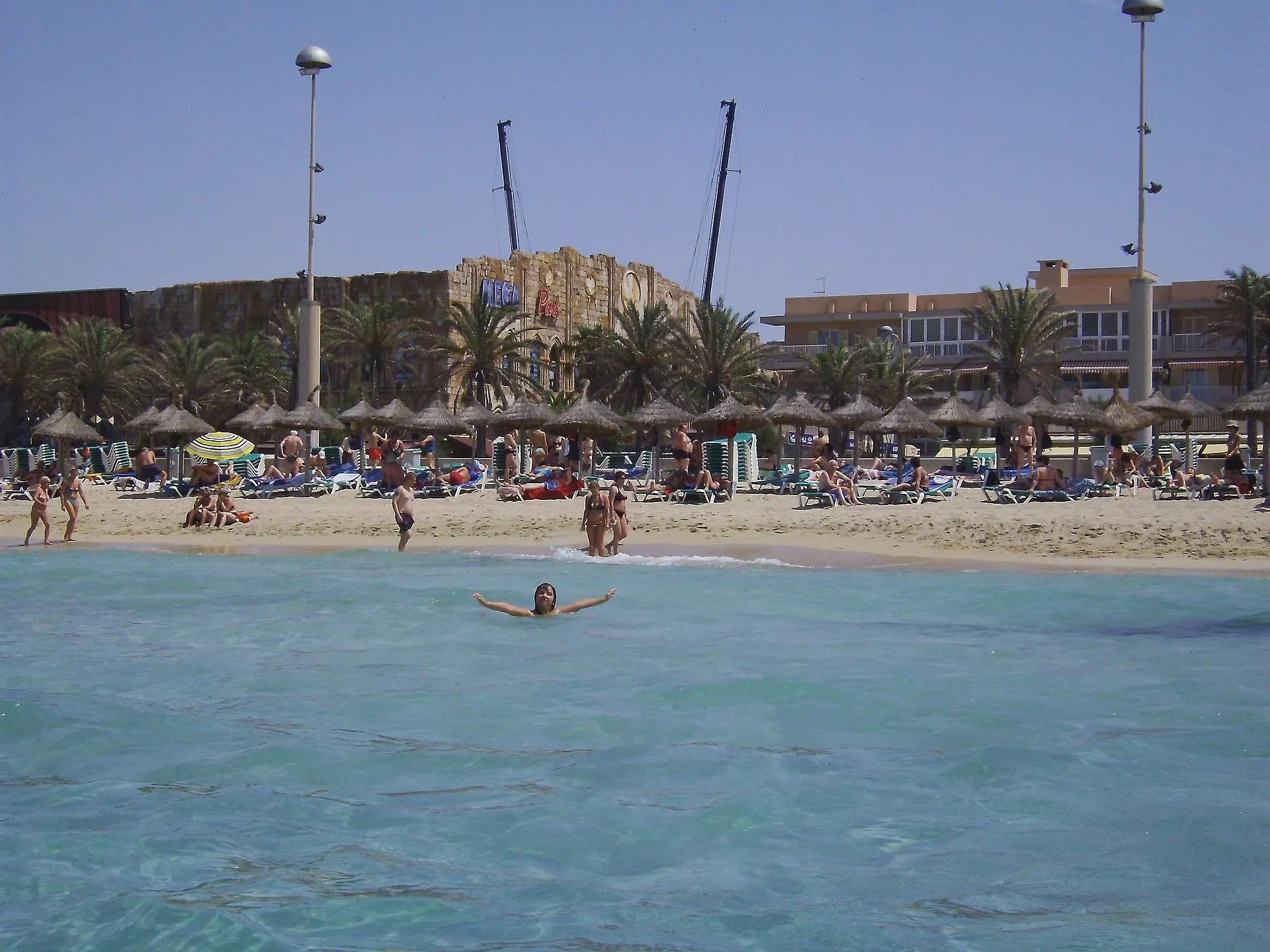
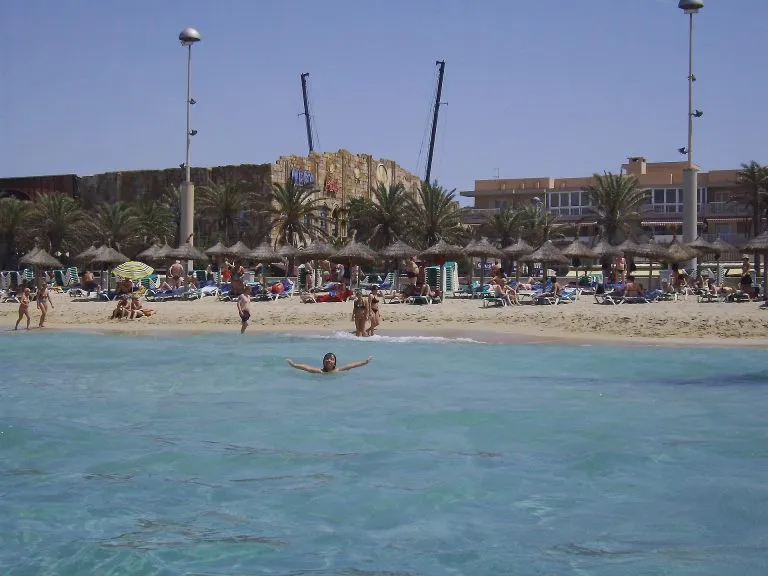
Playa de Palma is the long sweep of sand running east from near the airport towards S’Arenal, about twenty-five minutes from the centre by bus. It holds the largest concentration of hotel beds in Mallorca, most of them large resort hotels, and prices are the most competitive on this list. The beach is excellent and the water stays shallow a long way out.
If the trip is a beach holiday with a day or two of sightseeing, it is a sensible choice, and families get more space for their money. It is not really a city break, though. In high season the character is lively and heavily international, and anyone whose reason for coming is Palma itself will spend the week travelling in to the place they meant to stay.
Best Boutique Hotels in Palma Old Town Compared
Most visitors who choose the Old Town choose a small hotel, because that is what the historic centre offers. Protected buildings cannot be extended, so the good properties are converted palaces and townhouses, and they fill months ahead in summer. The table compares the boutique hotels we recommend most often.
| Hotel in Palma Old Town | Building | Rooms | Good to know | Price guide |
|---|---|---|---|---|
| Casa Roca | 1847 paper and stationery house | Suites, apartments, penthouse | Wine bar, rooftop terrace, kitchenettes, family apartments | Check rates |
| Sant Francesc Hotel Singular | 19th-century mansion | 42 | Rooftop pool | €€€€ |
| Can Cera | Historic Mallorcan palace | 14 | Adults aged 14 and over | €€€ |
| Glòria de Sant Jaume | 16th-century house | 14 | Underground spa | €€€ |
| Can Alomar | Townhouse on the Born | 16 | Adults aged 14 and over | €€€€ |
| Hotel Basilica | Restored townhouse | 38 | Four-star, opened 2019 | €€–€€€ |
Casa Roca differs from the others in one practical way: most of its rooms are apartments and suites with kitchenettes and living space, so it suits families and longer stays as well as couples. The three-bedroom penthouse sleeps six, which is rare inside the old walls.
Where to Stay in Palma for Couples, Families and Nightlife
The decision usually comes down to one question: is the city the point of the trip, or is the beach? For couples, the Old Town and La Lonja give you dinner on foot and a walk home through lit streets, and Santa Catalina adds wine bars and markets. For families, the Old Town works if you choose an apartment with space to spread out, and Portixol works if a daily swim matters more than sightseeing. For nightlife, La Lonja and the Paseo Marítimo keep going latest.
Match the Area of Palma to Your Trip
- First time in Palma: the Old Town. Nothing else gives you the city as completely.
- Couples, food and wine: the Old Town, La Lonja or Santa Catalina.
- Families: an Old Town apartment, or Portixol for the beach.
- Nightlife: La Lonja, with the Paseo Marítimo for clubs.
- Beach hotel with a pool, city still close: Cala Major.
- Resort beach holiday: Playa de Palma.
- Before or after a cruise: the Old Town or La Lonja.
The evening is the practical test. Palma eats late, and the good restaurants fill from nine. If you sleep in the Old Town or La Lonja you finish dinner and walk five minutes home. From Playa de Palma you are taking a taxi each way, which adds twenty to thirty euros to every night out and changes how often you go out at all.
Tips for Choosing Where to Stay in Palma de Mallorca
Book earlier than you think for June to September. Palma has far fewer rooms inside the historic centre than its visitor numbers suggest, and the good Old Town hotels are small. From November to March rates fall, the light is soft and the city belongs to the people who live in it, and the Palma weather month by month shows what to expect in each season.
Think twice about a car. Palma Old Town is a restricted traffic zone, the city is walkable end to end in about twenty minutes, and interurban buses and trains across Mallorca are free in 2026 with an Intermodal Card. The best day trips from Palma all start from the Estáció Intermodal, ten minutes on foot from Casa Roca.
Finally, read the room description as closely as the area description. In the Old Town, whether a room faces a courtyard or a street matters more than which quarter it sits in, and a calm interior room three minutes from the cathedral beats a busier one two minutes closer every time.
“Nestled in the narrow streets of Palma’s old town, this boutique hotel is a real find. An historical building, beautifully decorated, it has an understated elegance about it. Great location, not far from seafront for a swim or the famous cathedral, and easy to return to hotel to relax… Just a stunning hotel, we’ll be back!”
– Lisa Feldmann, Google review, October 2026
Casa Roca Gallery: Staying in Palma Old Town
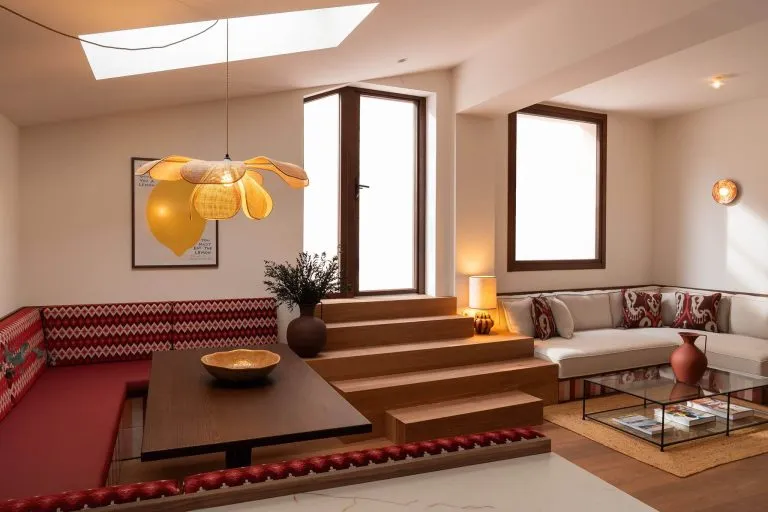
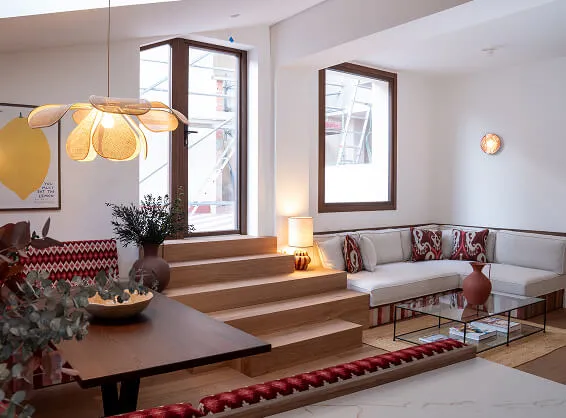
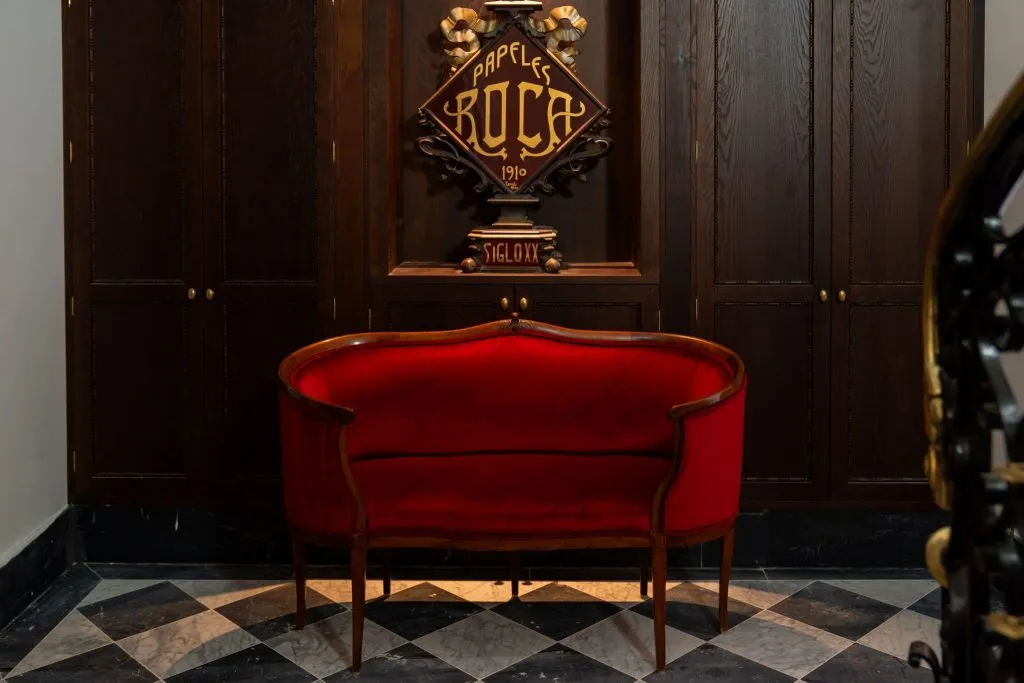
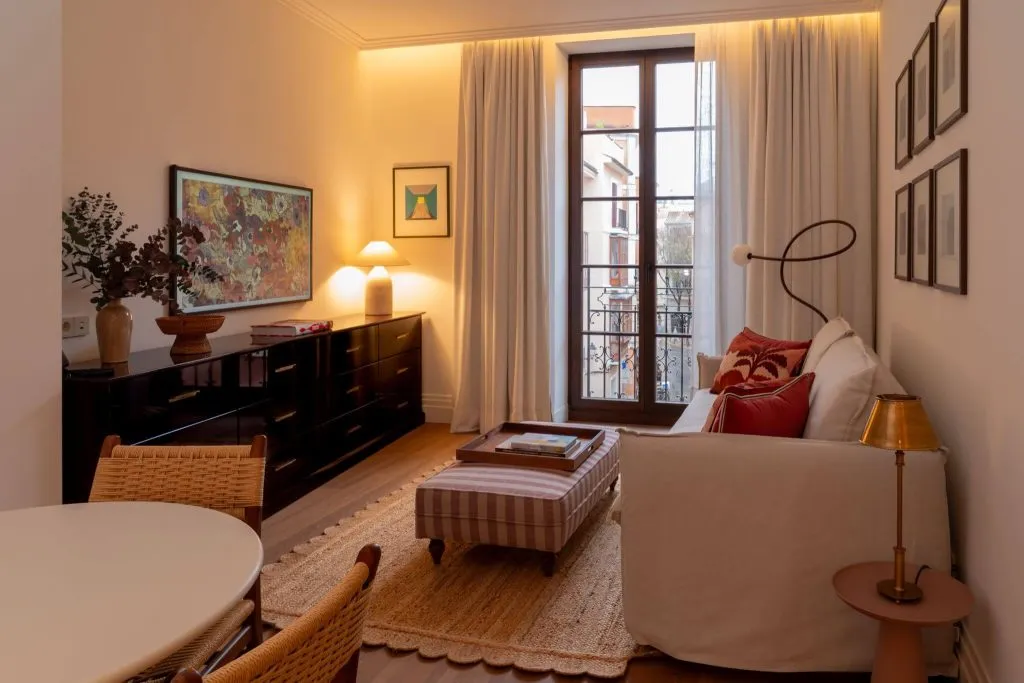
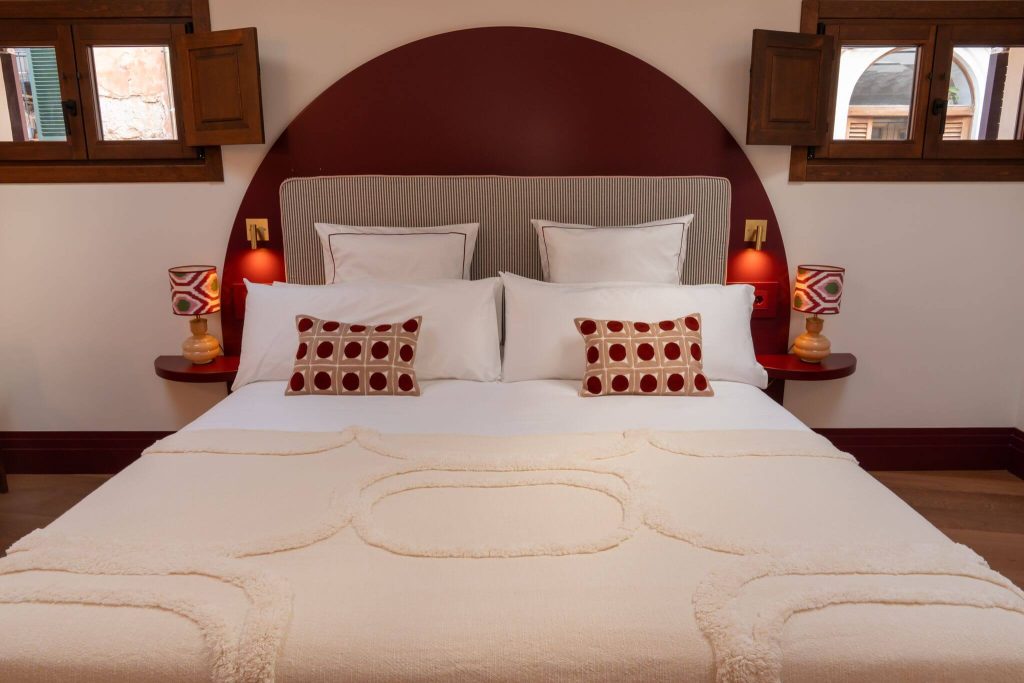
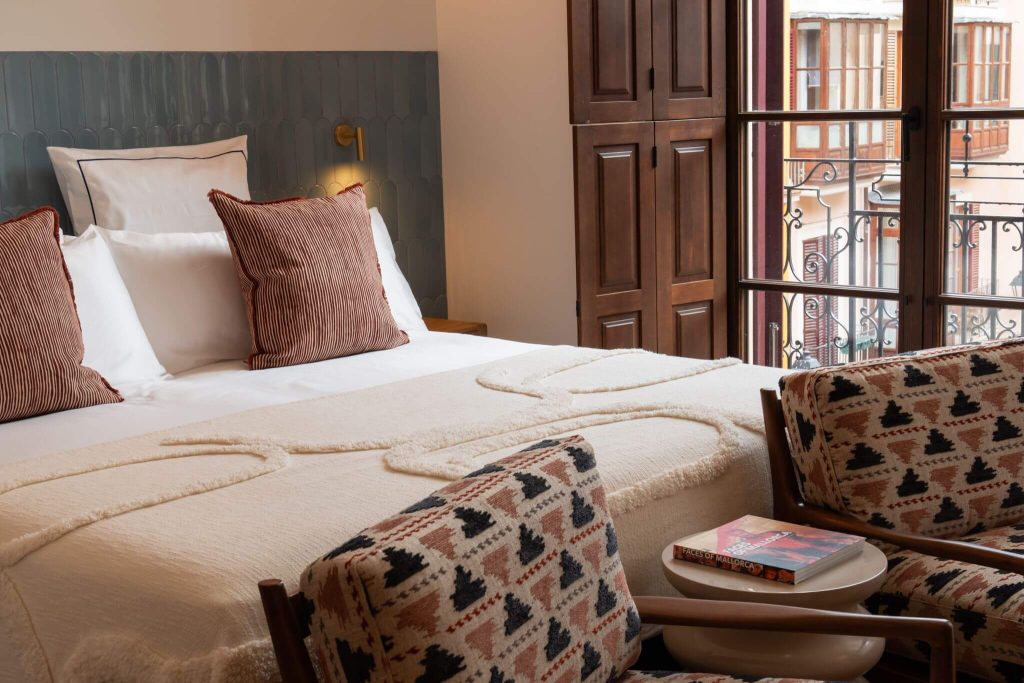
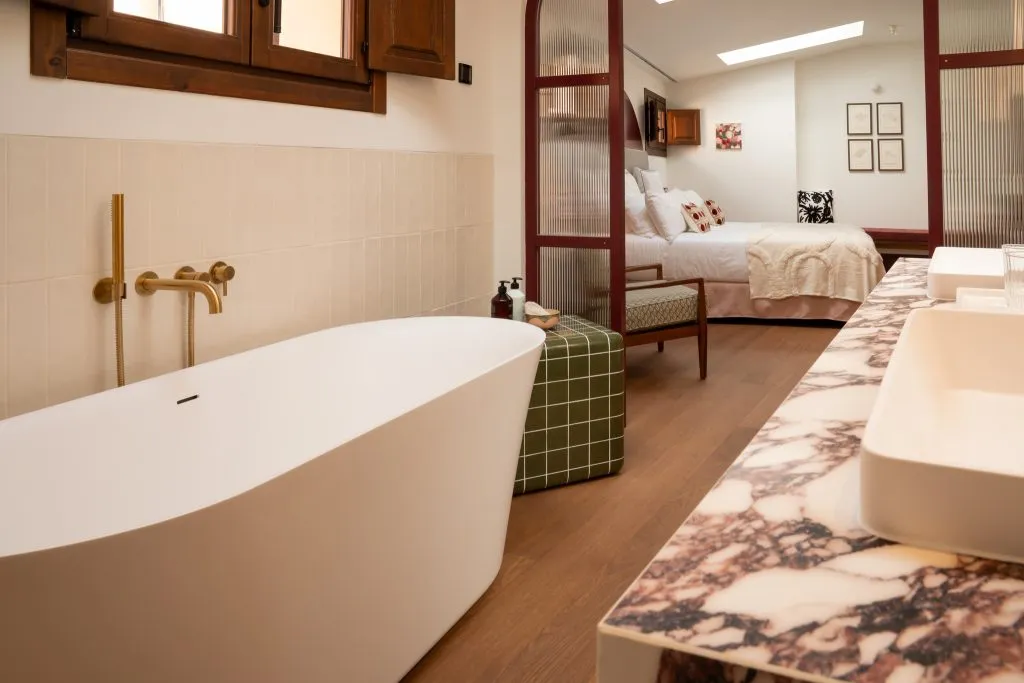
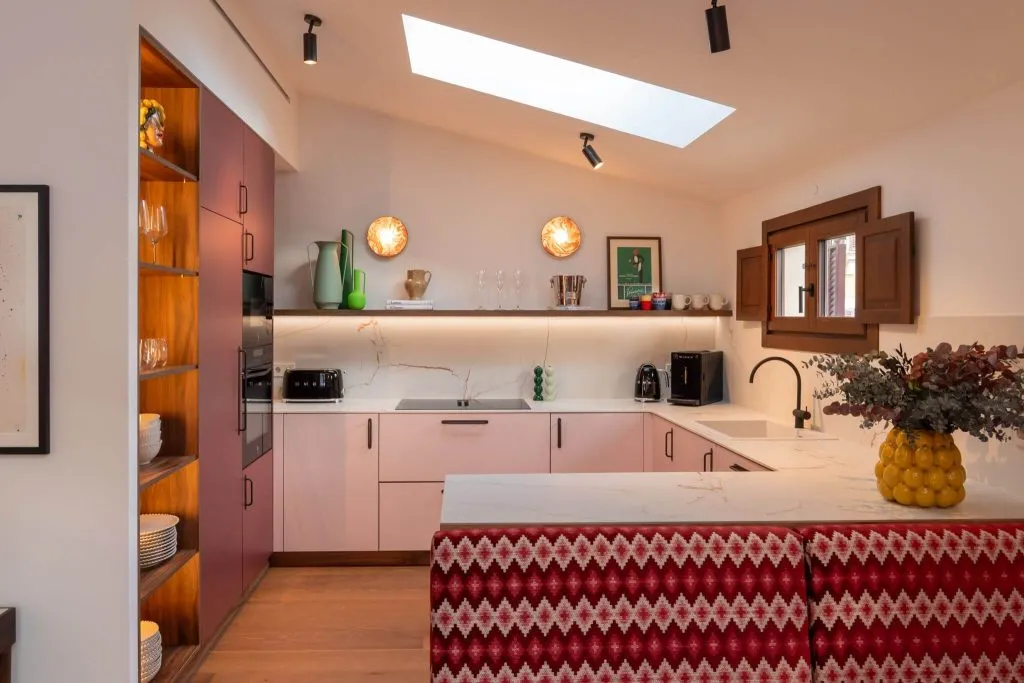
Inside the restored Casa Roca building, the original staircase, marble floors and Papeles Roca sign sit alongside suites with soaking tubs, apartments with full kitchens and the split-level living room of the Francisco Roca Penthouse.
Where to Stay in Palma: Frequently Asked Questions
Where Is The Best Place To Stay In Palma De Mallorca?
For a first visit, the Old Town is the best place to stay in Palma de Mallorca. The cathedral, Plaça Major, the Olivar market and several hundred restaurants sit within a ten-minute walk, so you can see the city entirely on foot. La Lonja is the better choice if dining and evenings out matter most.
What Is The Best Area To Stay In Palma De Mallorca?
The Old Town is the best area for most visitors, followed by La Lonja for restaurants and Santa Catalina for food markets and local life. Portixol and Cala Major suit a seaside stay within reach of the city, and Playa de Palma suits a resort beach holiday about 25 minutes from the centre.
Where To Stay In Palma Old Town?
The streets between the cathedral and Carrer dels Hostals are the most peaceful part of the Old Town at night while still five minutes from La Seu, and the area around Plaça Major is busier. Casa Roca, Sant Francesc Hotel Singular, Can Cera and Glòria de Sant Jaume are all good boutique choices.
Where Is Palma Old Town?
Palma Old Town, the Casco Antiguo, is the historic centre of Palma de Mallorca, behind the seafront and the cathedral. It runs roughly from La Seu and the Almudaina palace up to Plaça Major and the Olivar market, and takes about twenty minutes to cross on foot.
Where To Stay In Palma De Mallorca For Families?
An Old Town apartment gives families space, a kitchen and every sight within walking distance. Casa Roca has one- and two-bedroom apartments and a three-bedroom penthouse that sleeps six. Portixol suits families who want a calm beach every day, and Playa de Palma suits a full resort holiday.
Where To Stay In Palma De Mallorca For Couples?
The Old Town and La Lonja suit couples best, with candlelit restaurants, wine bars and a short walk home through lit streets. A suite with a soaking tub and a rooftop terrace, as at Casa Roca, makes the most of a city break. Santa Catalina is the choice for couples who love food markets.
Where To Stay In Palma De Mallorca For The Beach?
Playa de Palma has the longest beach, six kilometres of sand about 25 minutes from the centre by bus. Cala Major is closer at around 15 minutes with a smaller cove, and Portixol is the best compromise if you want to swim and still walk into the Old Town in about 30 minutes.
Where To Stay In Palma For Nightlife?
La Lonja has the densest concentration of bars and restaurants in Palma and stays busy until late, while the clubs are mostly along the Paseo Marítimo. Staying in the Old Town keeps you within a short walk of both without sleeping above the busiest streets.
Stay Where Palma Happens: Casa Roca in the Old Town
Casa Roca is on Carrer dels Hostals in the Old Town: five minutes from La Seu, four from the Olivar market, and a short walk home from dinner. Suites, apartments and a three-bedroom penthouse in a restored heritage building.
Check Availability See Suites & ApartmentsImage credits: Plaça Major by Olaf Tausch (CC BY 3.0); Llotja chapel by Joan Gené (CC BY-SA 4.0); Portixol by Chixoy (CC BY-SA 3.0); Cala Major by Chixoy (CC BY-SA 4.0); Palma cruise port by Northmetpit (CC BY-SA 4.0). All via Wikimedia Commons.