At A Glance
Six hours ashore at the Palma de Mallorca cruise port is enough to see La Seu Cathedral, the Royal Palace, the Arab Baths and Plaça Major, have lunch at the Olivar market and be back on board with time to spare.
- The cruise terminals sit about 4 km (Estació Marítima 1-4) or 6 km (Dique del Oeste) from the Cathedral.
- EMT bus line 1 costs €2 and runs from the terminals into the city every 20-25 minutes.
- La Seu Cathedral is closed to tourist visits on Sundays; the Royal Palace and Bellver Castle close on Mondays.
- Casa Roca is on Carrer dels Hostals in the Old Town, a 10-minute walk from the Cathedral.
Palma is one of the easiest cruise stops in the Mediterranean to explore without an excursion. The Cathedral, the Royal Palace and the medieval lanes of the Palma Old Town all sit within a 15-minute walk of each other, the city bus from the port costs €2, and nearly every sight on this route is free or under €10. What catches people out is distance: the terminals are further from the centre than they look from the ship’s rail, so the first 20 minutes of the day decide how much of Palma you actually see.
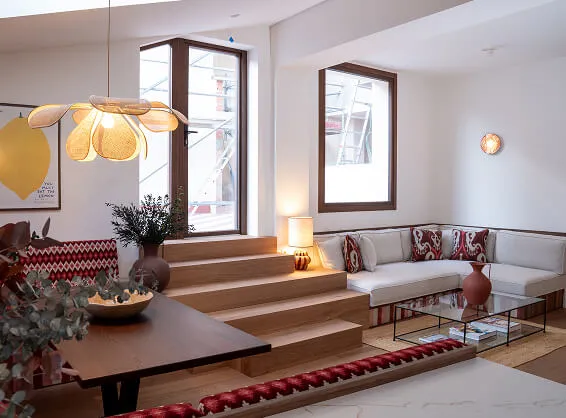
Casa Roca sits in the Old Town, a short walk from Plaça Major and the Olivar market, and this is the route our team recommends to guests with a single day in Palma. It starts at the Parc de la Mar under the walls, spends proper time inside La Seu Cathedral, crosses the oldest part of the city on foot and ends with lunch at the Olivar market before the bus back to the ship.
Insider Tip: Check the day of the week before you plan anything. On a Sunday the Cathedral is closed to tourist visits and the Olivar market is shut, so switch the order and put the Royal Palace, the Arab Baths and Bellver Castle first. On a Monday the Royal Palace, Bellver Castle and Es Baluard are all closed, but the Cathedral and the market are open as normal.
Where Ships Dock at the Palma de Mallorca Cruise Port
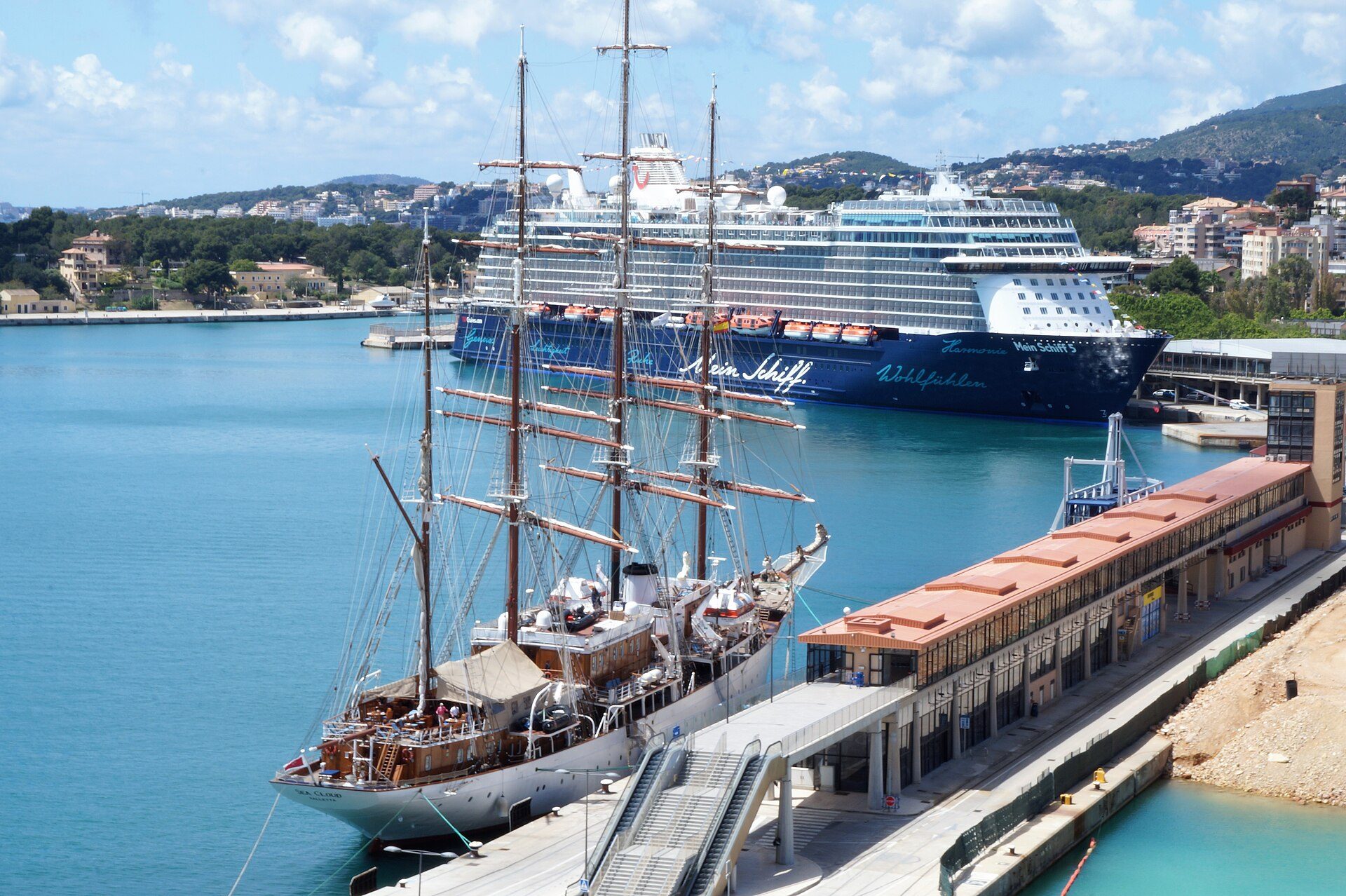
The Palma de Mallorca cruise port has two separate docking areas on the western side of the bay, and which one your ship uses changes the shape of the whole day. Most ships berth at the Paraires and Poniente quays, served by the terminal buildings Estació Marítima 1 to 4, which are linked to the quays by covered walkways. The largest ships moor further out on the Dique del Oeste, the western breakwater, using Estació Marítima 5 and the newer Estació Marítima 6, which opened in 2018 for ships over 300 metres long.
From the Poniente terminals it is about 4 km to the Cathedral, a flat walk of 50 to 60 minutes along the seafront. From the Dique del Oeste the walk is closer to 6 km, because the route has to loop around the Porto Pi marina, which takes 75 to 90 minutes. The ship’s daily programme names your terminal, and it is worth checking before you go ashore rather than at the gangway.
| Palma cruise terminal | Ships using it | Distance to the Cathedral | Walking time | Best way into the Old Town |
|---|---|---|---|---|
| Estació Marítima 1-4 (Paraires and Poniente quays) | Most cruise ships | About 4 km | 50-60 minutes | EMT line 1 (€2) or taxi (about €14) |
| Estació Marítima 5 and 6 (Dique del Oeste) | The largest ships, over 300 m | About 6 km | 75-90 minutes | Cruise line shuttle, EMT line 1 or taxi (about €16) |
Palma limits how many cruise ships can call on a single day. Under the agreement between the Balearic government and the cruise lines, no more than three ships may be in port at once and only one of them can carry more than 5,000 passengers. Even so, a three-ship day puts a lot of people onto the same streets between 10am and 1pm, which is another reason to reach the Cathedral early.
Getting from the Palma Cruise Port to the Old Town
There are four ways from the Palma cruise terminal into the city, and on a six-hour stop the right answer is almost always to ride in and walk back, or ride both ways. Walking in along the seafront costs you close to an hour of your best sightseeing time before you have seen anything, and the promenade is fully exposed to the sun from late morning in summer.
1. EMT Bus Line 1 from the Cruise Terminals
EMT line 1 runs between Portopí and Sindicat and stops at both cruise areas: at the Dique del Oeste beside the Museu Sant Carles, and at the stop marked Portopí Estacions Marítimes 1, 2, 3 i 4. A single ticket costs €2 in cash on board, and you can also tap a contactless bank card or phone at the door. Buses run every 20 minutes on weekdays and every 25 minutes on Saturdays, Sundays and holidays.
The bus follows the Passeig Marítim towards the centre, and the most useful stop for this itinerary is Passeig Mallorca – Jaume III, a 10-minute walk from the Parc de la Mar and the Cathedral. Line 1 does not stop at the Cathedral itself. If you are travelling as a group, one card can pay for up to five people, with a discount applied automatically.
2. Taxi from the Palma Cruise Terminal
Taxis wait outside the terminal buildings and use Palma’s official metered tariff: €2.50 on the flag, €1.20 per kilometre in the daytime and a €4.65 supplement for journeys from the port. That works out at about €14 from Estació Marítima 1-4 to the Old Town and about €16 from the Dique del Oeste, and the ride takes 15 to 20 minutes depending on traffic along the seafront.
Ask the driver for the Parc de la Mar or Plaça de la Reina, both at the foot of the Cathedral. On a busy three-ship morning the taxi rank can build a queue, so if it looks long, the line 1 stop is a short walk away.
3. Cruise Line Shuttle Buses into Palma
Most cruise lines run their own shuttle from the terminal to the edge of the Old Town near the Cathedral, and the ride takes 10 to 15 minutes. The price and the timetable are set by each ship, so check the daily programme or ask at guest services. Shuttles are the most convenient option from the Dique del Oeste, where the walk and the bus both take longer.
The main drawback is the return: the final shuttles fill up, so plan to board one or two departures earlier than the last. There is no public water bus between the port and the city at the moment.
4. Walking the Seafront from the Cruise Port
The walk from Estació Marítima 1-4 follows the Passeig Marítim for its whole length, flat and paved, with the Cathedral in view across the bay for most of the way. At about 4 km it takes 50 to 60 minutes, and it is at its best in the late afternoon, when it makes an easy and scenic way back to the ship.
From the Dique del Oeste, the extra loop around Porto Pi makes walking in impractical on a six-hour stop. Take the bus or the shuttle in, and keep the promenade for the return if you have time in hand.
Returning to Palma as a hotel guest?
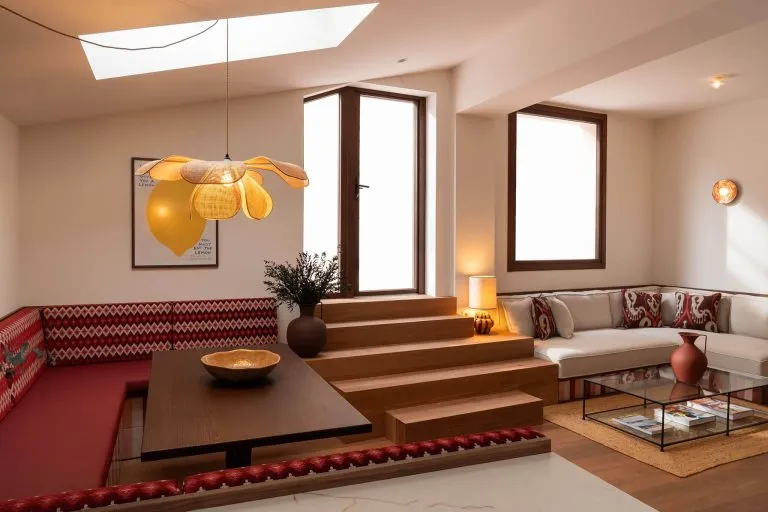
Many cruise visitors decide on the day that Palma deserves more than six hours. Casa Roca is a boutique hotel in a 175-year-old building in the Old Town, a 10-minute walk from the Cathedral, with suites, apartments and a rooftop terrace. Breakfast is included with every stay.
The 6-Hour Palma Walking Itinerary from the Cruise Port
This Palma walking itinerary assumes six hours from the moment you leave the ship to the moment you are back at the terminal, starting at around 9.15am so that you reach the Cathedral as it opens at 10am. Everything between the first and last step is on foot, the total walking distance in the city is about 3 km, and the route runs in a loop so you never double back. Timings allow for queues and a proper lunch rather than a rushed one.
| Time ashore | Step | Where | Cost |
|---|---|---|---|
| 0:00 – 0:25 | 1 | Cruise terminal to the Parc de la Mar by bus, taxi or shuttle | €2 bus / about €14 taxi |
| 0:25 – 0:45 | 2 | Parc de la Mar and the old city walls | Free |
| 0:45 – 1:50 | 3 | La Seu Cathedral, inside and out | €10 |
| 1:50 – 2:35 | 4 | Royal Palace of La Almudaina | €8 |
| 2:35 – 3:10 | 5 | Old Town lanes and the Arab Baths | €2.50 |
| 3:10 – 4:15 | 6 | Plaça Major and lunch at the Mercat de l’Olivar | Pay as you go |
| 4:15 – 5:00 | 7 | Passeig des Born and La Llotja, then the bus back | €2 bus |
| 5:00 – 6:00 | – | Back at the terminal with an hour in hand | – |
Step 1: From the Palma Cruise Terminal to the Parc de la Mar
Leave the ship as early as the tender or gangway allows, because the Cathedral opens at 10am and the first hour inside is the quietest of the day. From Estació Marítima 1-4, walk out to the line 1 stop and ride to Passeig Mallorca – Jaume III, or take a taxi straight to the Parc de la Mar. From the Dique del Oeste, the ship’s shuttle is usually the quickest option.
If you ride the bus, walk down Passeig Mallorca and along the edge of the old walls towards the sea. You reach the Parc de la Mar in about 10 minutes, with the Cathedral appearing above the trees as you go.
Step 2: The Parc de la Mar and the Palma City Walls
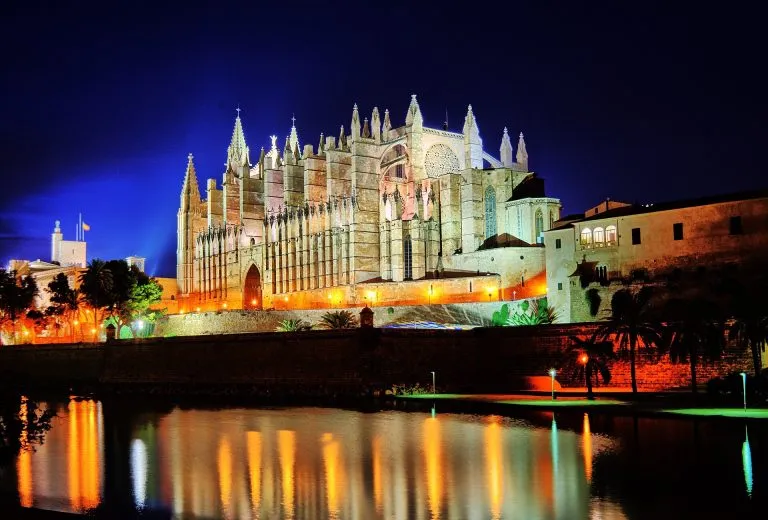
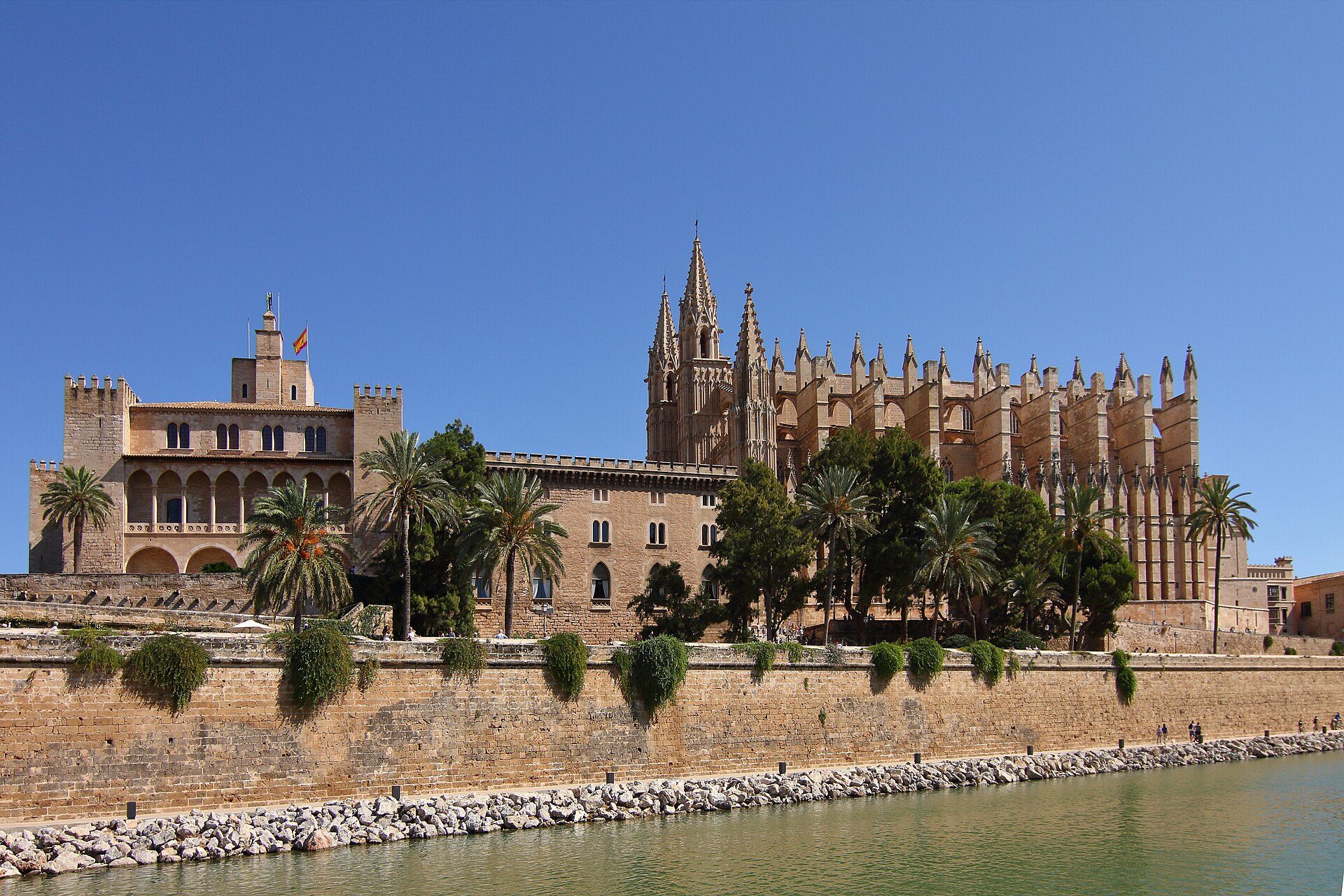
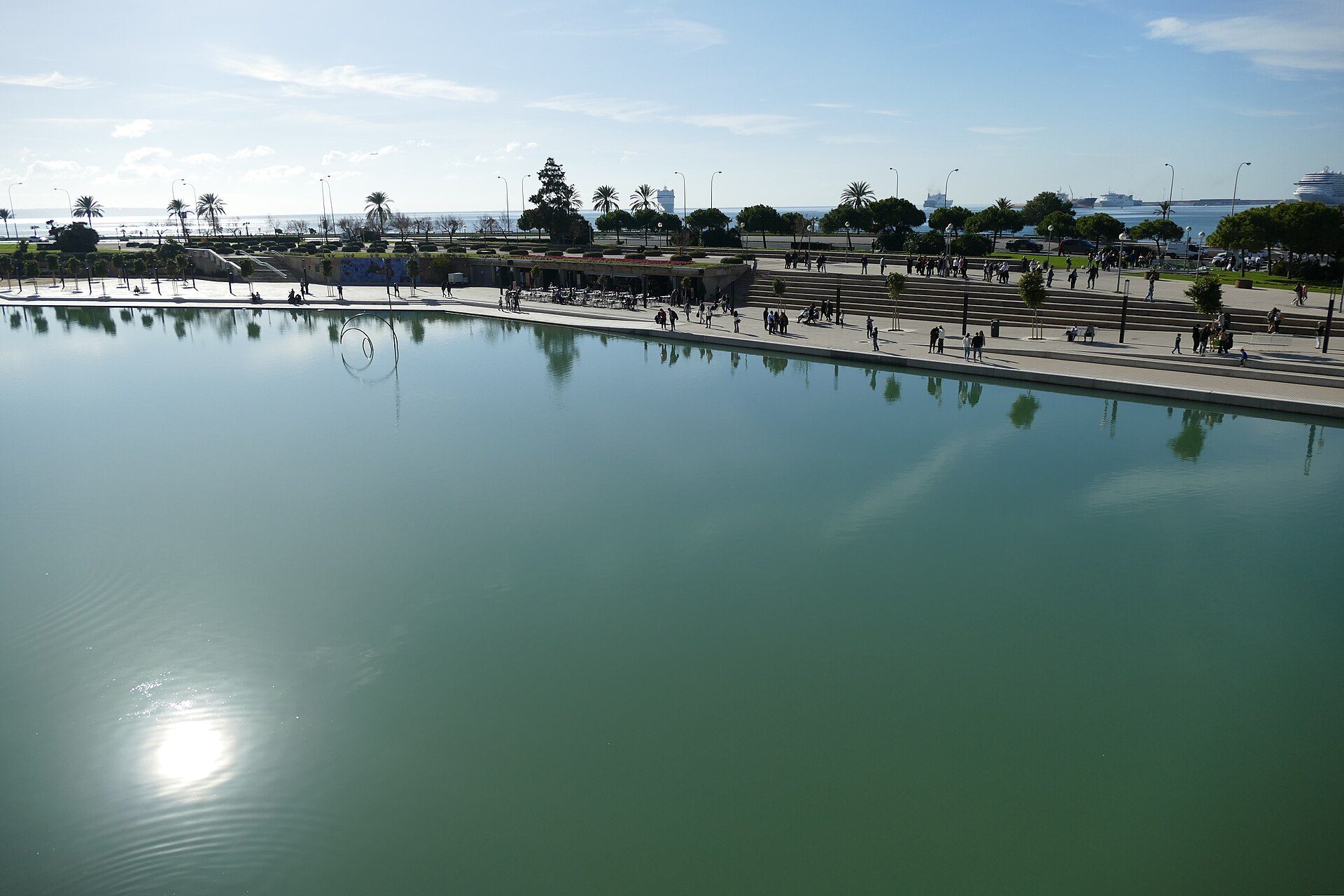
The Parc de la Mar is a long seafront park laid out around a reflecting lake directly below the city walls. It gives the best full view of La Seu and the Royal Palace side by side, the one most photographs of Palma are taken from, and the stepped paths up from the lake bring you out on the terrace beside the Cathedral.
Twenty minutes here is enough for photographs and to get your bearings. If there is time to spare before the Cathedral opens at 10am, walk along the top of the walls, where the view looks back across the bay towards the port and your ship.
Step 3: La Seu, Palma Cathedral
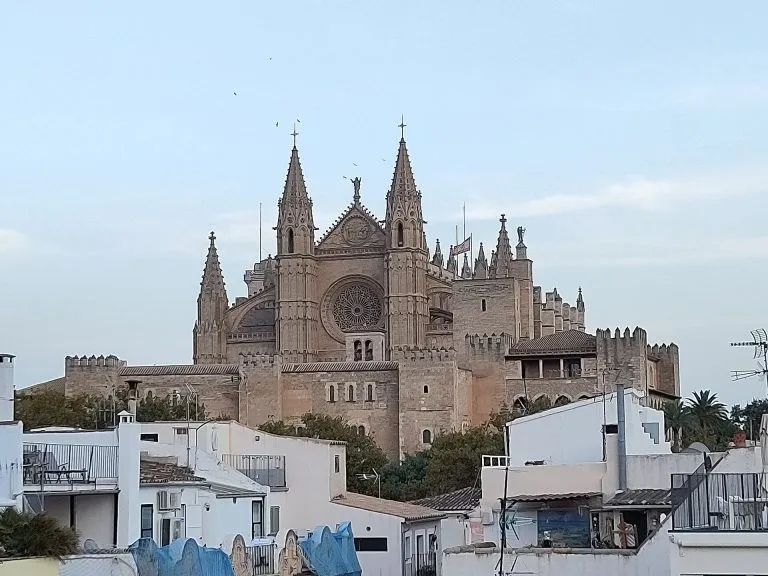
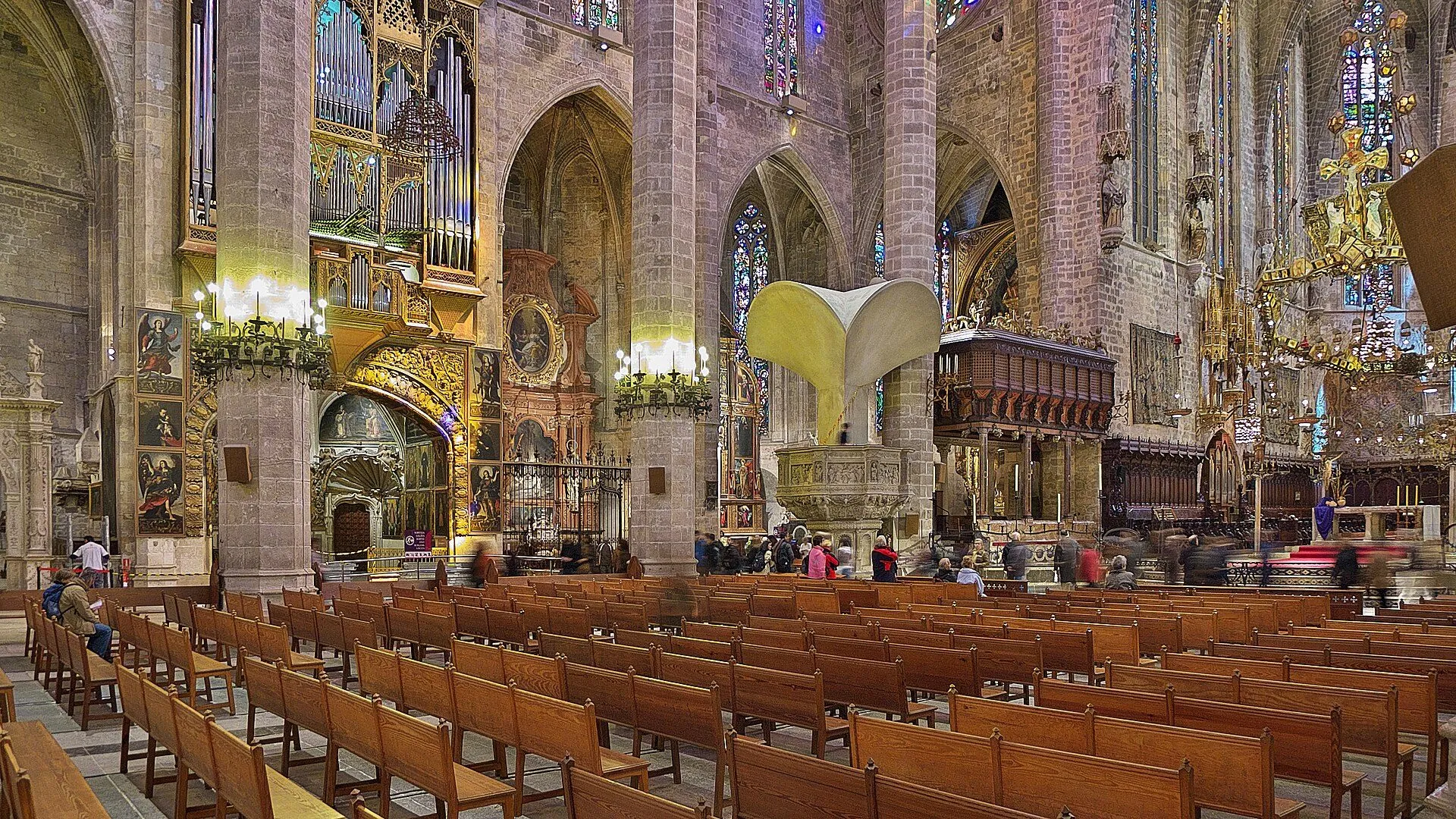
Palma Cathedral was begun in 1229, after the Christian conquest of Mallorca, and took until 1601 to complete. Its nave is one of the tallest in any Gothic church in Europe, and its rose window is among the largest in the world. In the early 20th century Antoni Gaudí reworked the interior, and his wrought-iron canopy still hangs above the main altar. Allow an hour inside, which is enough for the nave, the chapels and the museum rooms.
From April to November the Cathedral is open to visitors Monday to Friday from 10am to 5.15pm and on Saturday from 10am to 2.15pm. It is closed to tourist visits on Sundays. Adult tickets were €10 in 2025, and buying online before you go ashore saves time in the entrance queue.
Step 4: The Royal Palace of La Almudaina in Palma
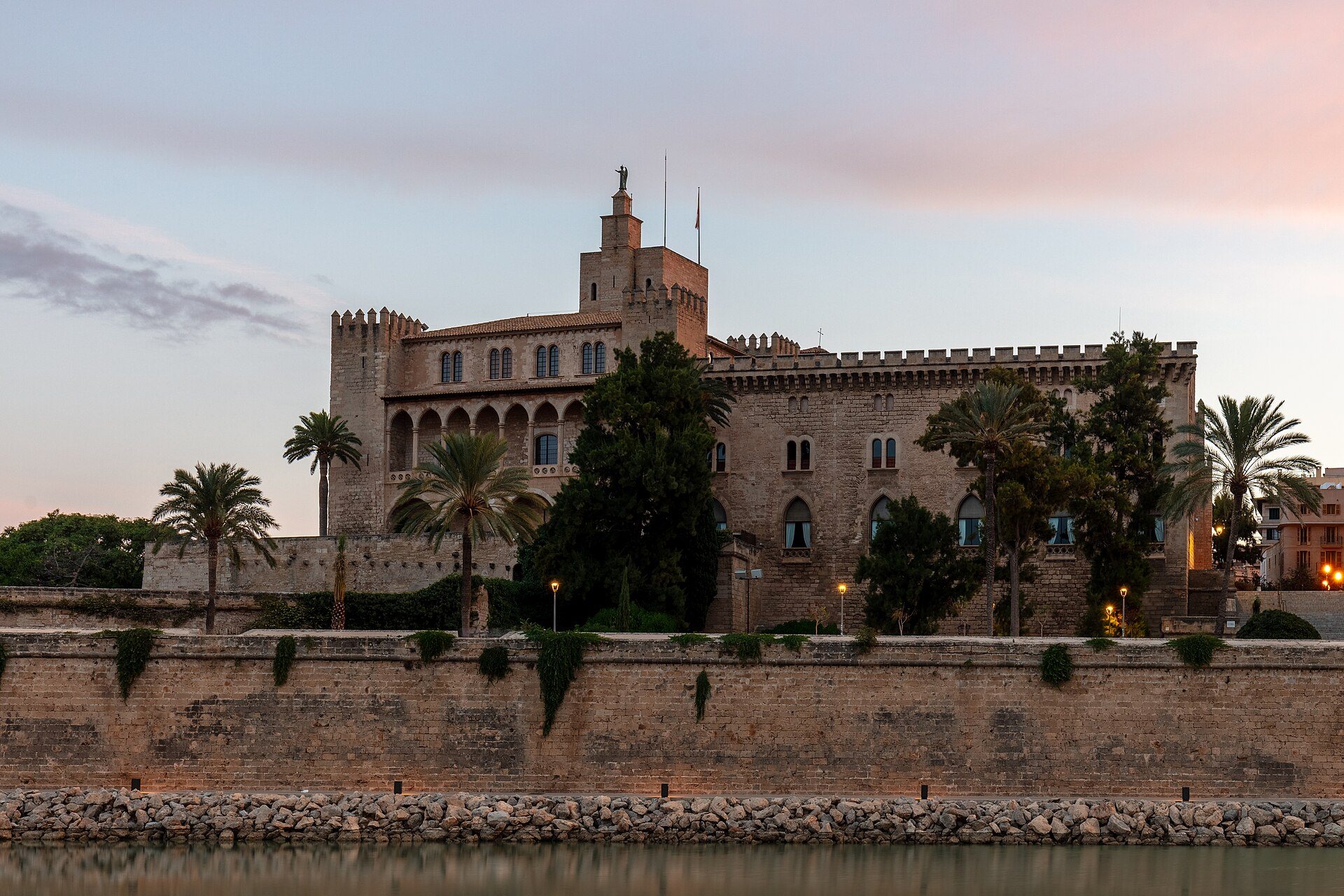
The Almudaina stands directly across the terrace from the Cathedral. It began as the Moorish fortress of Madina Mayurqa, became the palace of the medieval kings of Mallorca, and is still an official residence of the Spanish royal family. Inside are the great Gothic hall, the royal apartments and the chapel of Santa Anna, and 45 minutes covers it at a comfortable pace.
The palace is open Tuesday to Sunday, 10am to 7pm from April to September and 10am to 6pm from October to March, with last entry an hour before closing. It is closed on Mondays. General admission is €8. If your stop falls on a Monday, spend the extra time on a slower walk through the Old Town lanes in the next step.
Step 5: Palma Old Town Lanes and the Arab Baths
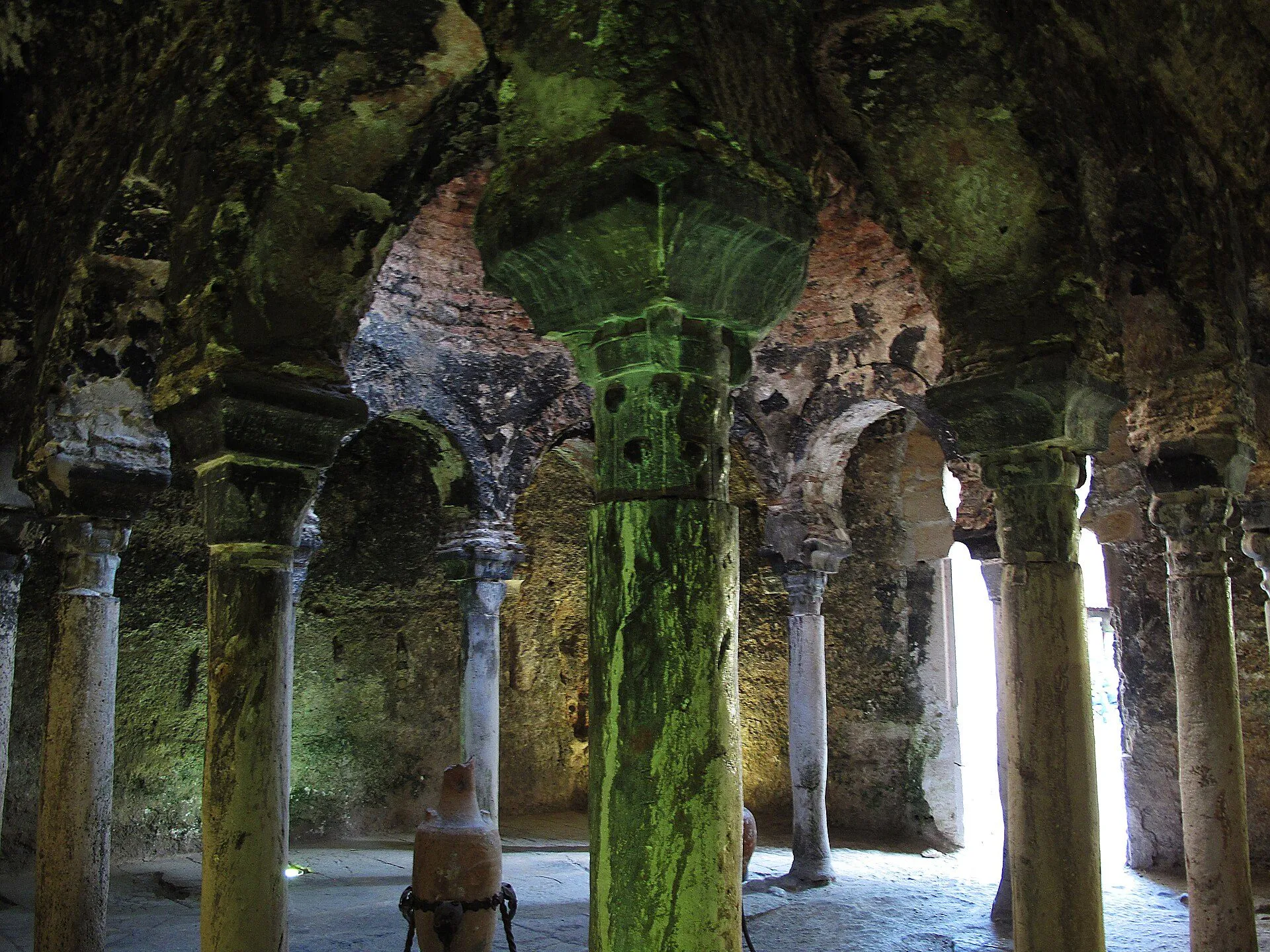
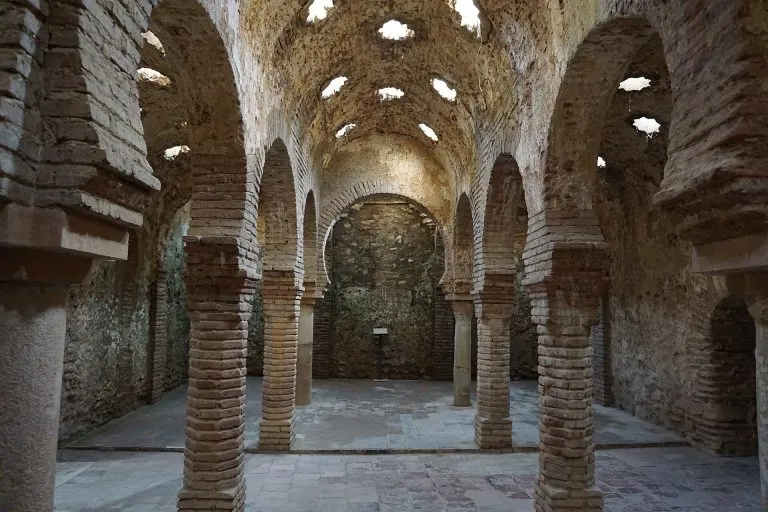
Behind the Cathedral, the streets of the Portella and Calatrava quarters are the oldest in the city: narrow, quiet and lined with stone mansions whose courtyards are often open to look into. Walk east along Carrer del Palau and Carrer de la Portella to Carrer de Can Serra, where the Banys Àrabs are among the few buildings in Palma that survive from the Islamic city.
The baths are a single domed room held up by columns with horseshoe arches, set in a small shaded garden. Entry is €2.50 and the site opens daily from 10am. Twenty minutes is plenty, and the garden is a good place to sit down in the shade before the walk north towards Plaça Major.
Step 6: Plaça Major and Lunch at the Olivar Market in Palma
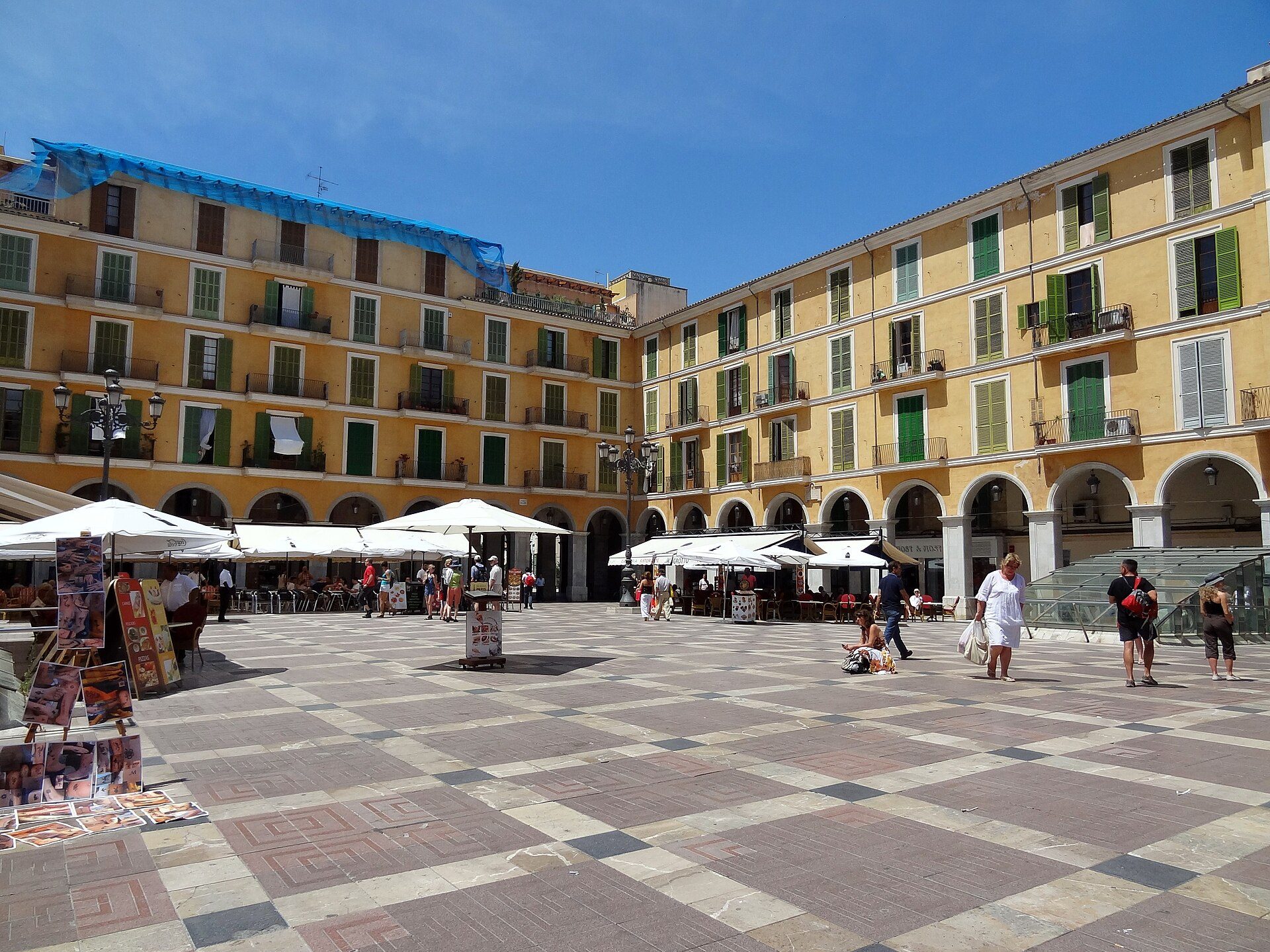
From the Arab Baths, walk north through Plaça de Cort, past the town hall and its old olive tree, and up to Plaça Major, the arcaded square at the top of the Old Town. The Mercat de l’Olivar is a five-minute walk further on, and it is the best place in Palma for a quick lunch that is still properly Mallorcan: fish and seafood counters, jamón and cheese, sobrassada, and the tapas bars upstairs.
The market is open Monday to Saturday from 7am to around 3pm and is closed on Sundays, so on this timing you arrive at the busiest and liveliest point of the day. If you would rather sit down to a full lunch, our guide to the best restaurants in Palma lists the places near the Old Town worth the time.
Step 7: Passeig des Born, La Llotja and Back to the Cruise Port
After lunch, walk down Carrer de Sant Miquel and through Plaça del Mercat to the Passeig des Born, the tree-lined boulevard that runs down to the sea. At the bottom, La Llotja is the 15th-century Gothic merchants’ exchange, one of the finest civil buildings in the city, and the lanes around it are Palma’s main bar quarter in the evening.
From the top of the Born it is a short walk to the line 1 stop at Passeig Mallorca – Jaume III for the ride back to the terminals. If your ship leaves late in the evening and you have time in hand, walk back along the Passeig Marítim instead, with the Cathedral behind you and the port ahead.
Your Palma Cruise Day Kit
- A contactless bank card or €2 coins for EMT line 1, and around €30 in cash for small bars and market stalls.
- Comfortable flat shoes: the Old Town is paved with smooth stone that gets slippery, and the walls have steps.
- Clothing that covers your shoulders for La Seu Cathedral, or a light scarf to put on at the door.
- A refillable water bottle and a hat from June to September, when the seafront has little shade.
- Your cruise card and photo ID, both needed to get back through terminal security.
- The ship’s port agent phone number, written down in case your phone battery runs out.
Opening Days for Palma Sights on a Cruise Stop
Palma’s main sights close on different days of the week, and a cruise itinerary rarely lets you choose which day you arrive. These are the opening days and adult prices for every stop on the walking route plus the two most popular extras, worth checking against your port day before you leave the ship.
| Sight | Open | Closed | Adult ticket |
|---|---|---|---|
| La Seu Cathedral | Mon-Fri 10:00-17:15, Sat 10:00-14:15 (April-November) | Sunday (tourist visits) | €10 (2025) |
| Royal Palace of La Almudaina | Tue-Sun 10:00-19:00 (April-September), 10:00-18:00 (October-March) | Monday | €8 |
| Banys Àrabs | Daily from 10:00 | – | €2.50 |
| Mercat de l’Olivar | Mon-Sat 07:00 to about 15:00 | Sunday | Free |
| Es Baluard Museum | Tue-Sat 10:00-20:00, Sun 10:00-15:00 | Monday | €8 (Fridays, pay what you like) |
| Bellver Castle | Tue-Sat 10:00-19:00 (April-September), 10:00-18:00 (October-March), Sun 10:00-15:00 | Monday | €4 (free on Sundays) |
If you have seven hours or more, Bellver Castle is the best addition. It is a round Gothic castle on a wooded hill about 3 km west of the Old Town, with views over the whole bay and the cruise terminals below, and a taxi up and a walk down is the easiest way to fit it in. Es Baluard, the modern art museum in the Renaissance bastion at the western end of the Old Town, is the better choice on a hot afternoon.
★★★★★ Verified Guest Review
“Despite being right in the heart of Palma, walkable to everything, it was remarkably quiet. Truly one of the best stays we’ve had. If you’re visiting Palma, don’t hesitate!”
Monika, Booking.com, May 2026 | Couple, leisure
Where to Eat Near the Palma Cruise Port
The cafés and restaurants immediately around the cruise terminals are geared to passing traffic and are not where Palma eats. The food gets much better the moment you reach the Old Town, and on a six-hour stop the simplest plan is to eat where the itinerary already takes you: the Mercat de l’Olivar at lunchtime, or one of the bars around La Llotja and the Passeig des Born on the way back.
For something to take back on board, the market sells vacuum-packed sobrassada and cheese, and the Old Town bakeries sell ensaimadas in boxes made to be carried. Both are easier to pack at the end of the walk than at the start.
Palma Shore Excursions or Walking on Your Own
For Palma itself, walking independently is the better choice for most visitors. The city centre is compact, the sights are signposted, the bus from the terminal is cheap and frequent, and nothing on the route above needs a guide to understand. Going on your own also lets you spend longer where you want, which a group tour rarely allows.
An organised excursion makes more sense for trips out of the city, such as the Drach Caves, the Sóller railway or the Tramuntana mountains, where transport is harder to arrange and the ship guarantees to wait for its own tours. If one of those is on your list, our guide to day trips from Palma de Mallorca covers how long each takes, to help you judge whether it fits your hours in port.
Getting Back to the Palma Cruise Port on Time
Plan to be back at the terminal an hour before all-aboard. The bus runs every 20 to 25 minutes, taxi queues build on busy days, and security at the terminal gate adds its own wait when several ships are boarding at once. An hour sounds generous until you have spent 20 minutes of it at a bus stop.
Keep the port agent’s number from the daily programme with you. If anything goes wrong, from a lost bag to a missed bus, calling the agent early gives the ship the most time to help. And if you arrive back with time to spare, the seafront by the terminals is a pleasant place to sit and watch the bay.
Coming back? Stay at Casa Roca
The visitors who see Palma properly on a cruise day are usually the ones who book a flight back. Casa Roca is in the heart of the Old Town – everything you walked past today is on your doorstep. Suites from €347/night. The Speakeasy bar opens at 8pm. The Tasting Palma team can take you anywhere on the island you didn’t have time to reach today.
Palma de Mallorca Cruise Port FAQs
How Far Is The Palma De Mallorca Cruise Port From The Old Town?
Can You Walk From The Palma Cruise Port To The Cathedral?
Which Bus Goes From The Palma Cruise Terminal To The City Centre?
How Much Is A Taxi From The Palma Cruise Port To The Old Town?
Is There A Shuttle From The Palma Cruise Port Into The City?
Is Six Hours Enough To See Palma From A Cruise Ship?
Is Palma Cathedral Open On Sundays For Cruise Visitors?
How Many Cruise Ships Can Dock In Palma In One Day?
Photo credits: Rene Cortin (cruise ship in the Port of Palma), Malopez 21 (Cathedral and Almudaina), Diego Delso (Almudaina Palace), Enric (Arab Baths) and Kritzolina (Parc de la Mar), all CC BY-SA 4.0; José Luis Filpo Cabana (Cathedral interior) and Olaf Tausch (Plaça Major), CC BY 3.0. Via Wikimedia Commons.