The quick answer: Santa Catalina is Palma’s former fishing quarter, a fifteen to twenty minute walk west of the Old Town, and it is where most people in Palma will tell you to go and eat. The covered market at its centre opens at seven in the morning and holds around fifty stalls; the restaurant streets around it, Carrer de la Fàbrica and Carrer de Sant Magí, hold the densest concentration of good cooking in the city. Go in the morning for the market, or from eight in the evening for the bars. Sunday is the one day to avoid.
Santa Catalina in Palma is the neighbourhood that residents name first when a visitor asks where to eat. It sits just outside the old walls, close enough to walk to from the historic centre but far enough to have kept its own character, and it has spent the past fifteen years turning from a working-class district into the city’s food quarter without entirely losing the thread. There are plenty of reasons to spend your days in the Old Town, but the evenings increasingly happen here.
What makes it worth the walk is that it still functions. People do their shopping at the market, children go to school on the same streets, and the bars have regulars rather than queues. It is not a preserved quarter or a themed one. It is a normal Palma neighbourhood that happens to have an unusual number of good kitchens in it.
This guide covers the market, the restaurant streets, the windmills at Es Jonquet, how to walk there from the Old Town, and the practical business of when to go and what to avoid. Distances are measured from Carrer dels Hostals, where Casa Roca sits in the historic centre.
Where Santa Catalina Palma Is and How to Get There
Santa Catalina sits immediately west of the historic centre, across the Passeig Mallorca, which follows the line of the old riverbed. From the cathedral end of the Old Town it is a flat fifteen to twenty minute walk. From Carrer dels Hostals, closer to Plaça Major, allow twenty minutes at an unhurried pace.
The walk itself is straightforward and pleasant. Head west along any of the streets running off La Rambla, cross the Passeig Mallorca, and the grid begins immediately on the far side. There is no hill worth mentioning and no point at which the route feels unclear. Taxis take five minutes and cost very little, but there is no real need for one unless it is raining.
The quarter is small. It runs roughly from the Passeig Mallorca in the east to the Avinguda Argentina in the west, and from the waterfront up to Carrer de Sant Magí. You can cross the whole of it on foot in about ten minutes, which is worth knowing when a restaurant recommendation sounds like it is on the other side of the neighbourhood. It is not.
Santa Catalina Palma at a Glance
| What | Detail |
|---|---|
| Walk from Palma Old Town | 15–20 minutes, flat |
| Market | Mercat de Santa Catalina, around 50 stalls, opens 07:00 |
| Market days | Monday to Saturday; closed Sunday |
| Restaurant streets | Carrer de la Fàbrica, Carrer de Sant Magí |
| Best time for the market | 08:00–11:00, before the stalls thin out |
| Best time for dinner | From 20:30; the streets fill after 21:00 |
| Landmark | The Es Jonquet windmills on the ridge |
| Quietest day | Sunday, when much of the quarter closes |
Things to Do in Santa Catalina Palma
Santa Catalina is a neighbourhood rather than a sight, so the list below is short by design. There is no cathedral here and no museum worth crossing the city for. What there is instead is a market, a set of streets, a ridge of windmills and a great deal of good food.
1. Mercat de Santa Catalina: The Heart of the Neighbourhood
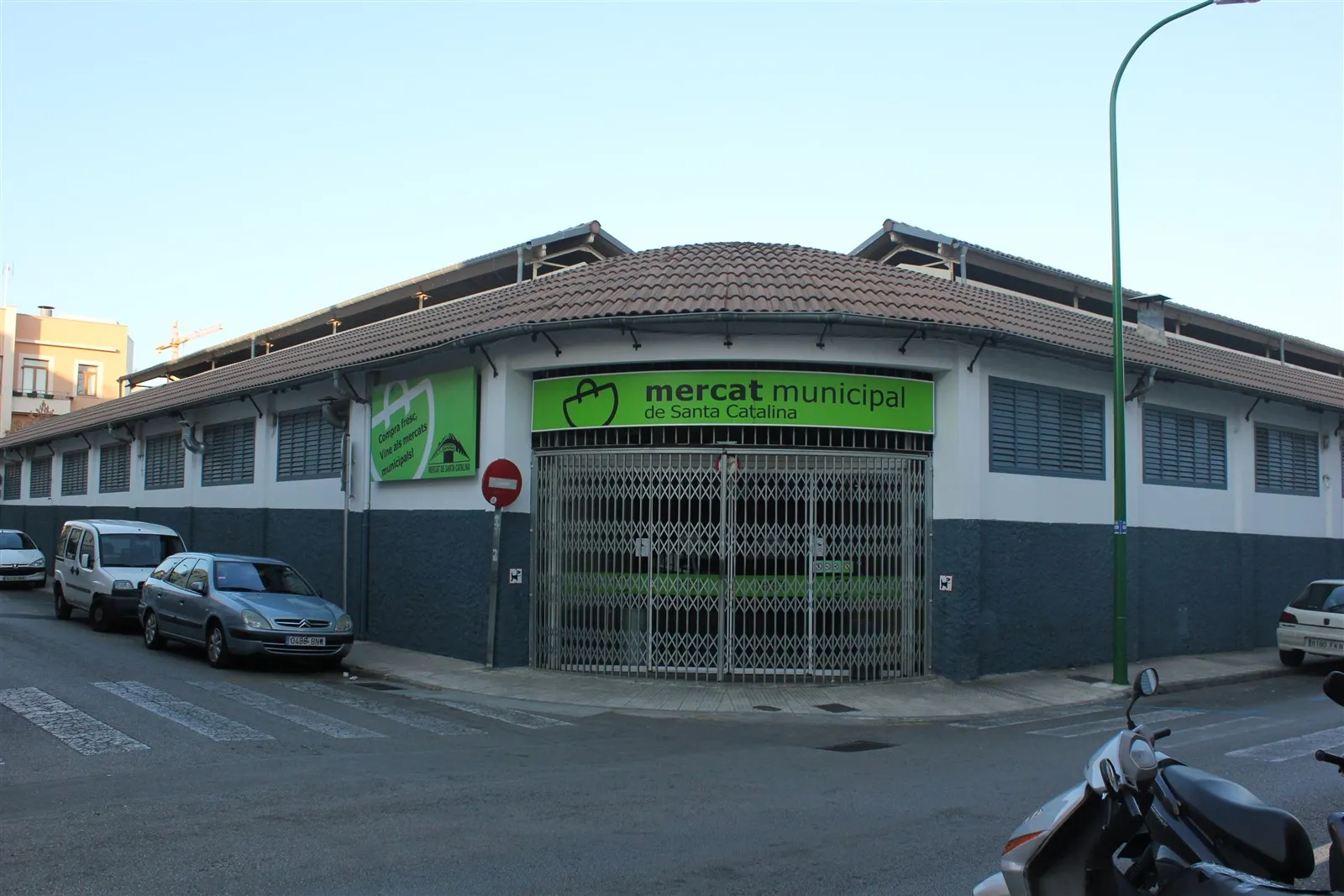
The covered market is the reason the neighbourhood works the way it does. It holds around fifty stalls under one roof: fish landed that morning, meat, fruit and vegetables, cheese and charcuterie, bread, and a scattering of bars built into the aisles where you can sit down and eat what has just been sold around you.
It opens at seven in the morning, Monday to Saturday, and the useful window is roughly eight until eleven. Come at nine and the fish counters are at their best and the bars are full of people having a coffee and a bite standing up. Come at two and half the stalls are packing away. It closes on Sundays entirely, which catches out a great many visitors.
The building itself is unremarkable from the street, a low mid-century hall with none of the wrought-iron drama of the Olivar market in the centre. Do not let that put you off. The interior is where the quarter does its business, and an hour spent in it will tell you more about how Palma eats than any restaurant will.
🌿 Insider Tip: Eat at the market bars rather than the restaurants immediately outside them. The counters inside are cheaper, the produce has travelled about four metres, and you will be sitting next to people who shop there every week rather than people who found it on a list.
2. Eating and Drinking in Santa Catalina Palma
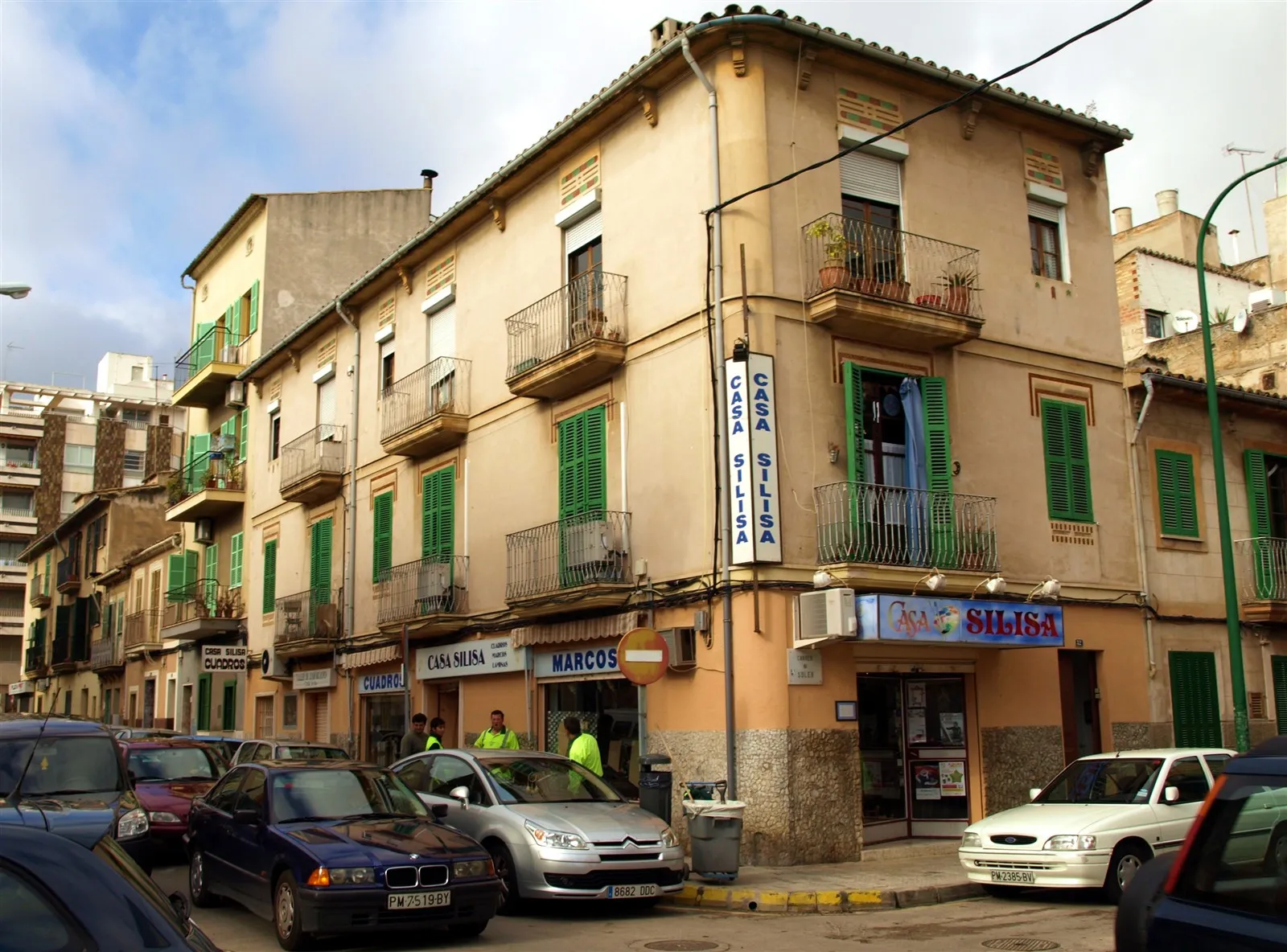
Two streets carry most of the eating. Carrer de la Fàbrica runs through the middle of the quarter and holds the highest concentration, from small tapas counters to serious modern cooking. Carrer de Sant Magí runs parallel a little further north and is slightly more local, slightly cheaper and slightly less booked out.
The range is genuinely wide. You can eat grilled fish at a plastic table for twenty euros or sit down to a tasting menu, and both will be good. Brunch has become a fixture here in a way it has not in the Old Town, which is useful on a slow morning. Our guide to the best restaurants in Palma de Mallorca covers the ones across the city worth booking ahead for, several of which are in this quarter.
Book if you are coming at the weekend. The good places in Santa Catalina are small, and turning up at nine on a Friday without a table is optimistic. Midweek you can usually walk in, particularly if you are willing to eat at eight rather than nine thirty.
3. Es Jonquet: The Windmills Above Santa Catalina
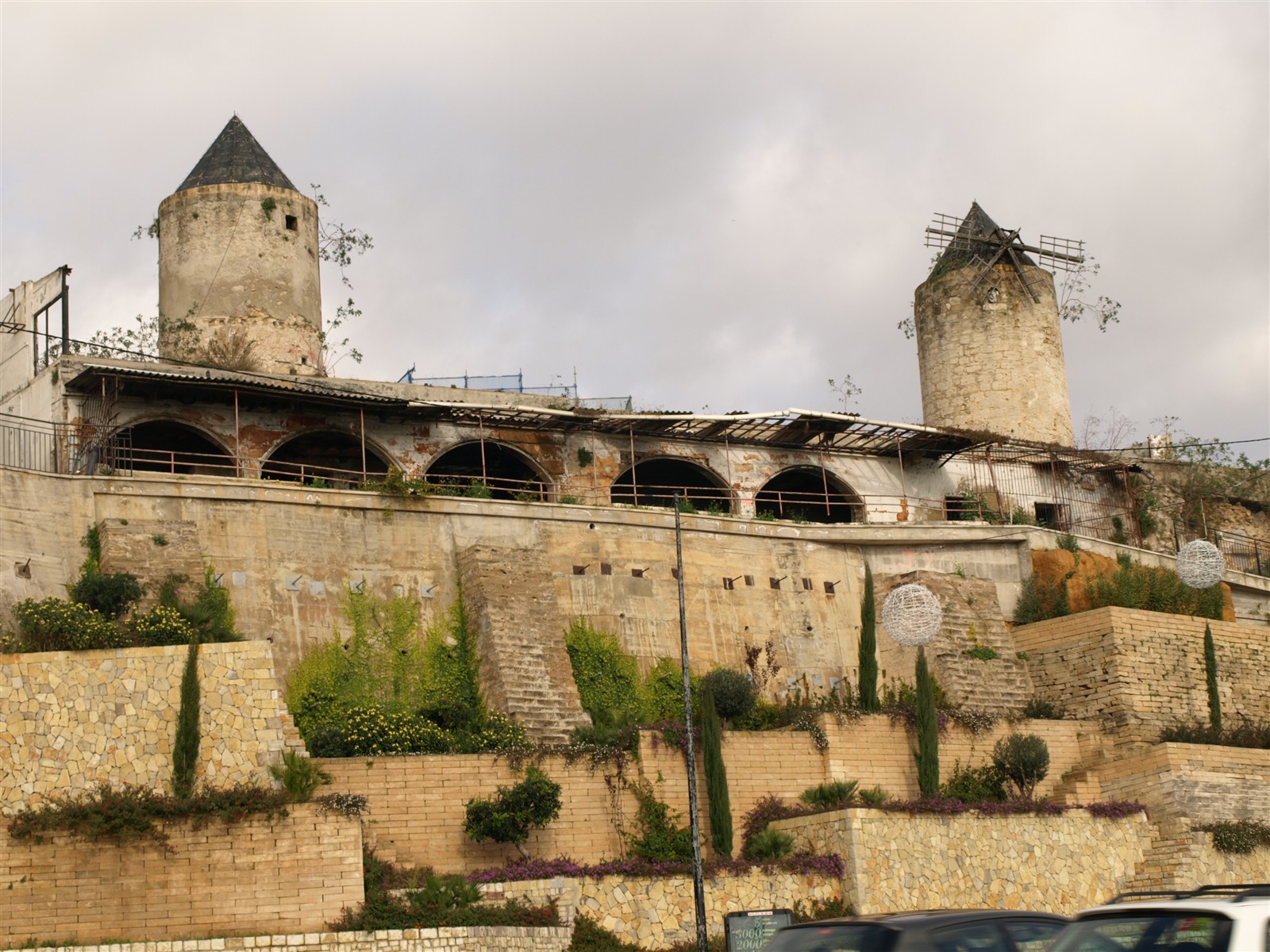
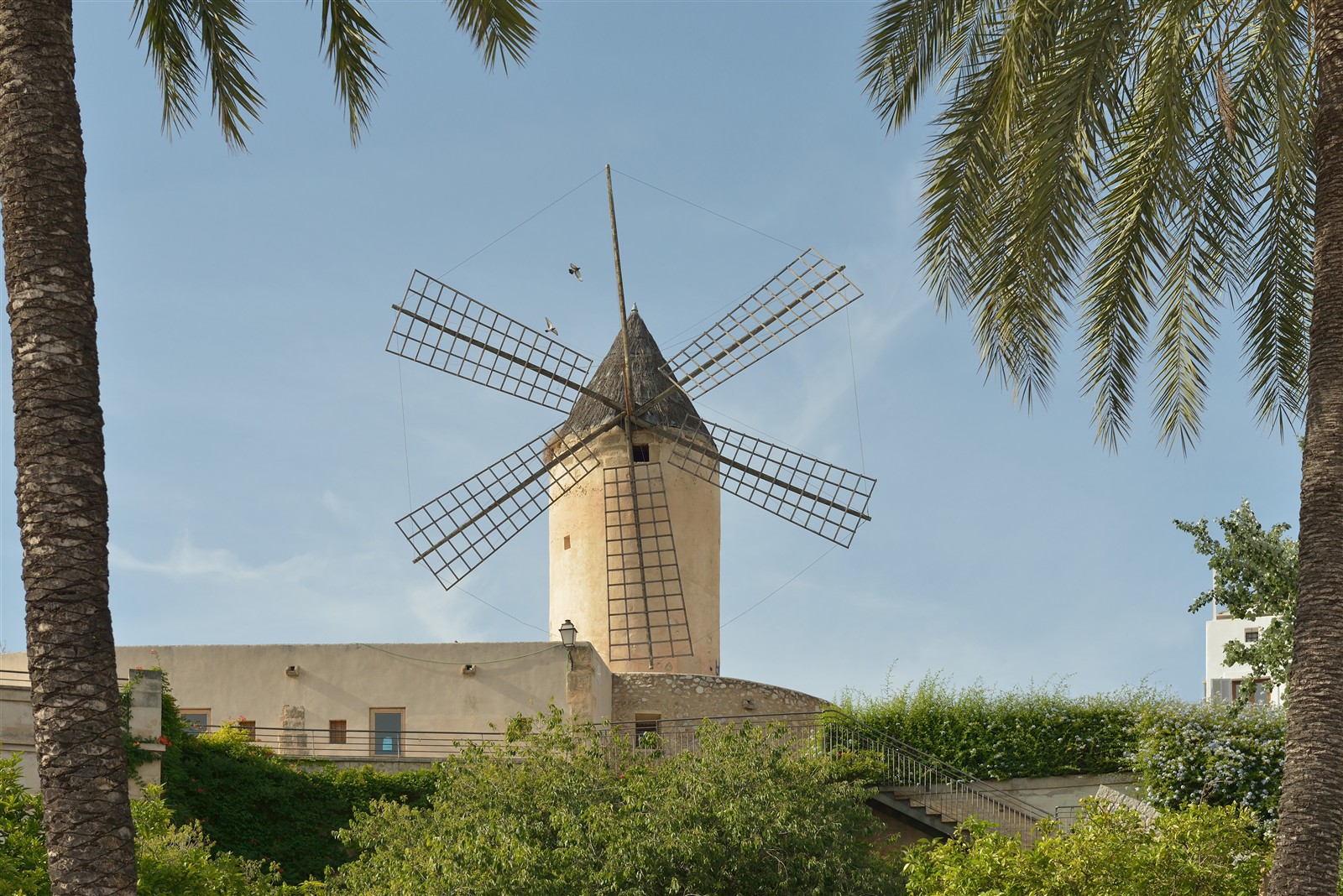
At the seaward edge of Santa Catalina, on a low ridge above the waterfront, sits Es Jonquet: a cluster of old fishermen’s houses and a line of stone windmills that once ground grain for the city. It is the most photographed corner of the neighbourhood and the only part of it that looks historic.
The windmills are not open to visitors in any organised way, and that is not really the point. The reason to walk up is the view: the ridge looks out over the harbour and the Paseo Marítimo, and it is a good place to be around sunset before dinner. The whole detour takes twenty minutes from the market.
Es Jonquet is also a reminder of what Santa Catalina used to be. These were the homes of the people who fished the bay, built low and tight on ground nobody else wanted. The contrast between them and the restaurants three streets inland is the neighbourhood’s whole recent history in one short walk.
4. The Streets and Architecture of Santa Catalina
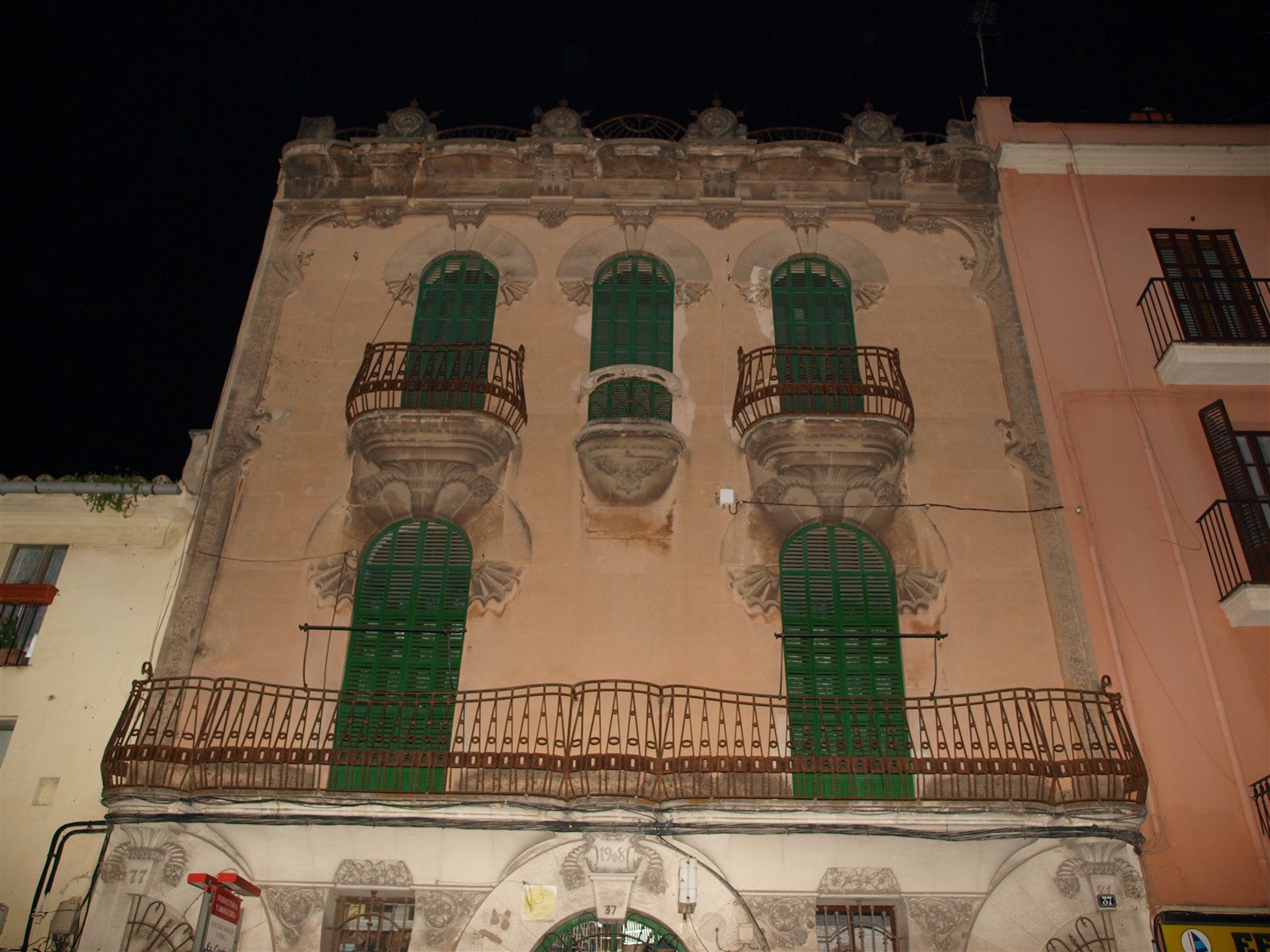
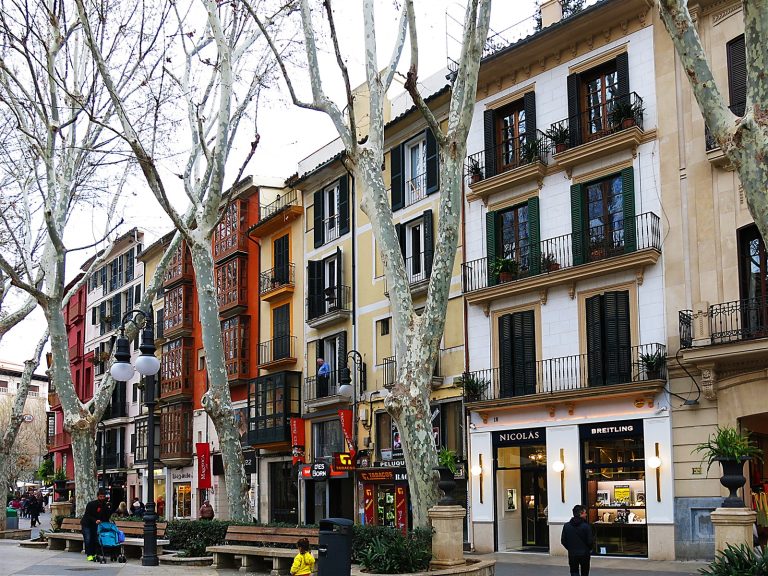
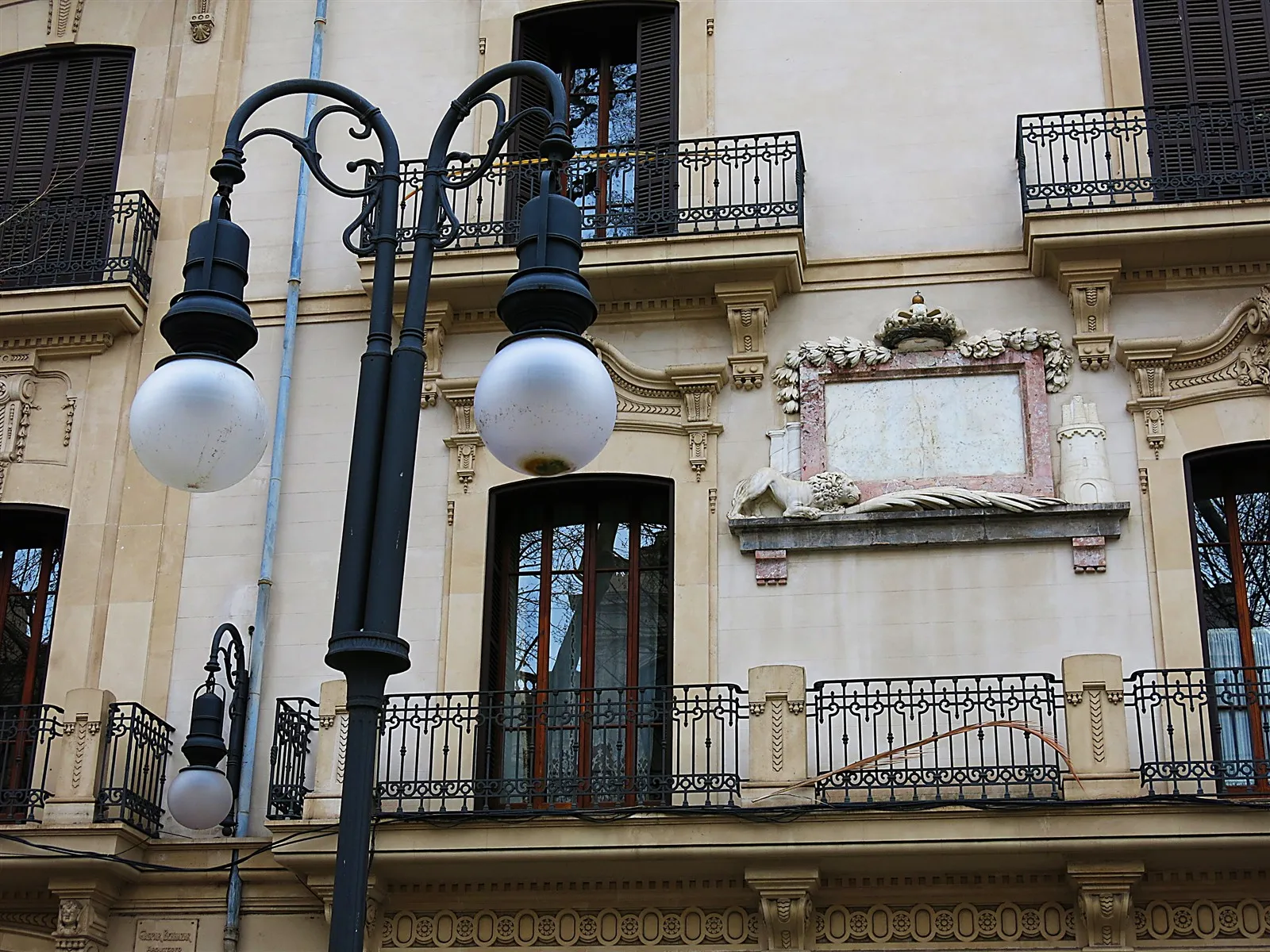
Santa Catalina is built on a grid of two and three-storey houses, most of them plain, painted in ochre and faded green, with shutters and small iron balconies. It is domestic architecture rather than grand architecture, and anyone arriving expecting the sandstone of the Old Town will find it ordinary at first glance.
Look a little harder and there is more here than there appears. Several corners carry proper modernist facades from the early twentieth century, with carved stonework and elaborate ironwork, sitting between plainer neighbours. Street art has arrived on the shutters and gable ends, and the mix of the two is a large part of the quarter’s current look.
The best way to see it is simply to walk the grid without a destination. The whole quarter takes ten minutes to cross, so getting lost is not possible, and the interesting things are all on corners rather than on the main streets.
A Twenty-Minute Walk Away in the Old Town
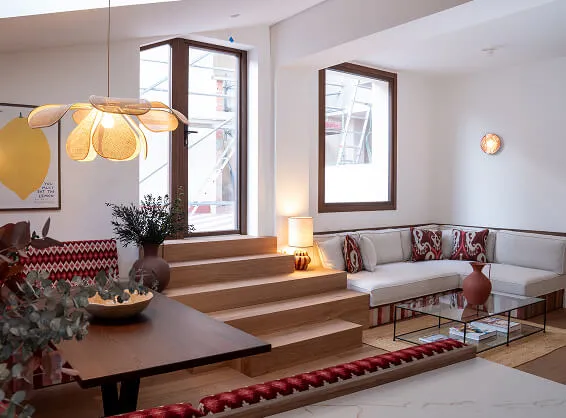
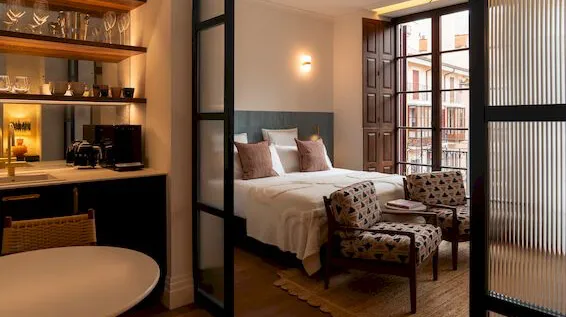
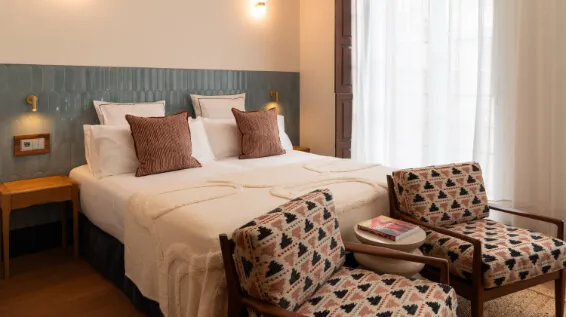
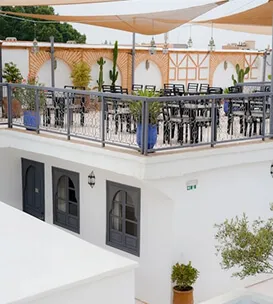
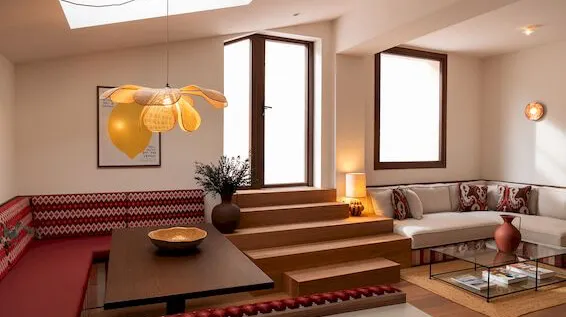
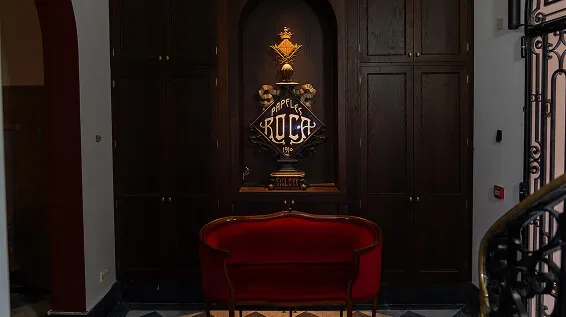
Casa Roca is a restored heritage building on Carrer dels Hostals, close enough to walk to Santa Catalina for dinner and back afterwards. Suites, apartments and a three-bedroom penthouse, with a rooftop terrace and an Art Deco bar downstairs.
Santa Catalina Palma Nightlife and the Evening Scene
Santa Catalina fills up in the evening rather than at night. The bars along Carrer de la Fàbrica and Carrer de Sant Magí start getting busy around eight, peak between ten and midnight, and thin out after one. It is a drinking-and-eating quarter rather than a clubbing one, which is the main difference between it and the Paseo Marítimo.
The crowd is a mix of Palma residents, longer-term foreign residents and visitors who have been told to come, and the balance tips further towards the first two on weeknights. It is comfortably walkable, well lit and busy enough to feel easy on your own. Our Palma nightlife guide sets out how the different quarters compare after dark.
The walk back to the Old Town at midnight takes fifteen to twenty minutes and is perfectly straightforward, along lit streets the whole way. In July and August it is a pleasant way to end the evening. In February, take the taxi.
One thing worth understanding about the timing. Palma eats late by northern European standards, and Santa Catalina is no exception. A restaurant that looks empty and disappointing at half past seven will be completely full at half past nine. If you arrive early and find the streets flat, the answer is usually to have a drink somewhere and come back in an hour rather than to conclude the neighbourhood was oversold.
The other difference from the Old Town is who you are standing next to. The historic centre’s bars run on visitors, and in August that is essentially all of them. Santa Catalina keeps a much higher share of residents year-round, which changes the atmosphere in a way that is hard to quantify but obvious once you are in it.
When to Visit Santa Catalina Palma
The neighbourhood runs on two clocks. The market clock starts at seven and is finished by early afternoon. The restaurant clock starts around eight in the evening and runs to midnight. Between about two and seven in the afternoon Santa Catalina is quiet and slightly shut, which surprises visitors who arrive at four expecting the scene they were promised.
Sunday is the day to avoid. The market closes, a good number of restaurants close with it, and the quarter is at its least interesting. If Sunday is your only free day, spend it in the Old Town instead and come here on a weekday morning.
Seasonally, Santa Catalina holds up better in winter than most of Palma because it is sustained by residents rather than tourists. Places stay open through November and February that would close in a resort area, which makes it a reliable choice on a shoulder-season trip when other parts of the island have shut down.
How To Spend A Day In Santa Catalina
- 08:30 Walk west from the Old Town, twenty minutes, flat the whole way.
- 09:00 The market. Coffee and something eaten standing at one of the inside counters.
- 10:30 The grid on foot, looking for modernist corners and shutter art.
- 11:30 Up to Es Jonquet for the windmills and the harbour view.
- 13:00 Lunch on Carrer de Sant Magí, which is less booked than Carrer de la Fàbrica.
- Evening Come back after 20:30 if you want the bars at their best.
Should You Stay in Santa Catalina Palma or the Old Town?
This comes up constantly, and the answer depends on which trip you are taking rather than on which quarter is better. Both are good. They are good at different things, and the fifteen-minute walk between them means you are never really cut off from either.
Stay in the Old Town on a first visit. The cathedral, the Almudaina palace, Plaça Major, the Arab Baths and the Olivar market are all inside a ten-minute radius, and you will see them repeatedly and casually rather than as planned excursions. The historic centre also has by far the greater share of the city’s interesting places to sleep, because the buildings themselves are the attraction. You can still eat in Santa Catalina every night; it is a twenty-minute walk each way.
Stay in Santa Catalina on a second or third visit, when the sightseeing is already done and what you want is a neighbourhood. Accommodation here skews towards apartments rather than hotels, which suits longer stays and people who intend to use the market. The trade-off is that everything historic is a walk away, and on a short trip that walk eats into the part of the day you came for.
One practical note that applies either way: neither quarter is designed for cars. Parking in Santa Catalina is residential and tight, and the Old Town is worse. If you are hiring a car for day trips, confirm where it will actually live before you book a room in either place.
More to Explore in Palma
- The complete guide to things to do in Palma de Mallorca
- Day trips from Palma without a car, for the days you leave the city
- Curated experiences at Casa Roca, including wine and vermouth tastings
“Casa Roca exceeded all of our expectations… The incredible staff created a personalized itinerary with recommendations for charming towns to visit.”
– Diana D, TripAdvisor, August 2026
Frequently Asked Questions
Where Is Santa Catalina In Palma?
Santa Catalina sits immediately west of Palma Old Town, across the Passeig Mallorca on the line of the old riverbed. It is a flat 15 to 20 minute walk from the historic centre, or about five minutes by taxi. The whole quarter takes around ten minutes to cross on foot.
Is Santa Catalina Palma Worth Visiting?
Yes, particularly if food matters to you. It holds Palma’s best concentration of restaurants along Carrer de la Fàbrica and Carrer de Sant Magí, plus a working covered market of around 50 stalls. It is a neighbourhood rather than a sight, so go for a morning at the market or an evening out rather than for landmarks.
What Are The Santa Catalina Market Opening Times?
The Mercat de Santa Catalina opens at 07:00 from Monday to Saturday and is closed on Sundays. Stalls begin winding down through the early afternoon, so the best window is roughly 08:00 to 11:00 when the fish counters are at their fullest and the market bars are busy.
Is Santa Catalina Or Palma Old Town Better To Stay In?
The Old Town is better for a first visit, since the cathedral, Plaça Major and the main sights are all within a ten-minute walk. Santa Catalina is better on a second or third trip, or if eating well matters more than sightseeing. The two are 15 to 20 minutes apart on foot, so you can stay in one and use the other easily.
What Is Es Jonquet In Santa Catalina?
Es Jonquet is the old fishermen’s quarter on the ridge at the seaward edge of Santa Catalina, marked by a line of stone windmills that once milled grain for the city. The windmills are not open to visitors, but the ridge gives a good view over the harbour and is about 20 minutes on foot from the market.
Is Santa Catalina Palma Good For Nightlife?
It is the best area in Palma for bars and an evening out, though not for clubbing. The streets fill from about 20:00, peak between 22:00 and midnight, and quieten after 01:00. For late clubs, the Paseo Marítimo is the area to head for instead.
Do You Need To Book Restaurants In Santa Catalina?
At weekends, yes. The good places are small and fill from about 21:00 on Friday and Saturday. Midweek you can often walk in, especially if you eat at 20:00 rather than 21:30. Carrer de Sant Magí is generally easier than Carrer de la Fàbrica.
What Day Should You Avoid Santa Catalina?
Sunday. The market closes, a good number of restaurants close with it, and the quarter is at its quietest. The afternoon lull between roughly 14:00 and 19:00 on any day is also worth avoiding if you have come specifically for the food scene.
Walk to Dinner, Walk Home Again
Casa Roca sits on Carrer dels Hostals in Palma Old Town, twenty minutes from Santa Catalina and five from the cathedral. Suites, apartments and a three-bedroom penthouse in a restored 175-year-old building.
Check AvailabilityImage credits: Windmill and Es Jonquet by Chixoy (CC BY-SA 3.0); Mercat de Santa Catalina and Carrer de Soler by Chixoy (CC BY-SA 3.0); modernist facade by Alainbs (CC0); Passeig del Born by Enric (CC BY-SA 4.0). All via Wikimedia Commons.