The quick answer: The Drach Caves (Coves del Drac) in Porto Cristo are Mallorca’s most visited attraction – and among the rare cases where something genuinely lives up to its reputation. The underground lake, the stalactite chambers, and the surprise classical concert on the water are all extraordinary. Allow 2.5 hours including travel time from the entrance. Book tickets online in advance from June through September. This guide covers everything you need: how to get there, what to expect inside, how much it costs, and whether it’s worth combining with other stops in the east of the island.
🌿 Insider Tip: The Drach Caves do timed entry in groups, with tours departing roughly every hour. The first tour of the day (10am when the site opens) is consistently the least crowded. If you’re coming from Palma, leave by 8:30am, park in the free car park on Avinguda Joan Servera Camps before the paid lots fill up, and you’ll walk straight into the first group with room to breathe.
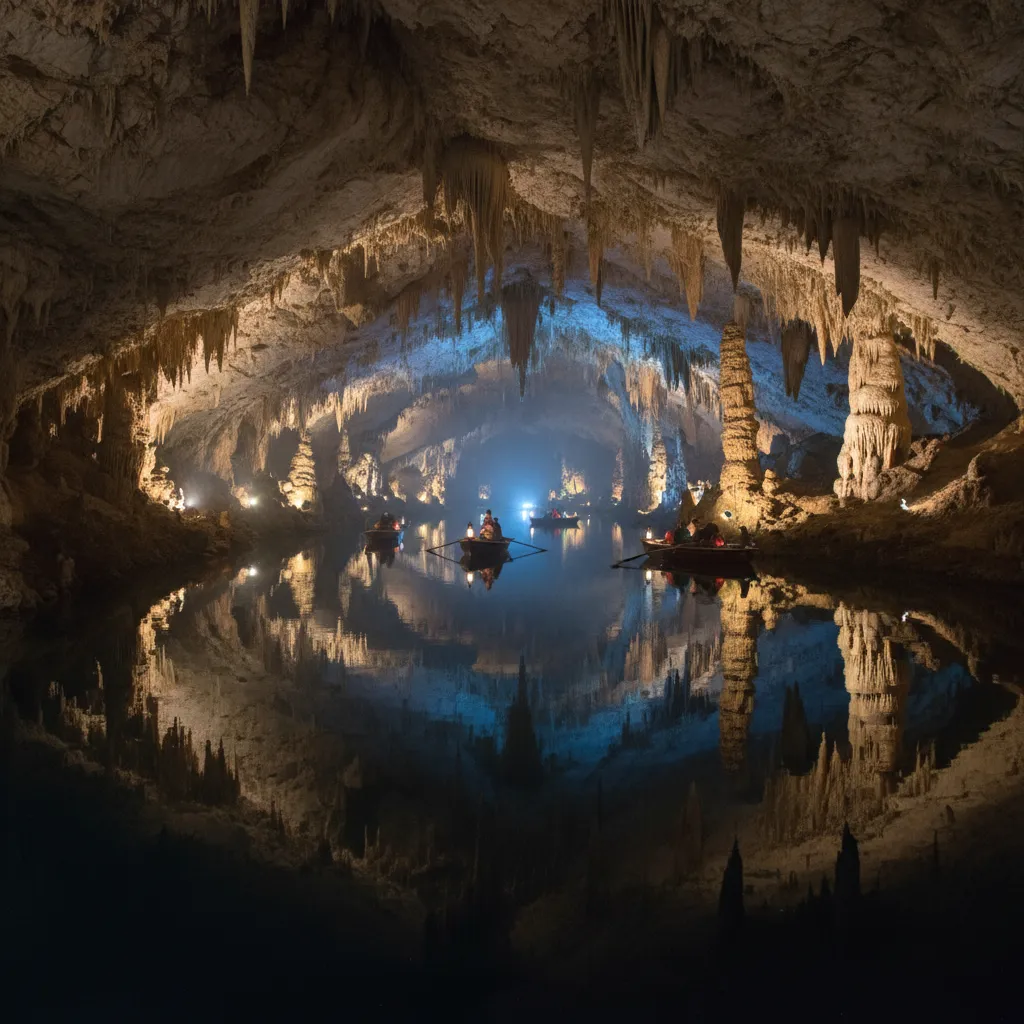
Underground Mallorca is a different island entirely. While the surface dazzles – all limestone cliffs and turquoise sea and almond-blossom hills – beneath it lies a karst system of caves, tunnels, and subterranean lakes that took 200 million years to form. The Drach Caves are the most accessible and most spectacular of them: four connected caverns running nearly two kilometres underground, opening finally onto Lake Martel – one of the largest underground lakes in the world.
The caves sit near Porto Cristo on Mallorca’s east coast, about an hour’s drive from Palma. The journey from Palma’s Old Town passes through the island’s interior – red earth, carob trees, stone walls, and the kind of rural Mallorca that the coastal resorts have no sense of at all. That, too, is part of the visit.
What Are the Drach Caves? A Brief History
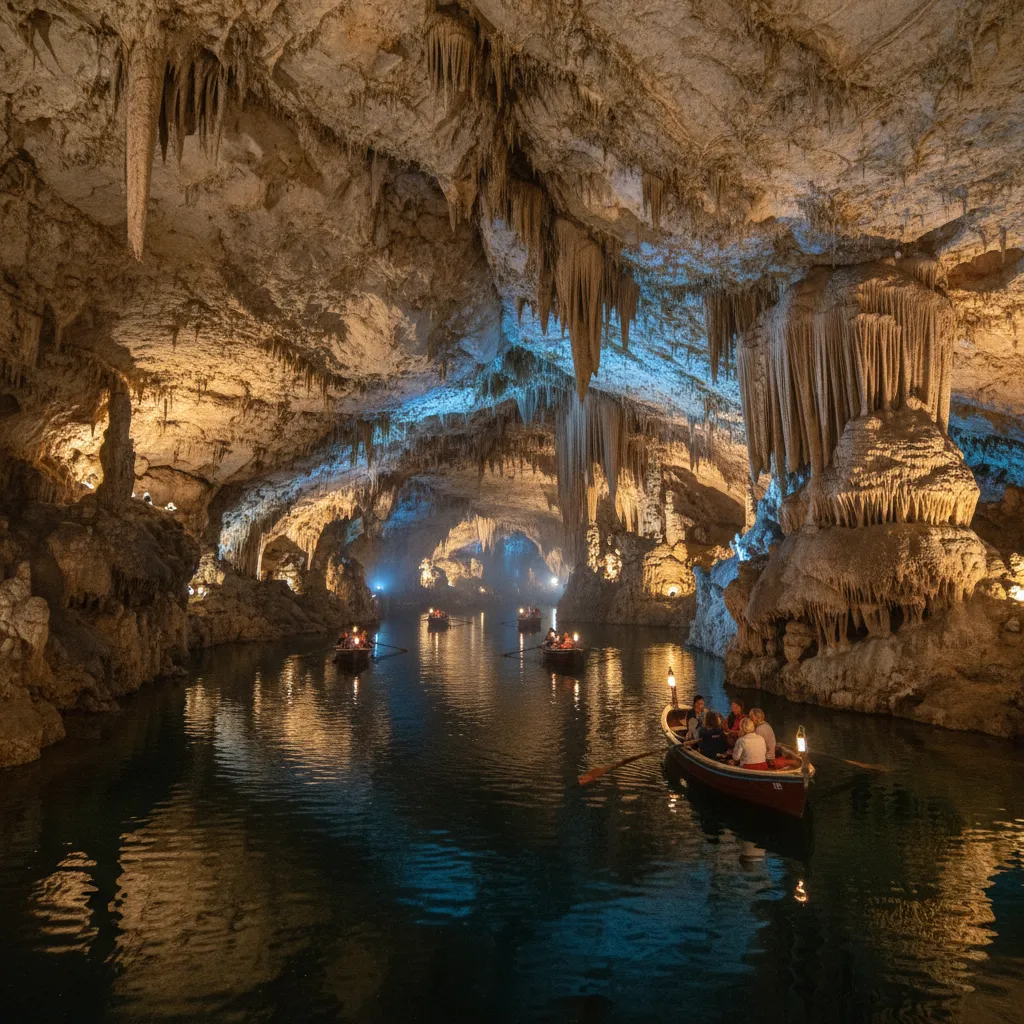
The caves have been known to locals for centuries, but their systematic exploration began in 1896 when a French geologist, Édouard Alfred Martel, mapped the underground lake that now bears his name. Martel measured Lake Martel at 177 metres long, 40 metres wide, and up to 9 metres deep – the largest known underground lake in the world at the time of discovery, and still among the largest today.
The cave system was developed for public visits in the 1930s under the direction of the Catalan engineer Carlos Buigas, who designed a path through the four main chambers and introduced the theatrical lighting – amber, rose, and white – that today gives the formations their otherworldly quality. The classical music concert on boats on Lake Martel was introduced in the same era and has been performed at every visit since.
The caves are privately owned – by the Servera family since the 1950s – and are managed with the kind of care you’d expect from a business whose livelihood depends on keeping something extraordinary looking extraordinary. They’re in excellent condition for a site that receives upwards of one million visitors per year.
Getting to the Drach Caves from Palma
Staying in Palma for your Mallorca trip?

Casa Roca is ideally placed for day trips like the Drach Caves – in the heart of the Old Town, with the main eastbound road out of the city ten minutes away.
Porto Cristo is 62 kilometres from Palma, on the east coast. There are three realistic ways to get there:
By Car – The Recommended Option
Driving is the most flexible way to do the Drach Caves, particularly if you want to combine the visit with Porto Cristo, the nearby beaches, or the Palma Aquarium on the return journey. The drive takes 55-65 minutes via the MA-15 motorway from Palma – well-signposted and straightforward. Parking in Porto Cristo near the caves costs €1-2 per hour in the paid lots directly outside the entrance. A free car park on Avinguda Joan Servera Camps is a 5-minute walk away and worth the short detour.
By Organised Tour
Multiple operators run half-day and full-day tours from Palma that include transport, entry, and usually a stop in Porto Cristo for lunch. These are the sensible option if you don’t want to drive, don’t have a hire car, or want to add neighbouring attractions (typically the Caves of Hams or the pearl factory at Manacor) without the logistics. Prices start at around €35 per person for a half-day. Casa Roca’s Tasting Palma team can arrange private and small-group day trips with local guides – a different experience entirely from the coach tour.
By Bus
TIB (Transport de les Illes Balears) runs buses from Palma to Manacor with a connecting service to Porto Cristo. The journey takes around 90 minutes and requires a transfer. In summer (June-September), there are direct seasonal services from Palma Bus Station to Porto Cristo. Check tib.org for current timetables. The bus option is viable but inflexible – the timetable doesn’t always align with cave tour times, so allow for waiting time at both ends.
Tickets, Times and Prices
The Drach Caves are open year-round, though hours vary by season:
- High season (April-October): Open 09:00-19:00, with tours departing every 60 minutes from 10:00
- Low season (November-March): Open 10:00-17:00, with fewer daily departures
Ticket prices in 2026:
- Adults: €20
- Children (3-12 years): €13
- Under 3: Free
Book online at cuevasdeldrach.com at least a day in advance from June through September – the site does sell out, particularly for the 10am and 12pm tours. In shoulder season (April-May and October), walk-up tickets are usually available, but online booking still saves time at the entrance.
⭐⭐⭐⭐⭐ Verified Guest · TripAdvisor
“Traveling with a baby for the first time was a bit daunting, but the team at Casa Roca made it seamless… The wine machine in reception was great as it meant we could enjoy tasting different premium Mallorcan wines without having to go out. A truly welcoming, stress-free environment.”
– Florencia, May 2026
What to Expect Inside the Caves
The tour covers approximately 1.2 kilometres on foot through four main chambers – the Cave of the Frenchman, the Cave of the Bats, the White Cave, and the Black Cave – before arriving at Lake Martel for the concert. The path is well-lit and accessible, though some sections involve low ceilings and uneven stone surfaces. Comfortable shoes are essential. The temperature inside holds at around 18°C (64°F) year-round – bring a light layer if you run cold.
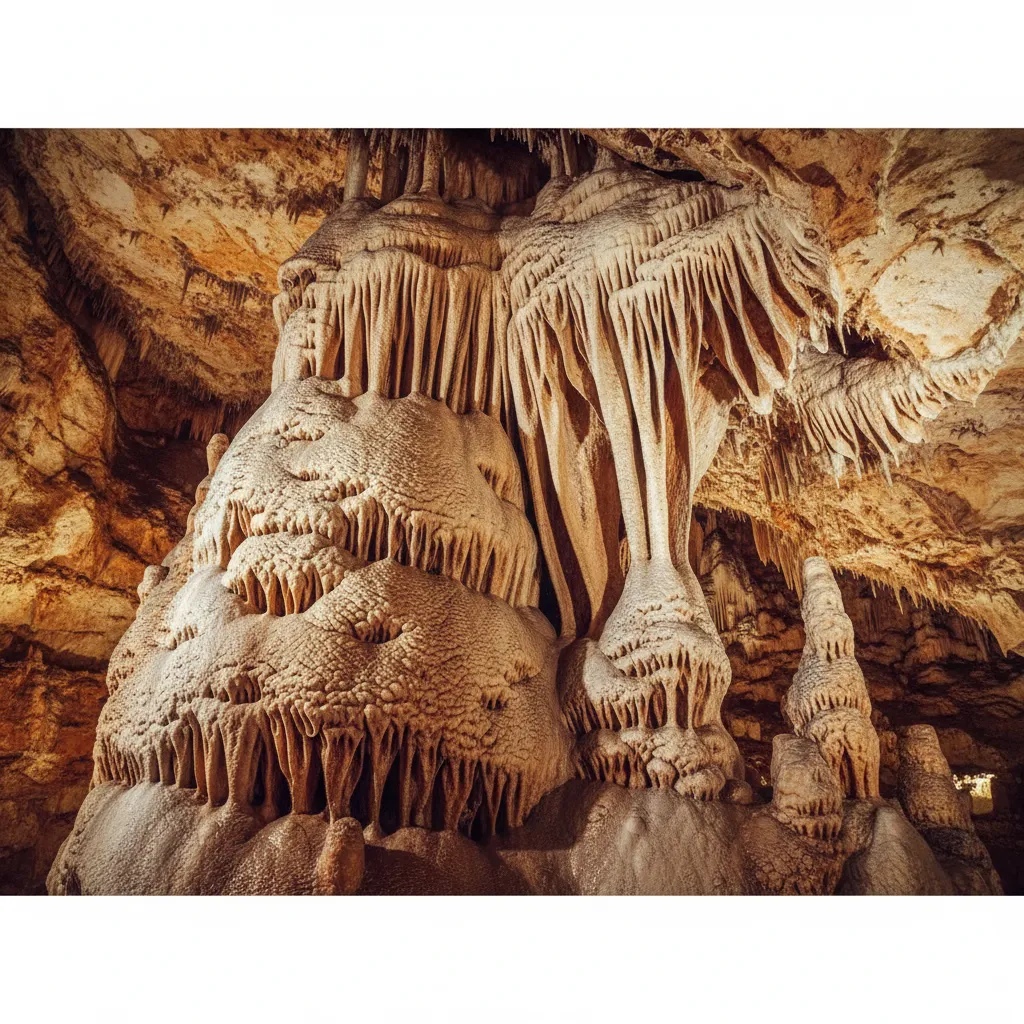
The formations – stalactites and stalagmites built up at roughly one centimetre per century – range from modest to extraordinary. The most impressive chamber before the lake is the Black Cave, where a single enormous stalactite column, formed by the meeting of a stalactite from the ceiling and a stalagmite from the floor over millions of years, stands in the middle of the room like a natural sculpture. The lighting in this chamber is particularly good.
The Concert on Lake Martel
The tour ends at a subterranean theatre arranged around the lake. After a few minutes of darkness – complete, absolute darkness – a quartet of musicians appears on illuminated boats, drifting silently across the black water. They play for approximately 15 minutes: typically Bach, Handel, or other Baroque pieces chosen for their resonance in the cave acoustic. The sound carries across the water and up into the cave ceiling in a way that a concert hall cannot replicate.
It is – and there is no other word for it – genuinely moving. Visitors who were sceptical before the tour consistently describe it as the highlight. If you’ve brought children who are beginning to lose patience with caves, this is the moment that retrieves the experience.
After the concert, a portion of visitors can take a short boat ride on the lake (included in the ticket). The boats hold 12-15 people and cross from the concert theatre to the exit. It’s worth taking if the queue is short – the view of the cave ceiling from the water, looking up at illuminated stalactites reflected in the black surface, is the image that stays longest.
Is It Worth It? An Honest Assessment
Yes. The Drach Caves are one of the few Mallorcan attractions where the reality exceeds the marketing. The caves are genuinely extraordinary – not extraordinary “for a tourist attraction” but extraordinary by any standard. The concert is an experience unlike anything most visitors will have encountered. The scale of Lake Martel is difficult to comprehend until you’re standing at its edge in near-darkness.
The caveats: the tour is ticketed and timed, which means you’re moving through with a group. The path is comfortable but not completely accessible for pushchairs or wheelchairs in all sections. The souvenir shop at the exit is, predictably, best ignored. None of this diminishes the caves themselves.
For children above 4 or 5, it’s an excellent experience – the darkness, the formations, and the music are handled with enough theatre to hold attention throughout. For younger children, it depends on the child.
What to Combine With the Drach Caves
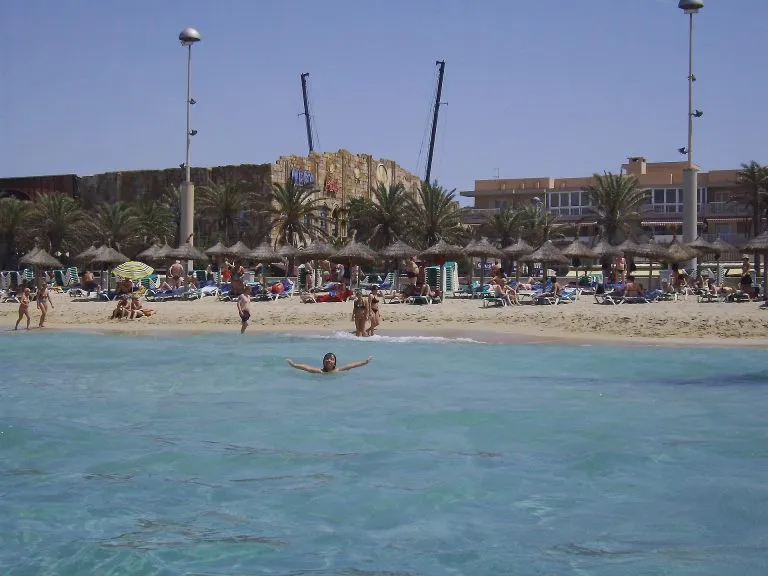
Porto Cristo village is a ten-minute walk from the cave entrance – a small east coast resort town with a natural harbour, good seafood restaurants along the waterfront, and a relaxed afternoon pace. Lunch here after the caves makes for a full day out. The harbour beach (Platja de Porto Cristo) is small but pleasant for a post-lunch swim. For Palma’s best beaches – much closer to the Old Town – there are better options on the return journey west.
The beaches of the east coast – Cala Millor, Cala Bona, and Sa Coma – are within 15-20 minutes north of Porto Cristo and offer the island’s characteristically turquoise water. If you have the car and the afternoon, the east coast beaches on a weekday in early June or September are among the finest in the Mediterranean.
For everything worth doing in Palma on the days either side of your Drach Caves trip, our complete guide to things to do in Palma de Mallorca covers the full city programme alongside other Mallorca day trips.
For further information on visiting times and seasonal variations, the Mallorca Tourism official site covers current attraction opening hours and island travel advice.
The best base for Mallorca day trips
Casa Roca sits in the heart of Palma’s Old Town – the natural starting point for the Drach Caves, Sóller, Valldemossa, and everything else the island has to offer. Return in the evening to a glass of Mallorcan wine in the Capitulo bar and the kind of debrief that only happens in a hotel that genuinely knows the island. The stories from your day deserve a good setting.
Frequently Asked Questions
How long does a visit to the Drach Caves take?
Allow 1.5 to 2 hours inside the caves, including the concert on Lake Martel and the optional boat crossing. Add the drive from Palma (1 hour each way) and a lunch stop in Porto Cristo, and the full day out takes 5-6 hours comfortably. It’s an ideal full day trip from Palma.
Do you need to book Drach Caves tickets in advance?
In summer (June-September), yes – book online at cuevasdeldrach.com at least a day or two ahead, particularly for the 10am and 12pm tours. In spring (April-May) and October, walk-up tickets are usually available, but online booking is still recommended to guarantee your preferred time. December through March rarely sells out.
Are the Drach Caves suitable for children?
Yes – children aged 4 and above generally enjoy the caves. The concert on the lake and the darkness are handled theatrically enough to hold attention. The underground temperature (18°C) is cool but not cold. The path is mostly accessible but has some uneven sections; pushchairs are not practical for most of the route. Under-3s enter free.
How far are the Drach Caves from Palma?
62 kilometres – about 55-65 minutes by car via the MA-15 motorway. There’s no direct train connection; buses require a transfer in Manacor and take around 90 minutes each way. Most visitors find driving the most practical and flexible option.
What should I wear to the Drach Caves?
Comfortable walking shoes with good grip – the cave paths are well-maintained but have uneven stone surfaces and occasional steps. The temperature inside is a constant 18°C (64°F), which is noticeably cooler than summer outdoor temperatures – a light layer in a bag is sensible from June through August. The cave is well-lit throughout.