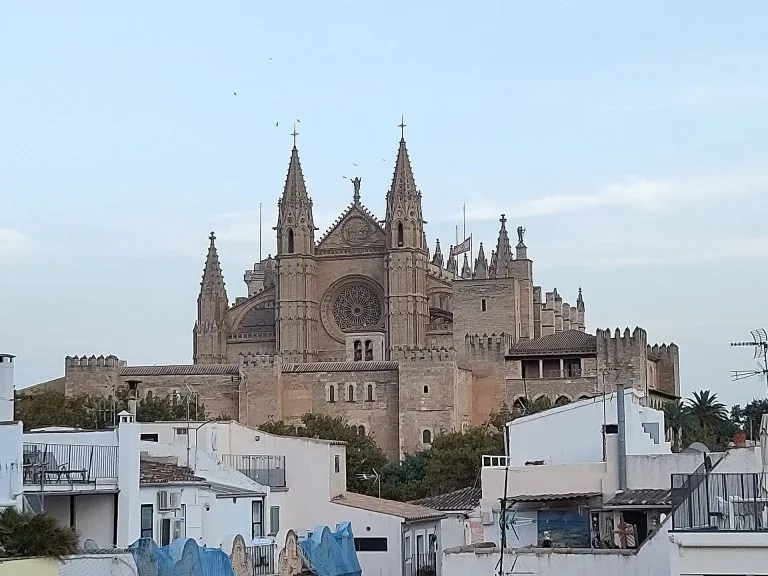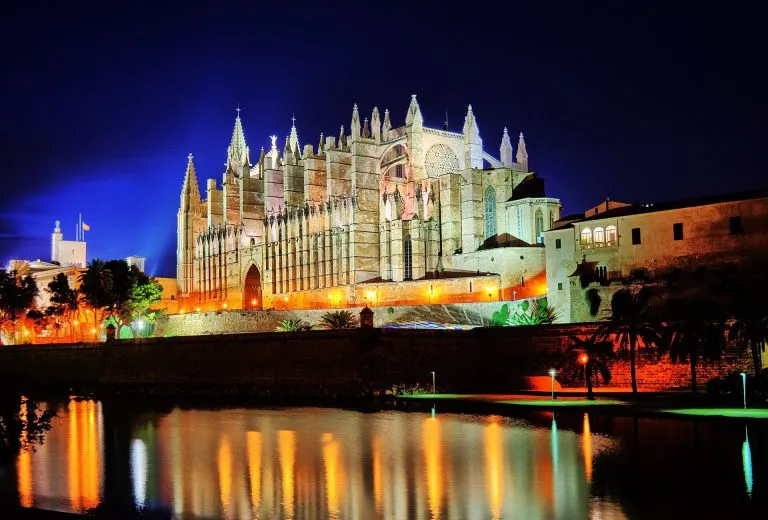
La Seu, the Cathedral of Palma, is the historic landmark of the capital city of Palma de Mallorca and one of the most iconic monuments in the Balearic Islands. Standing in the very heart of the city, this magnificent 14th-century cathedral is widely regarded as the most emblematic building in Mallorca’s capital and an essential stop for any visitor.
It is impossible to miss this imposing structure of warm golden sandstone, which dominates the skyline above Parc de la Mar and offers a spectacular view for those arriving by sea. As one of Europe’s tallest Gothic structures, La Seu is not only an architectural masterpiece but also a defining symbol of Palma’s identity.
The cathedral stands on a site rich in history. It was built over the former location of a mosque that once stood opposite the Royal Palace of Palau de l’Almudaina during the Moorish occupation of Mallorca. This unique layering of cultures and religions reflects the city’s complex past and adds profound historical significance to the cathedral we see today.
What is La Seu Cathedral?
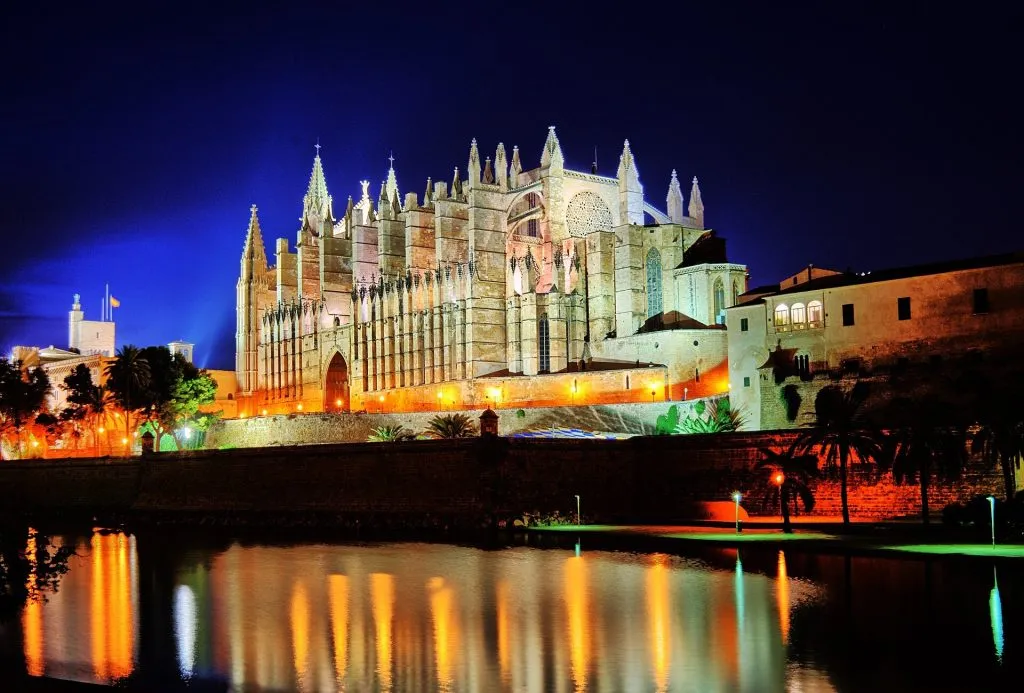
La Seu, the Cathedral of Santa Maria of Palma – that’s what the locals call it and visitors tend to refer to it as the Cathedral of Mallorca too. It’s basically the main church in the city of Palma de Mallorca and the name “La Seu” comes from the Catalan word that means “the bishop’s seat” – a nod to its role as the central church for the Bishop of Mallorca.
The build was started in 1229, just after the Christian conquest of Mallorca, and was largely finished by the 14th century, with later bits and bobs added or restored over the years. And today it’s still a place of worship as well as one of the most visited landmarks in the Balearic Islands.
As Mallorca’s principal cathedral, La Seu has some serious historical, cultural and religious significance. In simple terms – it’s the island’s main cathedral, a really big deal because of its size, history and identity as one of the defining symbols of Mallorca.
History of La Seu Cathedral in Palma de Mallorca: Construction, Conquest & Gaudí’s Influence
The story of La Seu Cathedral in Palma de Mallorca starts back in 1229 when King James I of Aragon conquered Mallorca from the Moors. After the conquest, the decision was made to build a grand Christian cathedral on a really important site – a spot that previously was home to a mosque that stood opposite the Royal Palace of Palau de l’Almudaina. This location was a powerful symbol of the cultural and religious change the island was going through.
Work started a little while after the conquest but the build went on and on over many, many years. Rather than being built in one go, La Seu developed gradually as architectural styles and resources changed over time. The core Gothic structure got done by the 1600s, but the build kept getting modified and refined long after that.
- Construction began in 1229 after King James I’s conquest
- Built on the site of a former mosque
- Main Gothic structure was largely completed by the 17th century (1600s)
Later centuries brought further changes, especially during the 19th and 20th centuries, when restoration work helped preserve the cathedral and adapt it to evolving architectural and structural needs.
A major turning point came in the early 20th century with the involvement of Catalan Modernist architect Antoni Gaudí. He reimagined parts of the cathedral’s interior, most notably proposing a dramatic crown-of-thorns-inspired canopy above the altar. However, this feature was ultimately completed by one of his pupils and collaborators rather than Gaudí himself. Despite this, his influence remains a defining part of the cathedral’s modern identity.
- Significant restoration and preservation work in the 19th–20th centuries
- Early 1900s interior redesign influenced by Antoni Gaudí, including a crown-of-thorns style canopy over the altar (completed by his collaborators)
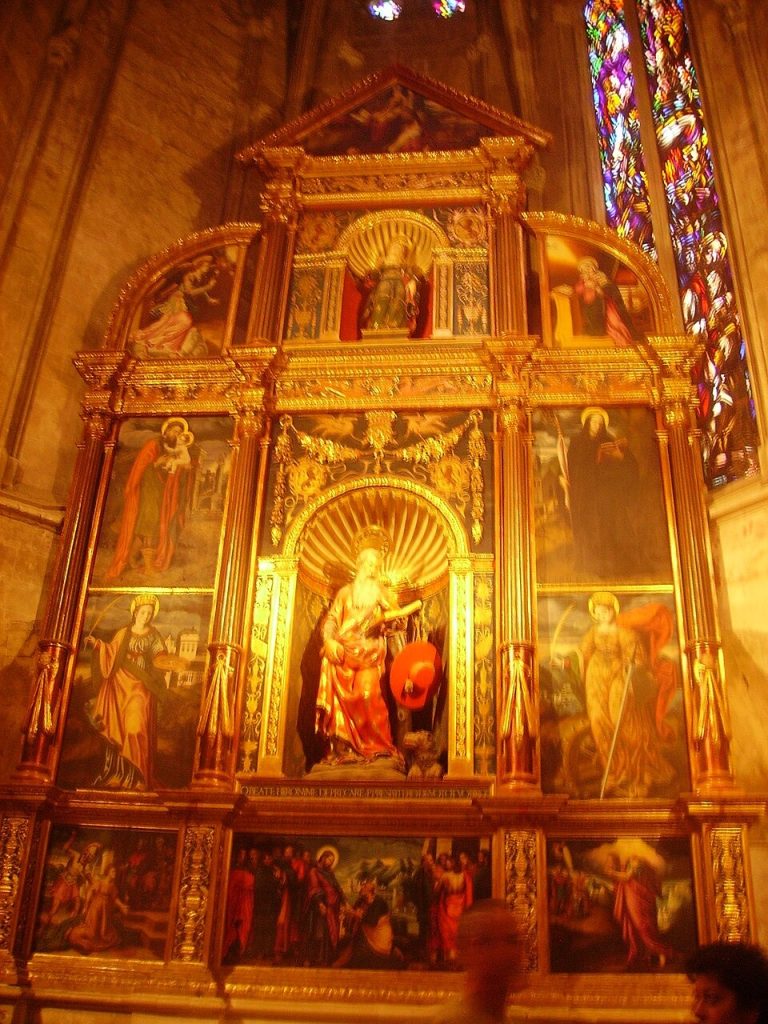
In more recent times, La Seu has continued to evolve. The Chapel of the Holy Sacrament was redesigned in the 21st century by Mallorcan artist Miquel Barceló, creating a bold contemporary contrast within the Gothic space. While its modern style is controversial, it has become one of the cathedral’s most talked-about features.
Architecture of La Seu Cathedral: Gothic Heights and Mediterranean Light in Palma
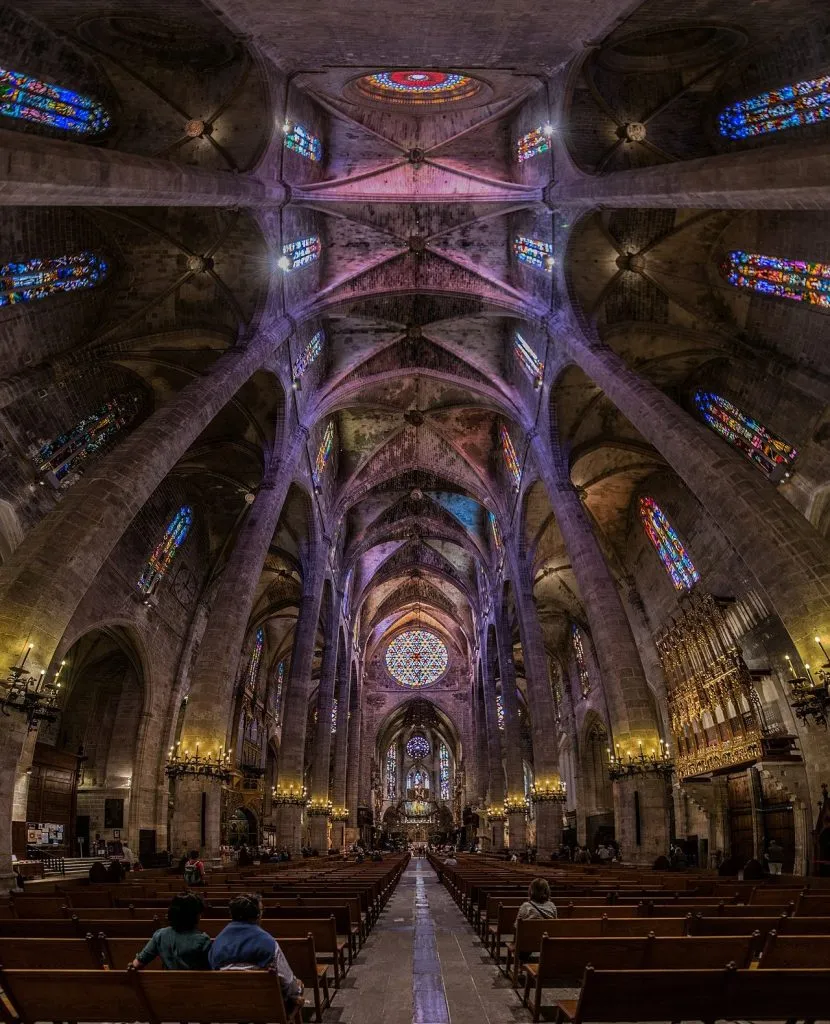
La Seu Cathedral in Palma de Mallorca is one of the most incredible examples of Mediterranean Gothic architecture in Europe – its massive scale, dramatic height and use of golden sandstone make it a real showstopper. Built to stand out against the city skyline and the waterfront, the cathedral was designed to inspire awe with its vertical proportions and structural strength
Gothic Style Architecture
La Seu Cathedral in Palma de Mallorca is one of the most impressive examples of Mediterranean Gothic architecture and ranks among the tallest religious buildings in Europe. Its design is built around height, strength, and light, using massive golden sandstone blocks that give the structure its warm and monumental appearance. The architecture relies on thick supporting walls and flying buttresses, which allow the building to rise to great heights while keeping the interior open and spacious.
- One of the tallest Gothic cathedrals in Europe
- Constructed from golden sandstone
- Supported by flying buttresses and heavy structural walls
- Designed to emphasize vertical height and monumentality
The Rose Window (“Gothic Eye”)
La Seu Cathedral’s rose window is one of the standout architectural features and is commonly known as “The Gothic Eye”. Located on the front of the house, it’s one of the largest rose windows of its kind in the world and is made up of a massive number of pieces of stained glass all assembled in a perfect circle. As the light passes through it at different times of day, it creates a fascinating light show that changes the look of the interior of the cathedral.
- One of the largest Gothic rose windows in Europe
- Known as the “Gothic Eye”
- Over 12 metres in diameter
- Produces dynamic coloured light effects inside
Gaudí’s Interior Transformation
At the start of the 20th century Antoni Gaudí got the job of redesigning some of the cathedral’s interior. He was keen to get more natural light in and make the space look more airy and visually balanced. He re arranged some of the spaces around the altar and toned down some of the more elaborate Gothic features to let the light get further into the nave. Some of the original ideas didn’t quite make it through to the final design but his influence added a subtle modern touch to the traditional Gothic design.
- Interior redesign by Antoni Gaudí in the early 1900s
- Improved natural light distribution inside the cathedral
- Reorganised altar and surrounding spaces
- Combined modernist ideas with Gothic architecture
Sea-Facing Location & Light Effects
The position of La Seu Cathedral beside the Mediterranean Sea in Palma de Mallorca significantly enhances its architectural beauty. The golden sandstone exterior reflects sunlight throughout the day, shifting in tone with the weather and time of day. Inside, the movement of natural light creates subtle changes in brightness and shadow, giving the interior a living, atmospheric quality that constantly evolves rather than remaining static.
- Located directly beside the Mediterranean coastline
- Exterior reflects changing sunlight conditions
- Interior light shifts naturally during the day
- Creates a constantly changing visual atmosphere
6 Most Interesting Facts About La Seu Cathedral
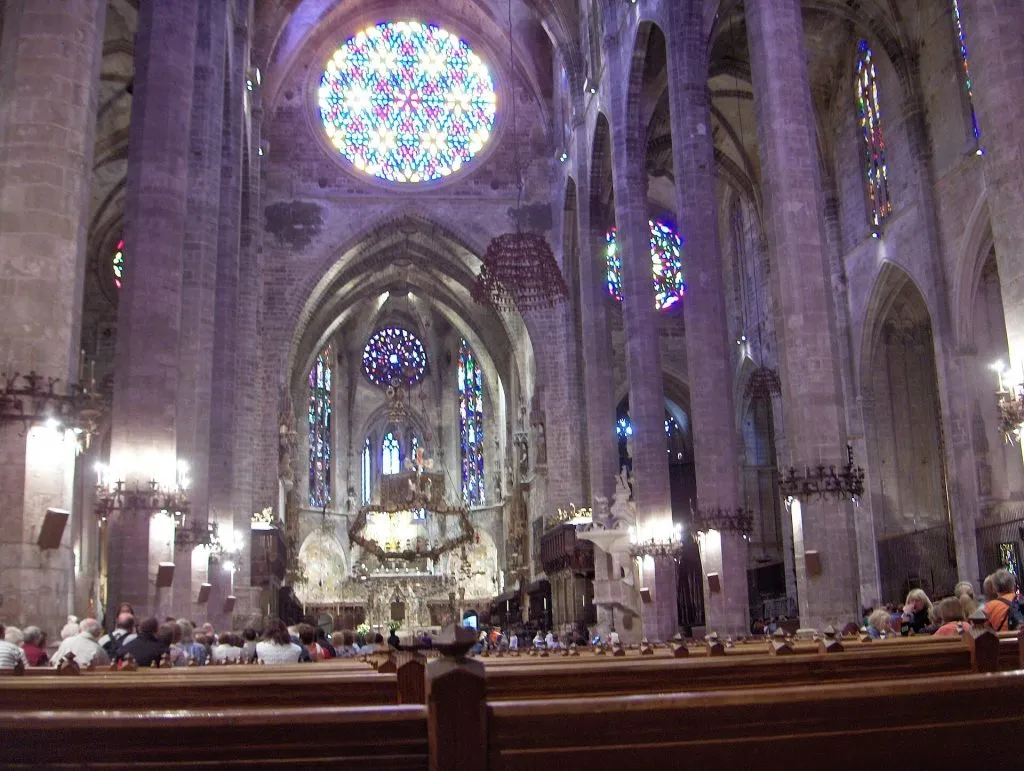
La Seu Cathedral is one of the most famous landmarks in Mallorca, full of hidden stories, artistic details and centuries of history. Situated right in the heart of Palma de Mallorca it’s the island’s most famous church and is an absolute must see for anyone visiting Palma de Mallorca. Here are six of the most interesting facts about what is a truly remarkable cathedral.
1. More Than 400 Years of Construction
The first stones of La Seu Cathedral were laid down in the 13th century after the Christian conquest of Mallorca and work on the building went on for many centuries. Although work started early the cathedral was actually completed many years later in the early 20th century – a testament to the endurance of all the builders and the different architectural styles they employed.
- Construction began in the 13th century
- Completed many centuries later in the 1900s
- A blend of Gothic and later architectural influences
2. A Statue With a Legendary Story
Just outside the cathedral, there’s a well known statue of an angel with a scarf tied around its neck. As the legend goes it’s got a fascinating story behind it – one that is connected to the Christian reconquest of the island and a bit of a clever moment involving a local resident who helped alert others when they tried to make a break for it.
- Angel statue dates back to the 14th century
- Connected to a local reconquest legend
- Still visible during guided visits today
3. Built Over a Former Mosque
Before the cathedral existed, the site was home to an Islamic mosque from the Moorish period of Mallorca’s history. After the Christian takeover, the structure was replaced and transformed into the cathedral we see today, though some original elements still remain hidden within its chapels and structure.
- Originally an Islamic place of worship
- Rebuilt after the Christian conquest in 1229
- Some original architectural elements still preserved
4. Antoni Gaudí’s Influence
In the early 20th century, the famous architect Antoni Gaudí was invited to redesign parts of the cathedral’s interior. His work focused on improving light and space, including modifications around the altar and contributions to the famous rose window design.
- Early 1900s interior redesign by Antoni Gaudí
- Focus on natural light and spatial improvement
- Influenced the cathedral’s modern interior look
5. Hundreds of Statues and Artistic Details
La Seu Cathedral is covered in more than 300 statues and decorative carvings on its exterior alone. Inside, visitors can also find detailed frescoes, artistic reliefs, and symbolic designs that reflect different historical periods and artistic styles.
- Over 300 exterior sculptures
- Mix of Gothic and historical artistic styles
- Detailed interior decorations and frescoes
6. Miquel Barceló’s Modern Intervention
One of the most recent artistic additions to the cathedral is the Chapel of the Holy Sacrament, redesigned by Mallorcan artist Miquel Barceló. His contemporary style creates a bold contrast with the Gothic architecture, making it one of the most unique modern spaces inside the cathedral.
- Modern redesign by Miquel Barceló
- Contemporary chapel interior added in the 21st century
- Strong contrast with Gothic architecture
La Seu Cathedral in Palma de Mallorca: Tickets, Opening Hours & Travel Guide
Visitor Information for La Seu Cathedral
Visiting La Seu Cathedral in Palma de Mallorca is one of the top experiences among all Palma de Mallorca attractions, offering a mix of history, architecture, and sea views. The cathedral is located in the heart of Palma’s old town, right next to the waterfront and overlooking the Mediterranean Sea, making it easy to reach on foot from most central areas.
Tickets
Entry to La Seu is usually paid for with a standard admission ticket, but don’t worry – it’s free if you’re attending a service. And the good news is that ticket prices vary, so it’s worth checking ahead to see what you can see for your buck.
- General entry is paid for tourists
- Free access during worship services
- Extra areas may require additional ticket options
Opening Hours
Opening times change depending on the season, but the cathedral is typically open from morning until late afternoon or early evening. Hours may be reduced during religious events or special services, so it is always recommended to check ahead before visiting.
- Mondays to Fridays from 10:00 hrs (closing time depends on the time of year)
- Saturdays from 10:00 to 14:15 hrs
Location
The cathedral is located in Palma’s historic old town, directly beside the waterfront and close to major cultural landmarks. Its position makes it a central highlight for anyone exploring the city on foot.
- Located in Palma old town
- Close to the waterfront and marina
- Easily accessible from central city areas
Check out the location :- Plaça de la Seu, s/n, Centre, 07001 Palma, Illes Balears, Spain
Best Time to Visit
The best time to visit La Seu is in the morning, when sunlight passes through the rose window and fills the interior with colourful light. Sunset is also highly recommended for exterior views, as the golden sandstone glows beautifully in the evening light over the sea.
- Morning visits for rose window light effect
- Sunset for exterior golden glow
- Early hours for fewer crowds
If you want to skip the line and enjoy faster access, you can reserve your ticket here:
Palma: Cathedral of Mallorca Skip-the-Line Entry Ticket
Essential Travel Tips for Visiting La Seu Cathedral in Palma de Mallorca
If you want to make the most of your visit to La Seu Cathedral, it’s worth planning a bit ahead. Early morning is a great time to visit, as the old town is still relatively quiet and the atmosphere is calm and peaceful. From there, it’s a doddle to wander to the nearby historic streets and explore other cultural gems in Palma.
If you’re a photography enthusiast, try capturing your shots from along the waterfront – the reflection of the sea really brings out the warmth of the stone, and the contrast between light and shadow is just stunning. And be sure to get your shots in during the golden hour – morning or late afternoon are the best times for that.
In the summer months, it can get hot in Mallorca, so try to plan your visit for early morning or late afternoon when it’s a bit cooler. And if you can, why not treat yourself to a professional photoshoot around the cathedral and old town – it’s a great way to capture some special memories.
- Arrive early to enjoy a quieter atmosphere before peak crowds
- Continue into the old town for nearby historic streets and landmarks
- Waterfront viewpoints offer the strongest contrast and reflections
- Morning and sunset light improve the quality of architectural photography
- Avoid midday summer heat for a more comfortable visit
For a more memorable experience, you can also book the Palma Cathedral Photoshoot Experience, a guided professional photography session that captures high-quality images around La Seu Cathedral and the surrounding old town.
Best Place to Stay in Palma Old Town
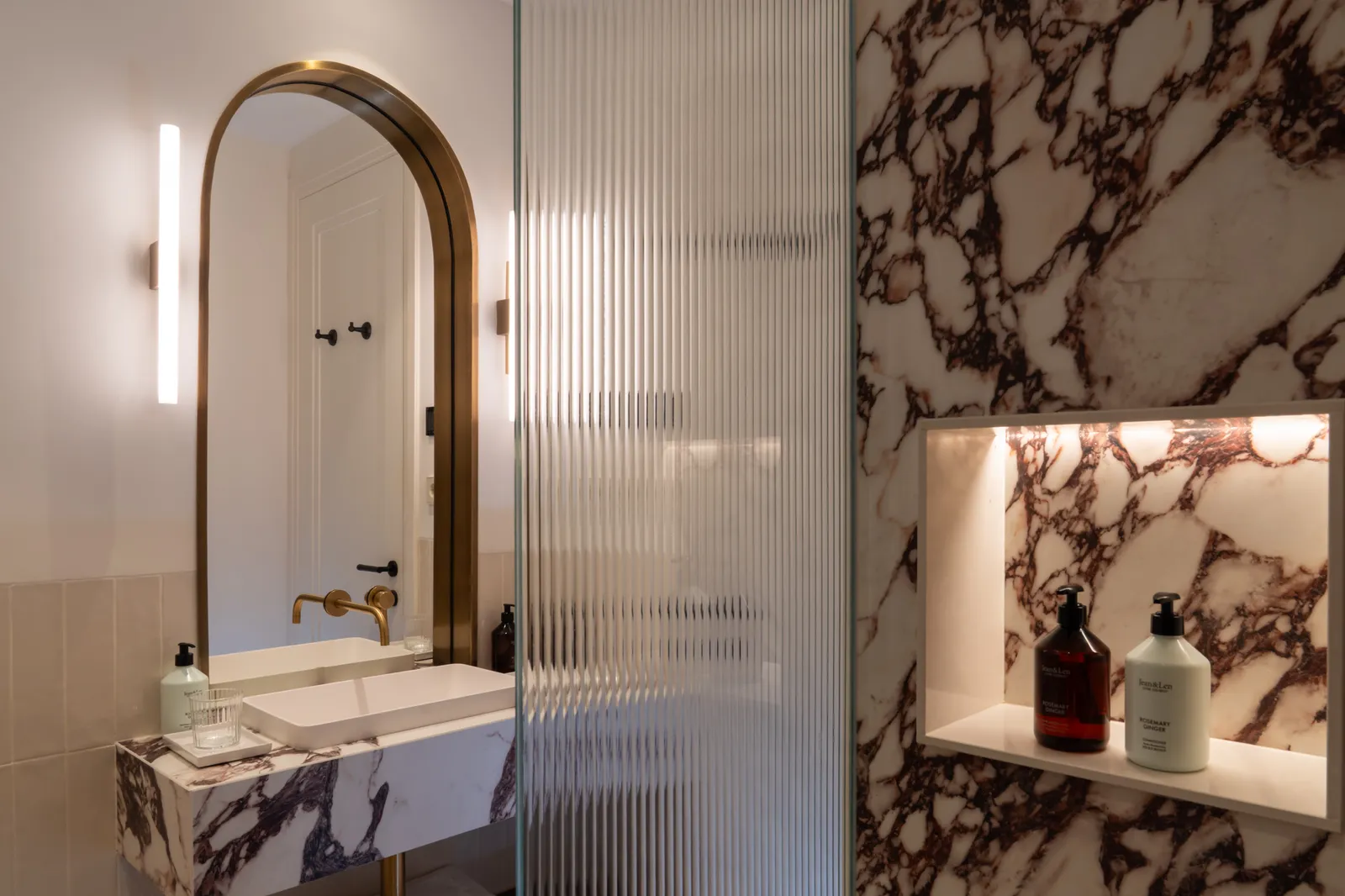
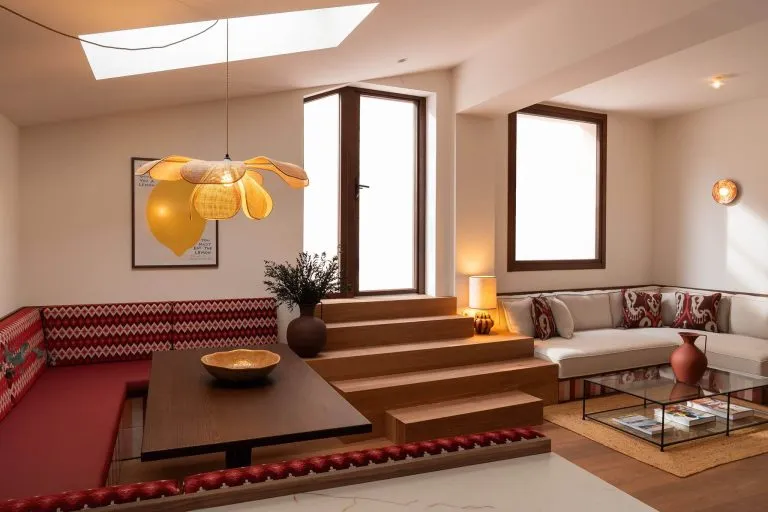
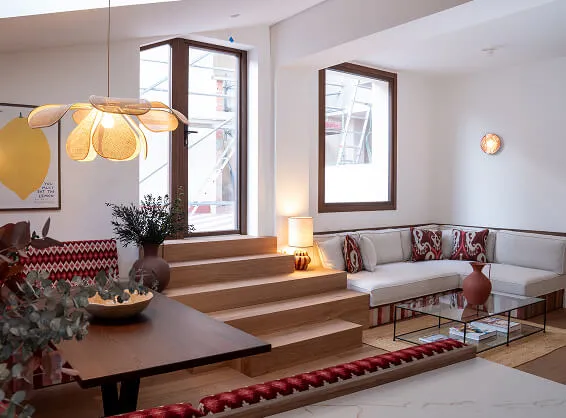
After visiting La Seu Cathedral in Palma de Mallorca, you can easily continue exploring the surrounding Old Town on foot, where some of the best accommodation options in the city are located. One of the top choices nearby is Casa Roca – Palma Old Town Elegance, a luxury boutique residence set inside a beautifully restored historic building. Its location in Palma Old Town makes it especially convenient for travellers who want to stay close to the cathedral while still enjoying a quiet and authentic neighbourhood atmosphere.
Casa Roca offers spacious luxury suites and apartments designed for comfort and style, making it ideal for both short stays and longer visits. Despite being in the heart of the city, it is located on a peaceful residential street, allowing guests to relax after a full day of sightseeing. From here, you can walk to Plaza Mayor, local markets, shopping streets, and Palma’s waterfront within minutes.
Book:- Casa Roca Boutique Maison